Bad Bunny’s “DeBÍ TiRAR MáS FOToS” is an achievement on every level, and even saying that feels like an understatement.
On a technical level, the Puerto Rican singer and rapper’s sixth studio album highlights exactly what Bad Bunny does best: create complex music with just as complex subject matter. “BAILE INoLVIDABLE,” the album’s love letter to salsa music, and the first salsa song in history to reach No. 1 on US Apple Music, is a prime example of this. As traditional backing sounds of trumpets and piano keys find themselves intertwined with reggaeton throughout the song’s six-minute runtime, Bad Bunny himself describes feeling lost in the ‘in-between’ of romance, asking himself if it’s possible to mourn a past relationship while also being grateful for it. Utilizing dance as a metaphor, listeners are invited to get lost in the beat as Bad Bunny speaks to the nostalgia of learning to be in rhythm with another person, “Si me ven solo y triste, no me hablen / Si me ven solo y triste, soy culpable / La vida es una fiesta que un día termina / Y fuiste tú mi baile inolvidable / Y fuiste tú mi baile inolvidable.”
As the song’s journey continues, and Bad Bunny gets further into his own head about longing for past love, he is joined by a chorus of male voices, seemingly affirming the reality of never forgetting your first love. As he processes the feelings of past love, describing the discomfort of attempting to find rhythm with another and comparing it to past partners, he acknowledges that denying himself the ability to love, or dance, despite aching feelings at times, altogether is a punishment too cruel.
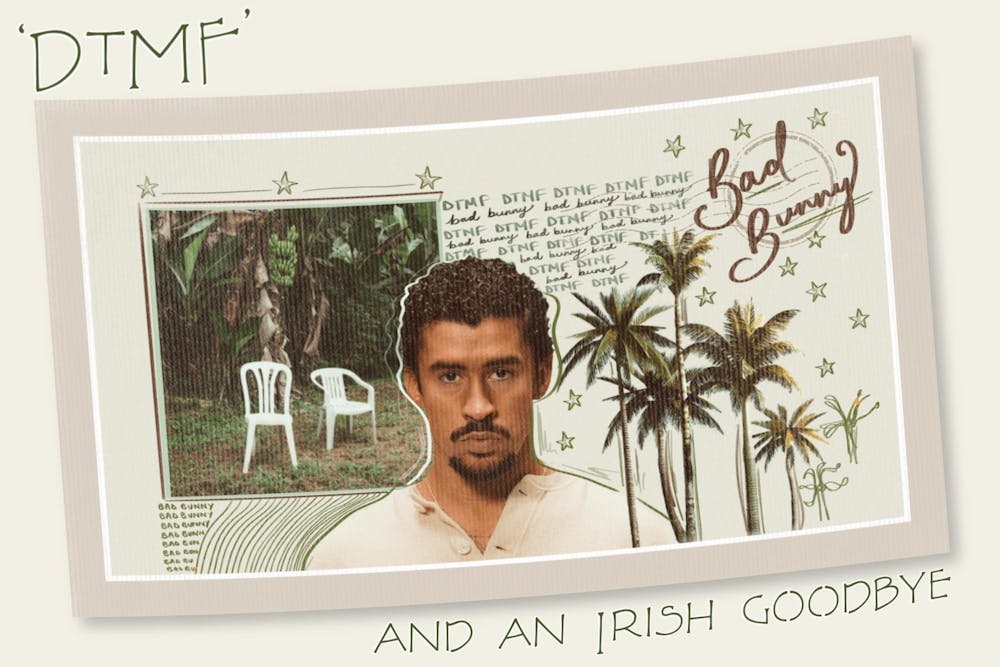
Much of the album exists in this in-between space, where living life as it happens and holding onto nostalgia battle for space in one’s mind and heart, begging the question, what am I allowed to hold onto, and who will allow me to nurture these memories? The album’s title track and penultimate song, “DtMF” rings the truest of this theme. The song itself directly translates to “I Should’ve Taken More Photos.” The line “Debí tirar más fotos de cuando te tuve, debí darte más besos y abrazos las veces que pude” felt like a bucket of ice over my own body the first time I heard it.
The fear of losing what home means is one that exists universally, but it takes root in the Latin American experience and brings forth the emotions of losing home that are all too familiar to people like my own grandparents, who left their home in search of a place and life they had yet to know existed. As the world around them continued to change, and they were expected to be pioneers for their children and their children’s children, who gave them the opportunity to live in the now? Who will hold onto their memories before they eventually fade, and once they leave the Earth, who will tend to the artifacts of their histories?
I also want to acknowledge that the fear of losing home (the feeling) is all too familiar to my peers in the class of 2025. The silent passing of time makes moments like the final weeks of school feel even harder, almost as if the past seven semesters have been a dream state, and now in our final weeks of undergraduate education, someone has come to sound the bell of adulthood.
Now, with my final words at The Observer, I urge you all to listen to the lesson of “DtMF”: Love and loss are languages that must be translated between one another to form the human experience. To be alive and found in the point of transition is to fully intake the love you’ve received, hold onto it and bring it with you to wherever your next chapter is. It’s the act of honoring yourself and those around you, and protecting it divinely, while ensuring you create space for the future to love you just as much as you’ve given love to the past.