
From the moment students arrive on campus to Thanksgiving is the time when most sexual assault cases happen on campus, according to University a report, giving the time period the name the Red Zone. Lauren Mulhern, program director for education, outreach and prevention, wrote about the statistics released from their confidential survey conducted last year.
“Recently released results from the 2024–2025 Sexual Conduct and Campus Climate survey, which supports the troubling statistics associated with the Red Zone … Survey results show that of those students who indicated they experienced sexual assault in the twelve months prior to taking the survey, 47% of incidents occurred between the start of the fall semester and Thanksgiving break,” Mulhern wrote.
Defined by Active* Consent, a research program created by the University of Galway, active consent is the “practice of actively giving consent and communicating with a partner about consent, boundaries, likes, and dislikes during intimacy, and for all sexual activity.” It mentions that pressure may indicate a lack of consent and that the lack of opposition does not imply consent.
Prior to Thanksgiving break, the discussion-based workshops through Active* Consent will be scheduled and hosted within residence halls for students to have the option to attend to.
“Active* Consent fosters open dialogue about consent in various contexts, the role of alcohol, and understanding personal boundaries in both intimate and everyday interactions and relationships. Students will receive notifications through NDCentral when workshops are scheduled in their hall,” Mulhern wrote.
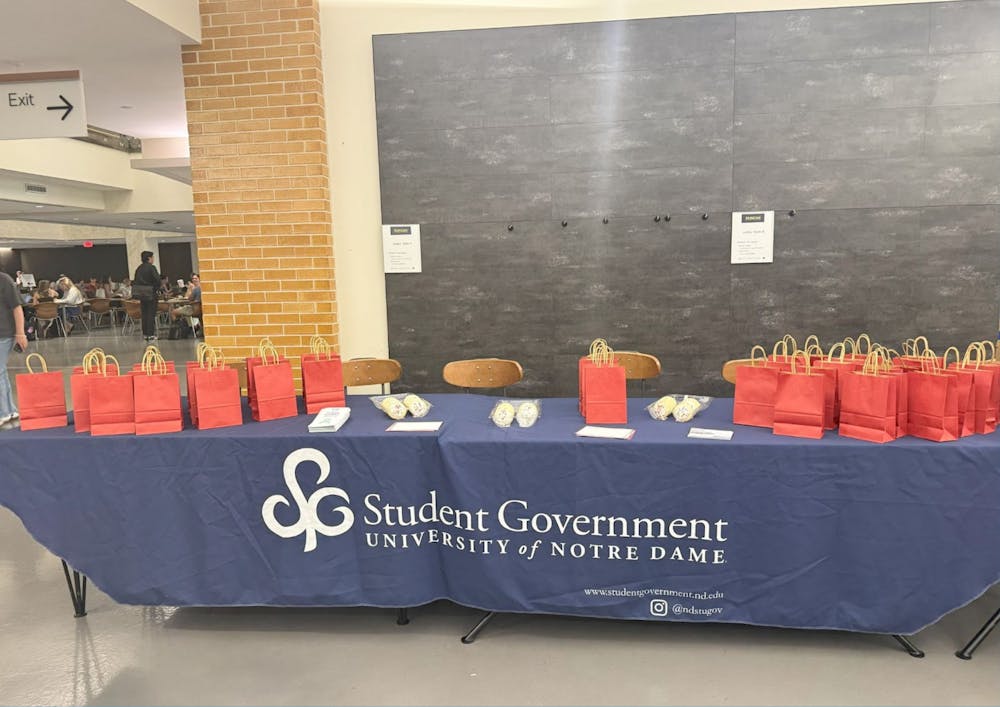
As a preventive measure, Notre Dame has put together initiatives to inform students the risks associated with this time period and provide strategies to help them be safer. On both Monday and Wednesday, from 2 p.m. to 4 p.m., at Duncan Student Center, the Notre Dame student government hosted tables designated to informing students about the Red Zone, asking them “to sign solidarity cards, sharing OIE/CSAP resources with them and encouraging them to engage with our programming to raise awareness about the Red Zone,” Gianna Switalski, the director of the Department of Title IX and Women's Initiatives in student government wrote via email.
The main table contained flyers, food and red self care bags, along with pamphlets regarding how to report sexual assault and other supportive resources. Sophomore Samantha Sanchez, who ran the table, explained the purpose is “to bring comfort to students and give resources out to all of the student body because you never know what someone is going through or will need.”
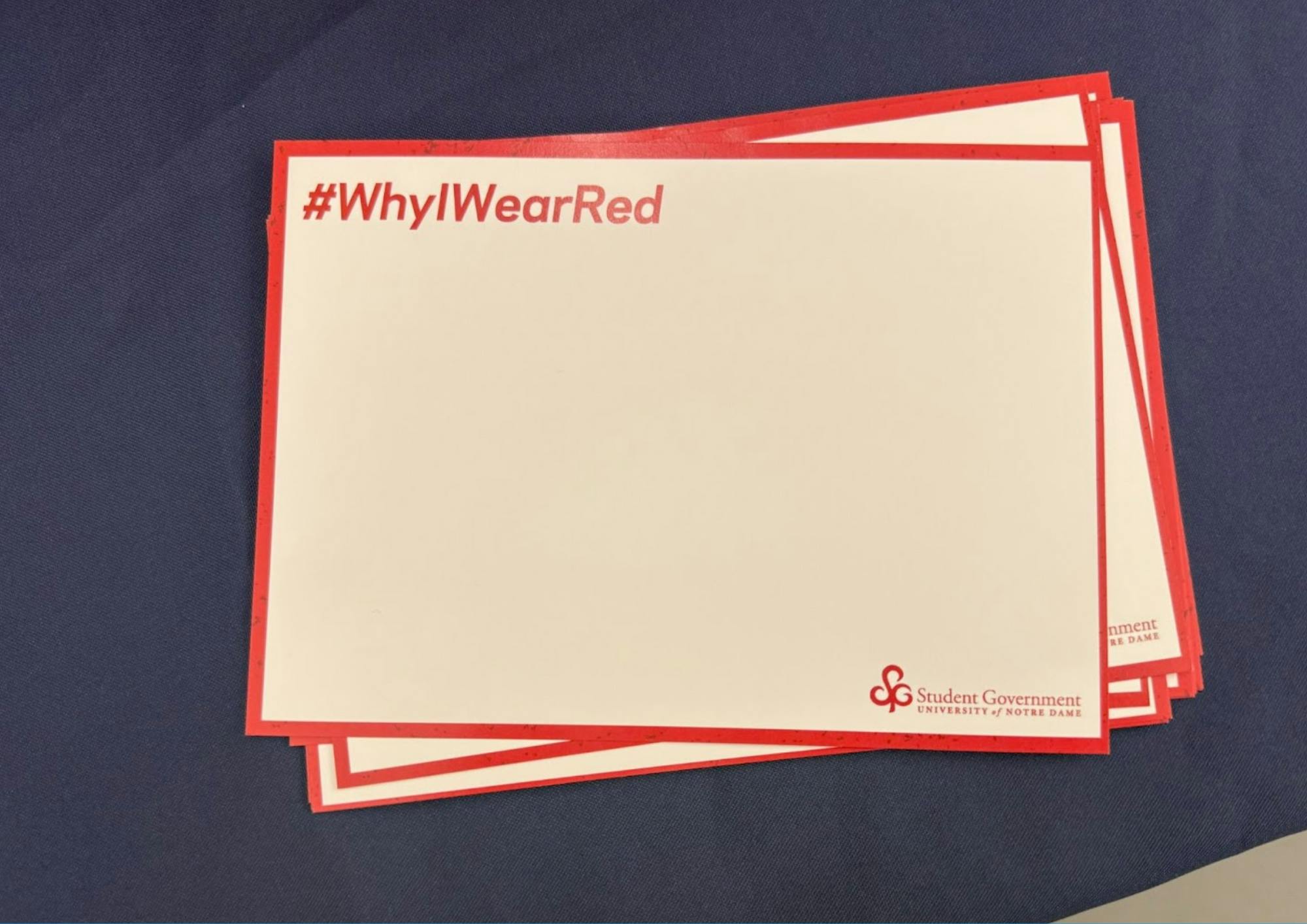
Sanchez explained that the title of the cards handed out, “#Why I Wear Red,” was to “get everyone to wear red on Friday, Sept. 7 in order to bring awareness to the cause.” Switalski wrote that these initiatives are displayed both in-person and through social media, as they plan to post videos this week on what it looks like to be an active bystander, along with red and green flags in social situations.
Dorms are also having pledges passed to “Shatter the Red Zone” which not only serves to inform students but also be put towards a dorm competition, including through table events in Duncan Student Center and wearing red on Friday. Through the presence of these programs, “students will be better informed about the Red Zone, how to be active bystanders, how to stay safe themselves, and what resources are available to them,” Switalski wrote.
Switalski hopes that students know more about the Red Zone and how they can better support themselves and others while using the resources around them.
“Ultimately, our goal is to empower every student to be part of the solution. By raising awareness about the Red Zone, we hope to foster a campus culture where everyone understands their role in preventing sexual violence and supporting their peers,” Switalski said.


