The first time I saw Robert Eggers’ 2024 remake of vampire classic “Nosferatu,” I called it “the freakiest film I will watch all year,” a bold claim for just past midnight on New Year’s Day, but thus far an accurate one. The adaptation is not just a supernatural thriller but, from the opening scene, a blatantly psychosexual one. With the Halloween season fast approaching and “Nosferatu” playing at the on-campus Browning Cinema in the DeBartolo Performing Arts Center, I decided to give it a rewatch and hopefully make some sense out of Eggers’ directorial vision. The verdict: There’s just as much sex as the first time. But what could Robert Eggers possibly mean by it?
It’s important to keep in mind that sex is, and always has been, fundamental to the vampire genre. In “How to Read Literature Like a Professor,” (a book I haven’t thought of since my AP Literature days), Thomas Foster puts it succinctly: “A nasty old man … violates young women, leaves his mark on them, steals their innocence … and leaves them helpless followers in his sin.” Such has been the vampire formula since “Dracula,” so “Nosferatu’s” exploration of sexual themes is far from groundbreaking.
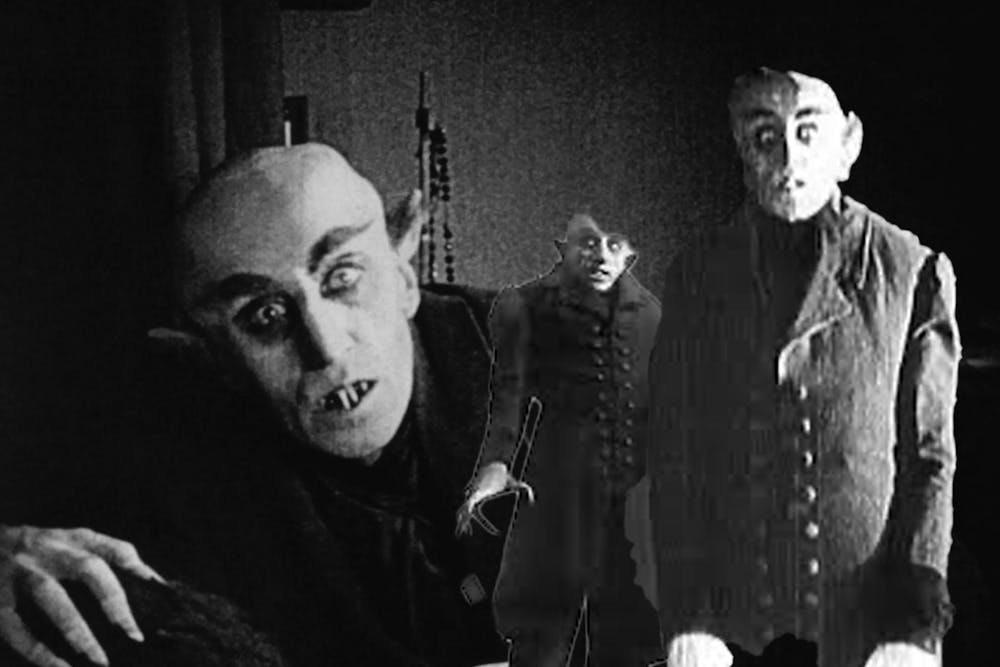
What is unique to Eggers’ adaptation, though, is the vampire himself. Count Orlok — the Nosferatu himself, portrayed magnificently by Bill Skarsgård — is more of a force of nature than a traditional Transylvanian bloodsucker. Orlok personifies animal instinct: The desires of the flesh, chief among which is sex. His consuming of a victim’s blood represents these desires destroying their humanity. Protagonist Thomas Hutter, for example, longs for wealth. Soon after he annuls his marriage in exchange for gold, Orlok drinks Hutter’s blood in an unmistakably erotic fashion, alluding to Hutter’s greed clouding his better judgement.
Lily-Rose Depp’s standout and almost perpetually sexual performance as Ellen, then, is the ultimate example of this struggle between human and savage. While awake, she yearns for her husband; while asleep, her concupiscent desires call for the vampire. Throughout the film, the lilac — a symbol of both love and death traditionally worn in mourning — remains a constant symbol of Ellen’s internal conflict. Orlok personifies this conflict and the damage he causes is reminiscent of the inner damage Ellen sustains in her struggle.
There are certainly moments where the metaphor falls apart. At times, the film’s sexual content provides more in the way of shock value than meaningful symbolism, and, while I appreciate Eggers’ dedication to slowly building tension, there are certainly scenes that drag on a bit too long. Overall, though, the blatantly sexual nature of this modern “Nosferatu” transforms it into a thrilling exploration of obsession, desire and inner turmoil that stands uniquely powerful, even in a sea of numerous vampire stories that precede it.