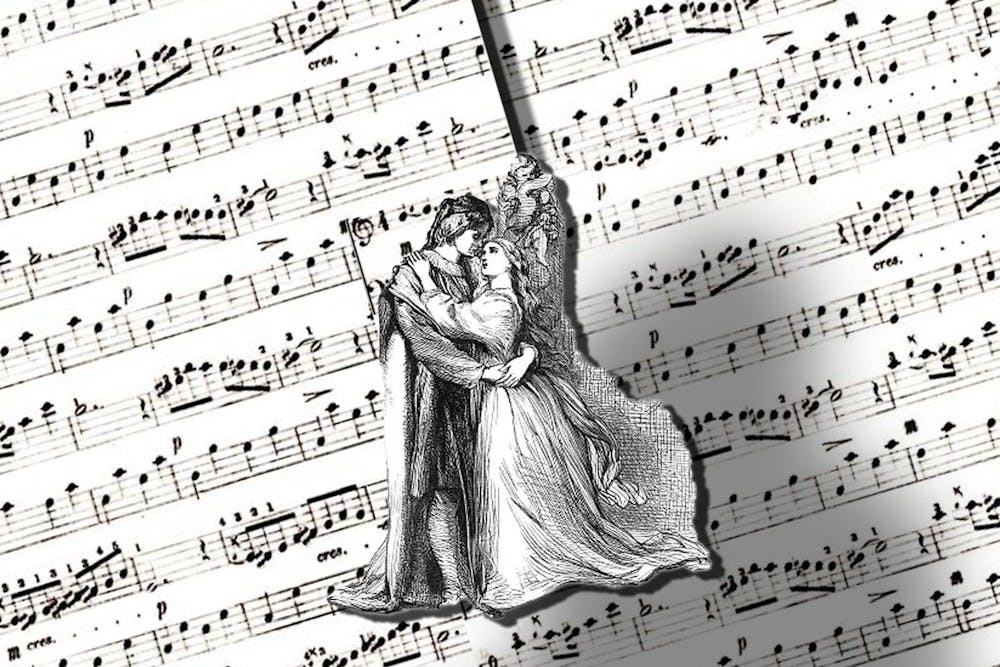
On Friday, Oct. 3, South Bend Symphony Orchestra music director Alastair Willis energetically guest-conducted the Notre Dame Symphony Orchestra in a memorable performance at the DeBartolo Performing Arts Center. The Grammy-nominated conductor’s debut and five weeks of practice with the symphony included selections from Sergei Prokofiev’s “Romeo and Juliet” suites along with two other impactful pieces preceding these. Accompanying “Romeo and Juliet” were acting intermissions performed by Willis and the Mary Irene Ryan Family executive artistic director of Shakespeare at Notre Dame, Scott Jackson. The variety of the concert, glistening with talent and unique touches, made for an unforgettable evening and experience.
The show began with a 2007 piece called “Ascending Bird.” Noting that it was composed by two of his friends, Colin Jacobsen and Siamak Aghaei, Willis explained that the song represented a phoenix ascending and bringing new life. This piece thoroughly demonstrated this symbolism, as it started soft and became powerful and energetic. The vibrating strength of the percussion towards the end of the song radiated and found hope and new beginnings. An older piece followed: Mozart’s “Piano Concerto no. 27 K. 595.” All three parts — I. Allegro, II. Larghetto and III. Allegro — created a smoother and calmer atmosphere in contrast to the previous piece. Grammy-nominated pianist and Notre Dame professor Daniel Schlosberg joined in playing the piano for this production. These pre-intermission performances combined represented the calmness and intensity that was to follow with the “Romeo and Juliet” pieces.
The show resumed after the brief intermission with dramatic Shakespearean storytelling. Willis charmingly introduced the “Romeo and Juliet” ballet atmosphere the music was to reflect in a characteristic Elizabethan accent. Jackson followed suit by reciting Shakespeare’s famous prologue sonnet from “Romeo and Juliet.” The eight suites performed from the ballet coincided with the themes the story followed. These themes were also communicated in between the suites with the help of both Willis and Jackson. Willis painted pictures of the mood the ballet would be representing with each suite while also occasionally joining Jackson in summarizing significant scenes in between the songs. Jackson used a scarf and suit jacket as a tool to represent different characters from the play. Joining Willis in playful banter on the main stage or appearing on the stage’s overhang balcony, the actor’s presence in the performance helped bring comical and informative elements to the production.
Willis described how the music coincided with the ballet by saying, “but this is ballet,” demonstrating that he wanted the audience to imagine how the dancers’ emotions and movements would be displayed with each suite performed. Romantic scenes presented passionate, orchestral sounds; horrid scenes, such as Romeo’s killing of Tybalt, came with intense music; sorrowful depictions, such as Romeo’s moments before death, brought melancholic but tender reflections in the instruments. Before the end of the performance, the symphony even held a long pause to give the audience a dramatic effect that was reflective of the dramatic production.
Through having an immersed composer, an energetic actor and the unforgettable and lively accompaniment of the Notre Dame Symphony Orchestra, this performance was truly captivating and emotion-inducing. Audience members experienced the beautiful agony of the “Romeo and Juliet” ballet and other pieces along with the humor and fun represented with the acting outside of the music. It was clear that it was a goal to immerse the audience in the performance as well. This was shown at the end of the performance with Willis’ recitation of “Never was a ballet of more woe than of Juliet and her Romeo,” from which he paused and gestured to the audience to say “Romeo” along with him. This all-encompassing atmosphere made this symphony concert a truly enjoyable, emotional and memorable evening.