The Joffrey Ballet, based out of Chicago, performed a series of shows this past weekend while in residence at the DeBartolo Performing Arts Center. First was “Broken Wings,” followed by an intermission and a performance of “Wabash & You.”
“Broken Wings”
Outside the theater, there was a content advisory posted for “Broken Wings” signed with the logos of DeBartolo Performing Arts Center and the University of Notre Dame.
It read: “‘Broken Wings’ is a story of the life of Frida Kahlo. This piece contains themes and events central to her life including miscarriage and adultery. This piece uses strobe lighting.”
The curtain rose to abstract skeletons standing on and around a large black box. One began to dance, and the others joined in before pulling Frida Kahlo out of the box they were standing on. The attention to quality of movement was clear and intentional here, with flexed feet and harsh movements when the skeletons held control over Kahlo and relaxed, artistic pointed feet when Kahlo held the power.
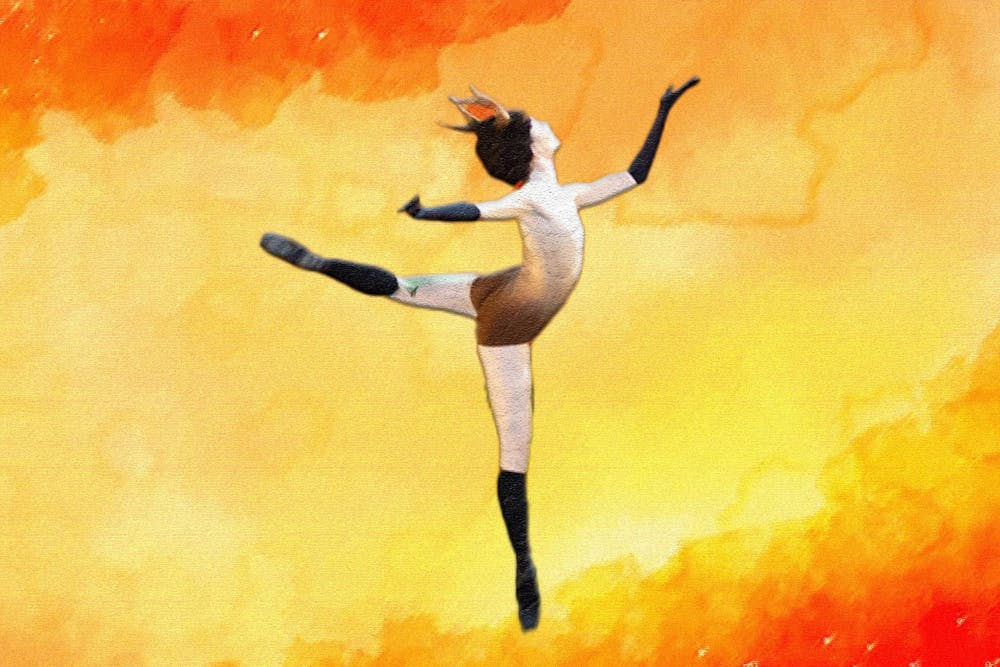
After the skeletons stole Kahlo’s health, leaving her weak, at odds with her own body and with a shaking right leg, Kahlo came to know nature. What started with an invitation from a deer grew into Kahlo painting nine plants and flowers in long, colorful, culturally significant skirts.
As Kahlo turned inward, she shared a suggestive dance with her husband — i.e., Diego Rivera — in a contemporary style. The broader theme of her leg continued as her husband frequently ran his hand along it and kissed it.
This spiraled into her miscarriage as the skeletons took control of her life once again, entangling Kahlo in the red rope that was once the umbilical cord of her fetus.
Kahlo’s rebirth came in the form of vein-like leaf characters who walked with Kahlo through the journey of rediscovering nature and finding herself again. These costumes, along with many others in the show including Kahlo’s, made use of skin-colored leotards with patterns on top, blurring the lines between human and nature. These costumes were crafted with both an eye for design and an awareness of diversity, as the skin tone matched that of the dancers wearing them.
This dance closed with all of nature reuniting and Kahlo becoming one with a butterfly as a bird marked her passing on from life in human form. Throughout the piece, the presence of animals marked key shifts, from her first interaction with the deer to the final word from the bird.
Over the course of the show, the dancers made their own noise from the stage by clapping their hands to their legs, snapping and even singing. While these noises were innovative and fitting, at times enhancing cultural elements of this work, when Kahlo would seemingly spank different characters to make noise, it felt out of place.
Overall, this show made expert use of a very minimal set. The singular box had many sides and dimensions that were opened and closed to capture the different moments and perspectives of Kahlo. This was especially evident toward the beginning of the show when Kahlo met the deer for the first time, and the flaps of the box were mirrors, giving the illusion of theater in the round.
“Wabash & You”
“Wabash & You” was a shorter piece set in downtown Chicago. This story took the traditional trope of a man and a woman coincidentally meeting and reworked it for a younger generation. In an era of technology, “Wabash & You” captured the ways in which we yearn for a lover to text back or pick up the phone and the ways that friends gossip about one another’s love lives.
The female lead and male lead shared an intimate moment of going into the female lead’s house after a date, shedding parts of their costumes and getting into bed together. This moment was lit in a manner that seemed like a blackout, but it was better lit than a traditional blackout so that the audience intentionally watched the blackout. It enveloped the audience in the story and prepared them for the dance that these characters shared with their bedsheet as a prop.
This show highlighted ease of connection and contrasted it with lack of commitment in the current dating world. At one point in the show, the female lead was on stage right with her female friends, and she was calling the male lead on the phone. He was on stage left at a party and blatantly ignoring her call as he danced with other women.
“Wabash & You” incorporated music in an interesting way by having a live band on stage with the dancers. The band had a short box to stand on, but at times, they would come join the dancers on center stage, intermixing the creativity of dance and music.
While most of “Wabash & You” told a compelling story and broadened an old trope for a younger generation, the ending of “Wabash & You” lacked something. The storyline was distorted in the progression of bows, a post-bows song and second bows.
Overall, these performances from the Joffrey Ballet were impressive works of artistry and creativity brought to life on stage.