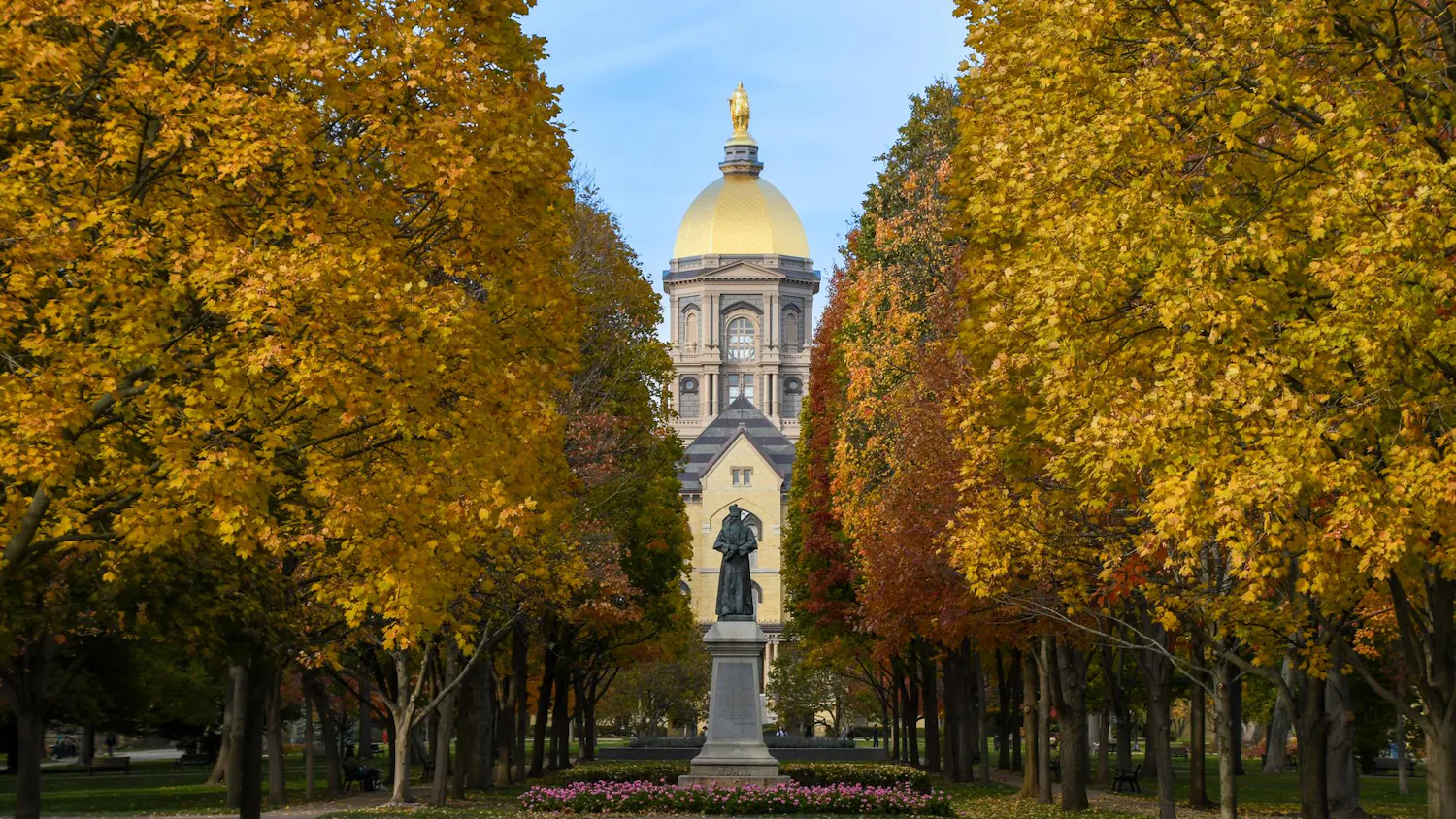
The University of Notre Dame has said they do not want to include sexual orientation in their anti-discriminatory clause because that somehow endorses homosexual activity. I vote Jesuit! I went to the University of Detroit Mercy, a Jesuit school, and this is their non-discrimination clause: "The Program does not discriminate based on race, age, creed, gender, sexual orientation, color, national origin, marital status, religion, or any other factor prohibited by law. This applies to all aspects of its operations." Oh Snap Notre Dame! The Jesuits have very good credentials. They have been around for many centuries, and their priests are well qualified.
Another great Jesuit school, Boston College has the following non-discrimination clause: "Founded by the Society of Jesus in 1863, Boston College is dedicated to intellectual excellence and to its Jesuit, Catholic heritage. Boston College recognizes the essential contribution a diverse community of students, faculty and staff makes to the advancement of its goals and ideals in an atmosphere of respect for one another and for the University's mission and heritage. Accordingly, Boston College commits itself to maintaining a welcoming environment for all people and extends its welcome in particular to those who may be vulnerable to discrimination, on the basis of their race, ethnic or national origin, religion, color, age, gender, marital or parental status, veteran status, disabilities or sexual orientation.
"Boston College rejects and condemns all forms of harassment, wrongful discrimination and disrespect. It has developed procedures to respond to incidents of harassment whatever the basis or circumstance. Moreover it is the policy of Boston College, while reserving its lawful rights where appropriate to take actions designed to promote the Jesuit, Catholic principles that sustain its mission and heritage, to comply with all state and federal laws prohibiting discrimination in employment and in its educational programs on the basis of a person's race, religion, color, national origin, age, sex, marital or parental status, veteran status, or disability, and to comply with state law prohibiting discrimination on the basis of a person's sexual orientation."
I bet most Jesuit schools have similar, welcoming environments. Go Irish! Beat Discrimination!