

Opinion
Faith alone
By
Andrew Sveda
· Monday, Oct. 31, 2022
Paul’s most scathing words are found in Galatians, where he vigorously defends the doctrine of justification by faith. Why was this teaching so important to him?
Red flag reading
By
Emma Duffy
· Sunday, Oct. 30, 2022
Social media is full of comments on what books are acceptable to read. There are warnings plastered all across online platforms declaring that it is a red flag if someone likes “The Catcher in the Rye” by J.D. Salingeror “Gone Girl” by Gillian Flynn, maybe even “The Stranger” by Albert Camus. At the same time, romance novels such as the ones by Colleen Hoover can not be recommended enough. I must confess, I would much rather engage in the “red flag reading” than force myself to read a sappy love story.
Neurodivergence in the classroom
By
Jack Griffiths
· Friday, Oct. 28, 2022
This week, I’m attending a conference in Vancouver to represent Notre Dame’s Writing Center alongside some of my fellow tutors. All of us will give short presentations pertaining to a common theme: promoting inclusivity in writing center environments. While my peers will be covering topics such as multilingual writers, discouraged writers and writers who respond to different kinds of sensory-based learning, I will give a presentation discussing the specific needs of neurodivergent writers. For me, it is crucial for tutors to make sure these unique students feel valued by the academic communities they’re trying to become part of. Given that neurodivergent students are often ignored, I believe it’s important for writing center tutors to help these folks develop confidence in their writing. I also believe it’s crucial to help these students recognize themselves as scholars who have contributions to make to their universities.
Land of hope and glory?
By
Pablo Lacayo
· Friday, Oct. 28, 2022
There is no doubt 2022 has been a very rough year for humanity, as the world struggles to keep up with a wide array of crises, including red-hot inflation, surging energy costs, increasing levels of food insecurity and the ever-looming prospect of a global recession. The United Kingdom has stood out among the Western world, as it has been more hard hit than other Western countries. The logistical challenges accentuated after the country’s departure from the European Union made British supply chains more vulnerable during the Coronavirus pandemic and its aftermath, which in turn contributed to the country dealing with higher levels of inflation than its Western European counterparts. British energy bills have also been among the ones that have risen the most within the continent, and the value of the pound dropped to its lowest level in nearly four decades. In September, financial analysts projected the United Kingdom was already in the throes of a recession, and the outlook as winter approaches threatens to only get bleaker.
The midterm elections: voting rights and gerrymandering
By
Grace Sullivan
· Thursday, Oct. 27, 2022
With the recent overturn of Roe v. Wade, drastic climate disasters and increasing political polarization among U.S. citizens, the midterm elections are essential in determining our government's ability to take on these issues. As Amber Phillips said in her article about the importance of the midterm elections, this election has the power to reshape our country.
Death and rebirth of (in)tolerance
By
Carlos Basurto
· Thursday, Oct. 27, 2022
When one takes upon themselves the challenge of imagining the wisest person to have ever lived, attributes such as empathy, kindness and a willingness to forgive are traits bound to define such an idealized sage. This is due to the fact that the more one engages with the human experience, the more likely one is to comprehend —perhaps even relate — to their fellows. A simple act such as an attempt to see a foreign worldview with a gentle, nonjudgemental gaze could be one of the most human things to do. A silent recognition of the inherent humanity of them all and how, despite it all, they are of the same value once the day comes to a close.
Kanye West shows responding to antisemitism requires education, not just condemnation
By
Blake Ziegler
· Thursday, Oct. 27, 2022
The latest chapter in the ongoing controversies of Kanye West is his antisemitic tirades. Over the last month, West has spewed nearly every antisemitic trope in the book. On Instagram, he suggested that the rapper Diddy was influenced by Jews, playing on the notion that Jews control the media and other societal institutions. The insinuation is dangerous because it portrays Jews as puppet masters of the world and responsible for the world’s ills. After being restricted on Instagram, West shared on Twitter that he’s “going death con 3 On JEWISH PEOPLE.” He clarified later that he meant “DEFCON 3” in reference to a stage in U.S. defense readiness. However, whether he wants to kill Jews or go to war with them, both are clearly antisemitic. He also tweeted that Jews try to “black ball anyone who opposes [their] agenda,” again spreading the antisemitic conspiracy that Jews control the world.
Where to run, walk and hike in South Bend
By
Claire Reid
· Wednesday, Oct. 26, 2022
I grew up in Madison, Wisconsin, where the UW-Madison campus is seamlessly integrated into the city.
Latin for fun and profit
By
Jonah Tran
· Wednesday, Oct. 26, 2022
Salvete omnes qui aut forte aut sua sponte tempus die exceperunt adesse nunc mecum. Quod scripsi est ordini maximi et certe dignus legendo multitudinis discuplorum. Ego ipse pollicior.
Earn your dopamine release
By
Mikey Colgan
· Wednesday, Oct. 26, 2022
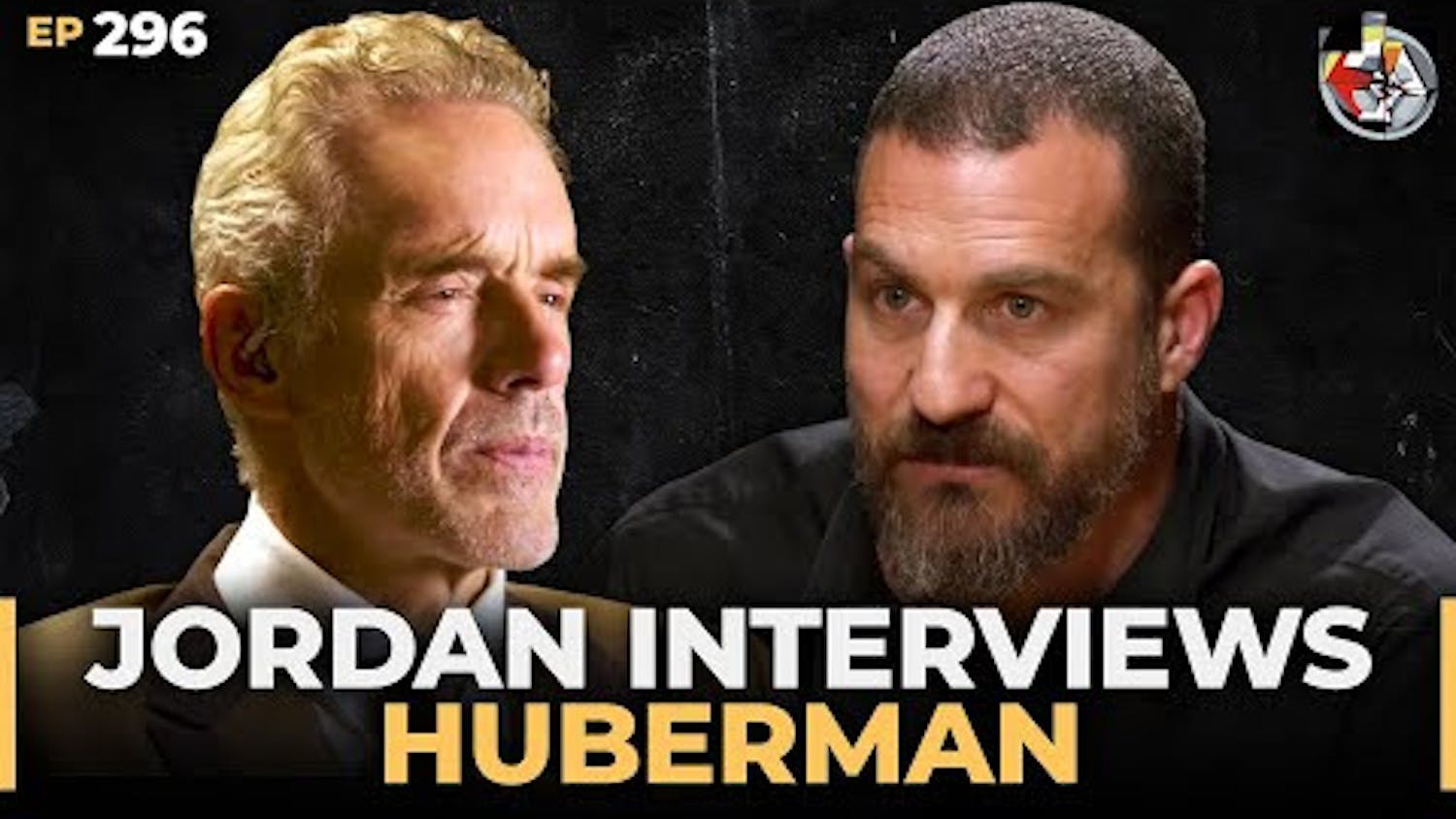
It’s too easy. I just stop looking at my work for a second to check my phone. A notification pops up. I click on it. After viewing my notifications, I want to put off work just a little longer. So eventually, I think to myself: why not check on some Celtics or Patriots news? Then, a minute break suddenly turns to 20 minutes of completely wasted time. I look up from my phone and realize what I’ve done. I feel disappointed and try to get back to work. Now, a question I’ve had a tough time addressing is why I continue this vicious cycle when I know exactly where it will lead me. Thanks to a podcast hosted by Canadian psychologist, Jordan Peterson, with guest Andrew Huberman, a neuroscientist and professor at the University of Stanford, I finally have discovered a scientific explanation of why we are inclined to waste time and ways to address it.

Chevron, Perry the Platypus and transubstantiation
By
Devin Humphreys
· Tuesday, Oct. 25, 2022
Once upon a time in my high school days I encountered a meme entitled “The Engineering Flowchart.” Translated into prose, it basically asserts the following four propositions: first, if it moves, and it’s supposed to move, you have no problem. Second, if it doesn’t move, and it’s not supposed to move, you also have no problem. Third, if it moves, and it shouldn’t, duct tape. Fourth and finally, if it doesn’t move, and it’s supposed to, WD-40.
I’m sorry, Rory Gilmore
By
lettertotheeditor
· Tuesday, Oct. 25, 2022
Editor’s note: This letter contains discussions of self-harm and mental health.
Stephen J. Viz shall never return to Las Vegas, Nevada
By
Stephen Viz
· Tuesday, Oct. 25, 2022
OK, that’s probably hyperbole, but let me explain some things before I begin. First, I must apologize to the faithful readers of our humble little newspaper. This was a week with Vegas heavy content in The Observer. But c’mon, there was no way I was going to travel to Las Vegas and not write about it. Feel free to stop reading at any point if you have Sin City burnout. Second, as I wrote before Labor Day, if you get the chance to travel for Notre Dame football, take it and run with the money. The atmosphere inside Allegiant Stadium was electric and the football team’s turnaround under the leadership of Marcus Freeman and company must be commended. My excitement for the coming years can hardly be contained, as Notre Dame versus Texas A&M in 2024 is already on my calendar. With that being said, I only came to Las Vegas for a Notre Dame football-focused reunion, and without the pomp and circumstance of the Irish, I will find it hard to make it back to the city. Allow me to shed some light on the subject.
The next eight months
By
lettertotheeditor
· Wednesday, Oct. 12, 2022
Editor's note: The Observer does not typically allow Letters to the Editor to be signed anonymously; however, in this case, the Editorial Board granted anonymity to the author as we consider the letter important to conversations in the tri-campus community. This letter includes mentions of sexual assault.
The wizard of loneliness
By
Claire Lyons
· Wednesday, Oct. 12, 2022
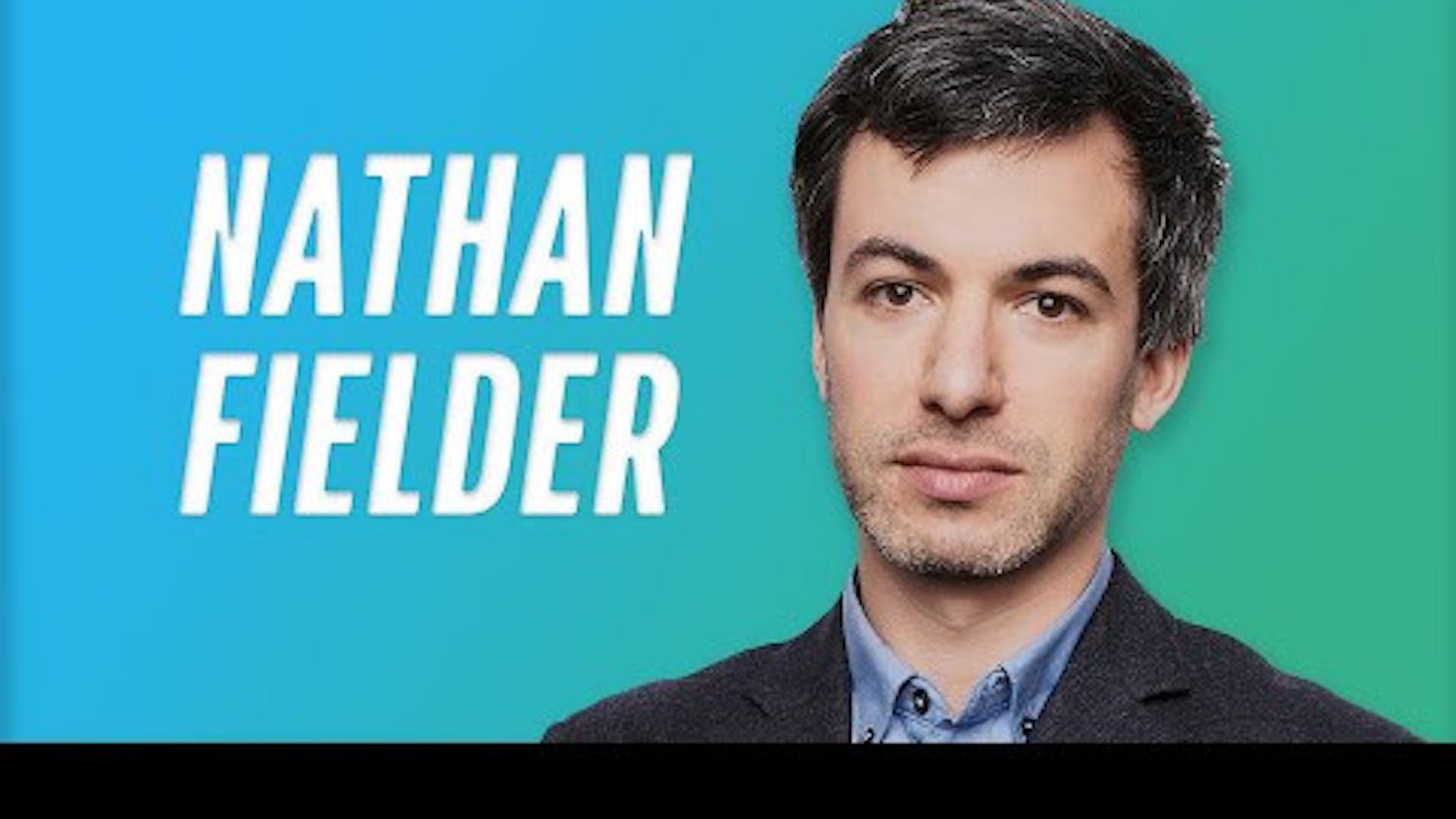
My favorite moment in comedy television history happens in the “Smokers Allowed” episode of “Nathan for You.” If you haven’t seen the show, the general premise is a spoof on reality TV shows like “The Bachelor” and “Undercover Boss.” Comedian Nathan Fielder contacts small-business owners to be on the show under the guise of a serious business consultant but instead proposes ridiculous business plans. In this particular episode, Fielder helps a bar owner exploit a loophole about indoor smoking by turning her bar into an experimental theater performance.
Underlined passages
By
Reyna Lim
· Wednesday, Oct. 12, 2022
On the R train from Union Square to Prince Street, I sit across from a girl who seems to radiate the very signification of “cool”. Her red curls fall into place like puzzle pieces, a beguiling smile in her eyes underneath her mask. A seemingly careless outfit, yet its nonchalance manifests itself through all the right pieces: perfectly tattered boots, a vintage-looking leather bag, the rings on her fingers that surely were collected from a plethora of farmers’ markets and local jewelers. But it’s her shirt that catches my eye — a purple long-sleeve with graphics promoting a band I have never heard of.
Money talks
By
BridgeND
· Wednesday, Oct. 12, 2022
On June 30, the Supreme Court’s majority opinion on West Virginia v. EPA (2022) delivered a blow to the U.S. Environmental Protection Agency’s ability to regulate the production practices and carbon emissions of large corporations. On Aug. 8, the Senate passed the Inflation Reduction Act of 2022, marking the single largest legislative commitment to combat climate change in American history. The bill intends to make a $370 billion investment in clean energy to decrease U.S. carbon emissions 40% by 2030 and place the country on track to reach President Joe Biden’s goal of cutting current U.S. carbon emissions in half by 2030. “Today, Senate Democrats sided with American families over special interests, voting to lower the cost of prescription drugs, health insurance, and everyday energy costs and reduce the deficit, while making the wealthiest corporations finally pay their fair share,” Biden said.
Yellow journalism, read all over
By
Elizabeth Prater
· Tuesday, Oct. 11, 2022
I made a pact with myself this year to read actively and more widely about the news. This may be surprising for someone who has both written and worked for The Observer since my freshman year at Notre Dame. However, I found myself barely being able to keep up with my seminar readings, rooted in the classical world, and failed to acquaint myself with contemporary and global issues.
Trending


