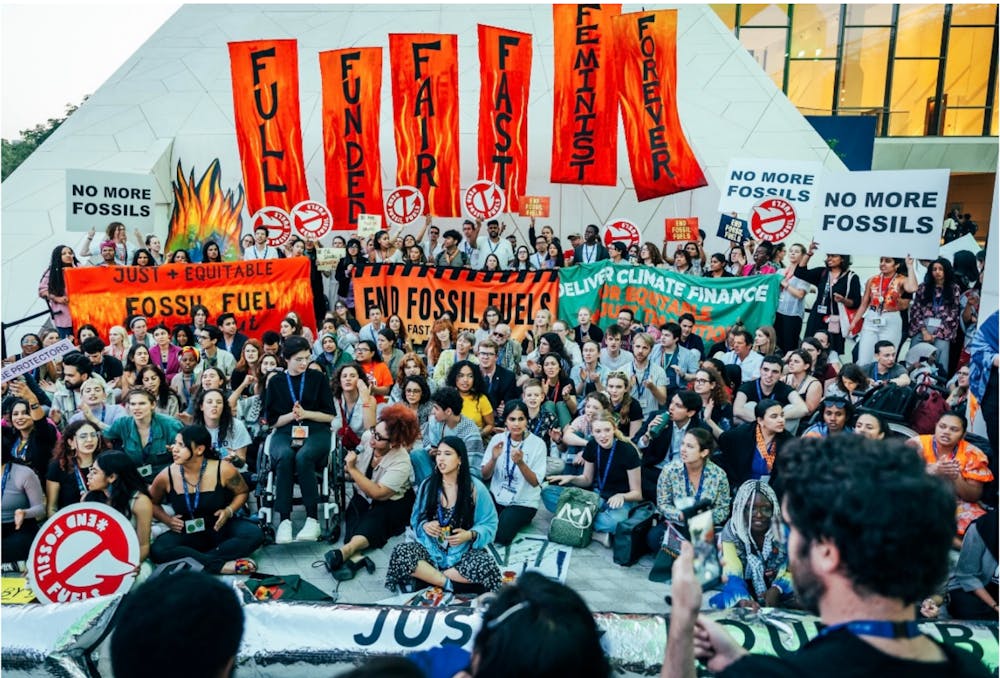
As the gavel came down on the COP28 conference in Dubai, UAE, a historic decision was made: It is time to “transition away” from fossil fuels. This was the first time fossil fuels, a main driver of climate change, was mentioned at this global climate conference. As an attendee of the conference, I had mixed emotions about this decision.
While a historic decision, it is also abundantly clear that loopholes were left in the UAE Consensus to allow big oil producers ways to continue their damaging practices. At a conference located in one of the largest oil producing countries, with one of the top oil executives as the president and over 2,000 fossil fuel lobbyists, it is not surprising big oil came out with a win.
Those at the conference, including me, were disappointed as the climate crisis is clearly pressing in nature at this moment. 2023 was the hottest year on record, and we have started to see the devastating impacts. For us here at Notre Dame this might mean more uncomfortable walks to class in the bitter cold or some sticky August nights in dorms with no AC. But for our friends in the Pacific Islands, climate change means the loss of their homes and lives. Signing this toothless decision was like signing these individuals a death sentence. The question then becomes: What are people worth to us? As Rev. James Bhagwan, the general secretary of the Pacific Conference of Churches asked a group of Christian Climate Activists: “Are we not your neighbor? Are our lives worth less than your comfort?”
This is a striking question we have to ask ourselves as citizens of the world and individuals caring for the common good. As Holy Father Pope Francis writes in “Laudate Deum,” when it comes to climate change, we “must move beyond the mentality of appearing to be concerned but not having the courage needed to produce substantial changes.”
So, what can we do to ensure the dignity and life of our fellow neighbors? Well, it is essential that the toothless decision from COP becomes a sword. We have the ability to use this language to pressure leaders to change policies. Notre Dame, this is our time to use every tool at our disposal to make climate justice a reality on our campus. Caring is not enough. It is time to act. This can begin right here on our campus.
A new resolution, Resolution SS 2122-05, is moving through the Notre Dame Senate, calling for University divestment from fossil fuels. Similar resolutions have moved through the Senate at various times in the past, most recently in 2022. Yet, continually, the administration has failed to approve these measures. It is ironic that the University has committed to net zero by 2050 yet shies away from monetarily moving away from fossil fuels. This action is in clear violation of our commitment to the common good as it perpetuates the emissions of fossil fuels which destroy our common home. More than 350 Catholic institutions and 1500 other institutions, including Creighton University, Boston University, Georgetown University and Harvard University, have divested from fossil fuels. It is disappointing a University which stresses human dignity and common good so heavily has been so wary to do what is necessary and expected to ensure a sustainable future.
It is imperative that we push for a “transition away” from fossil fuels in our Notre Dame investments. Students, take action. Ensure your University actually cares about the common good. Ensure Notre Dame is loving its neighbors. Ensure your University is protecting your future. Email administrators to express your concerns, start the conversation around divestment on campus and show up if the administration fails. That is how we will ensure our collective future, both here at Notre Dame and around the world.
Linnea Barron
sophomore
Jan. 29