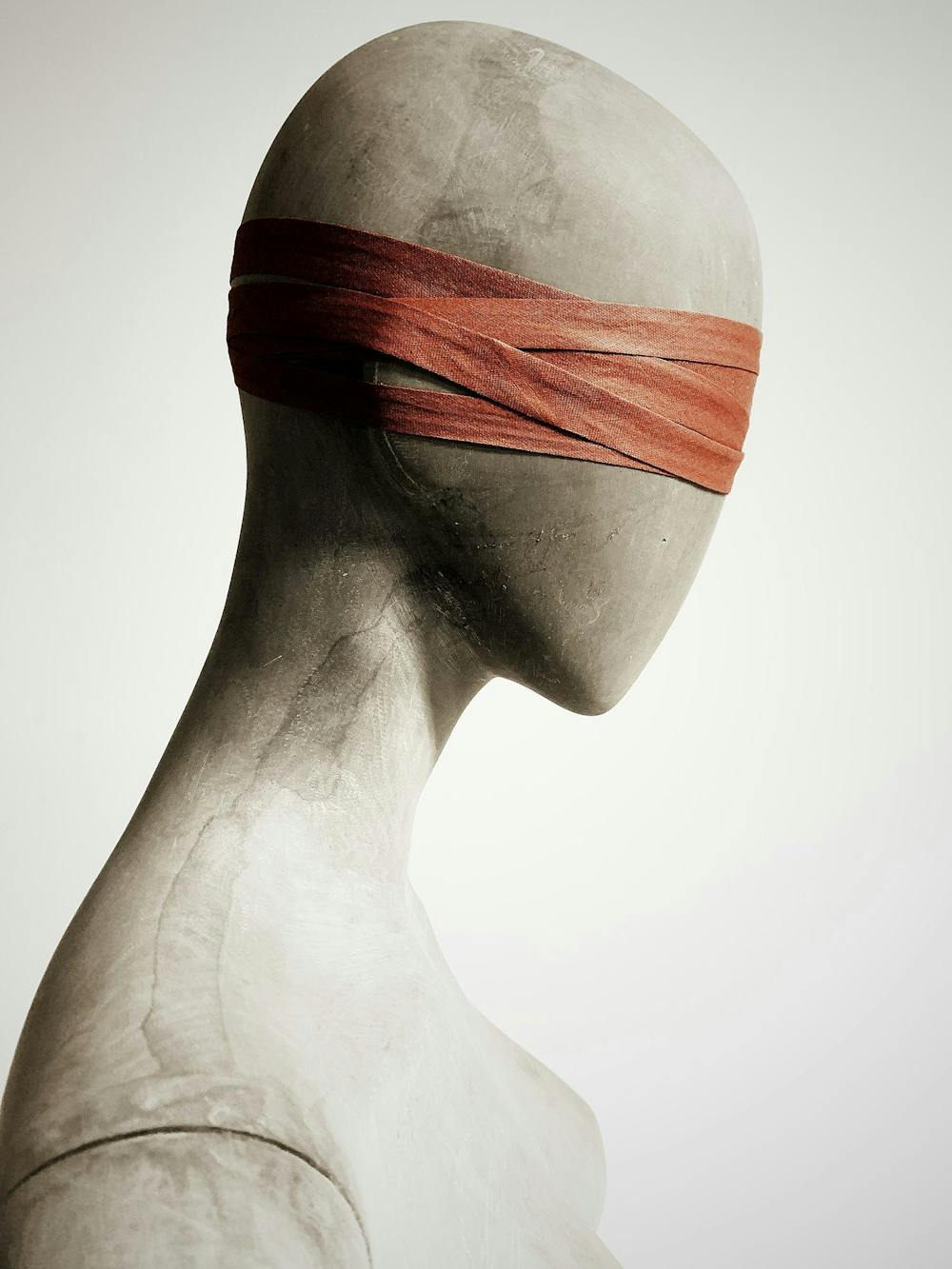
Navigating life with a disability is beautiful, hard, anger-inducing, scary and chaotic. It’s a lot. Which is why, over the years, I have come up with rules to help me to live a life of dignity as a blind person.
1. Never apologize for your disability.
Almost every Friday, I am starving for Indian food, and almost always, I give into temptation. One of these Fridays, my DoorDasher calls me. They are minutes away from my dorm, but they are lost in the maze that is Notre Dame. They ask me for the closest visual landmarks. They tell me what they see, and I feel so lost.
I only know one route to my dorm — the route in which I walk past the automatic doors and the carpeted floor of the Morris Inn to get to the front entrance of Ryan. I only know how to walk this route; I don’t know how to explain it with words and directions.
I panic and hesitate and panic, and the words come into my mouth, “I’m sorry, I am blind.”
Do not apologize for your disability.
Just because you interact with the world in ways that are different from what is regarded as normal, never apologize for who you are.
I grind the “sorry” to powder between my teeth and speak into the phone, into the ears of my impatient DoorDasher, “I am blind.”
2. Do not plead when you know that you have the right to receive.
Full disclosure: I’m not so good at following this rule.
My voice hesitates and coats itself in humility when I ask for course materials to be made available in accessible digital formats, for images on online platforms to be accompanied by alternative text and for math lectures to be made more accessible. I call the people who work to change structures for me kind and empathetic. The others who turn away with a no, I label as too busy with other important things, people who just don’t understand. Sometimes I don’t even ask, because then I won’t have to hear the refusals.
But I know I have been getting better. At least now I recognize that what I ask for aren’t favors that might be granted, but needs that must be satisfied in order for me to be able to thrive as a student, an employee and a human being.
Believing this truth has made it a little easier to have difficult conversations with my statistics professor, to ask for the digital copy of the new hymnal that is used during Masses.
But it is still hard to make myself vulnerable like this. It is harder to keep asking in a world that is not constructed for me, a world that does not anticipate my needs. It is the hardest to fight, to batter down the refusals, all by myself. But I guess I’ll have to keep asking and fighting until the world changes for the better.
3. Independence should always be a constant goal.
I know I have grown so much in the last few years.
I learned to live alone in a new country.
I learned to navigate campus on my own.
But I cannot afford to give into the temptation to lock myself into my comfort zone. I have so much more to conquer, like the route to Decio that I have been too lazy to learn. I cannot afford to curl up in my cocoon when I know that I still haven’t lived and worked in the heart of a bustling city, when I still haven’t tasted the Indian curries that I made all by myself.
4. Never give up your agency.
When you have a disability, people treat you like a child. Or worse, they treat you as if you are invisible, and then they steal your voice, your words.
I know this reality, and yet, I say nothing in protest as the waiter turns to my friend and asks her what I would like. I say nothing because, in that moment, my brain cannot find words to express the anger and the violation I am experiencing. I say nothing because I am so drained from the long day, and I just don’t have the energy to educate someone who does not know how to talk to a blind person.
I say nothing when my friend steals my voice and tells the waiter what I need. I know I should tell them, “I felt like you were taking away my agency.” But I am so scared. What if I make my friend feel guilty? What if I damage my relationship with them? So I say nothing.
I am at a counter ordering Subway. My friend is a few steps behind me. The lady asks me a question. For some reason, I don’t catch what she says. Instinctively, I turn back to my friend. I say nothing, but my friend responds to the question in my eyes. She repeats to me what the lady said.
It isn’t until I am walking away from the encounter that it hits me. I could have just said to the lady, “Sorry, I didn’t get you. Could you say that again?” But I turned to my friend like a child who wants her mother to translate what she is incapable of comprehending on her own. After a lifetime of allowing others to steal my agency, I finally gave it away.
In that moment of recognition, all I felt was shame. And all I knew was that I couldn’t go back to that Subway counter and take back my agency.
Of all the rules that I want to live by, perhaps this is the hardest. Of course, the easiest way out is to surrender, to cloak myself in silence. But that is not who I am, that is not who I want to be. So I will keep working hard, to find my voice, to find the words, to become visible again.
Hannah Alice Simon was born and raised in Kerala, India, and moved to the U.S. for college with the dream of thriving in an intellectual environment that celebrates people with disabilities. On campus, you will mostly see her taking the longest routes to classrooms with her loyal cane, Riptide, by her side. She studies psychology and English with minors in musical theatre and theology. You can contact Hannah at hsimon2@nd.edu.