
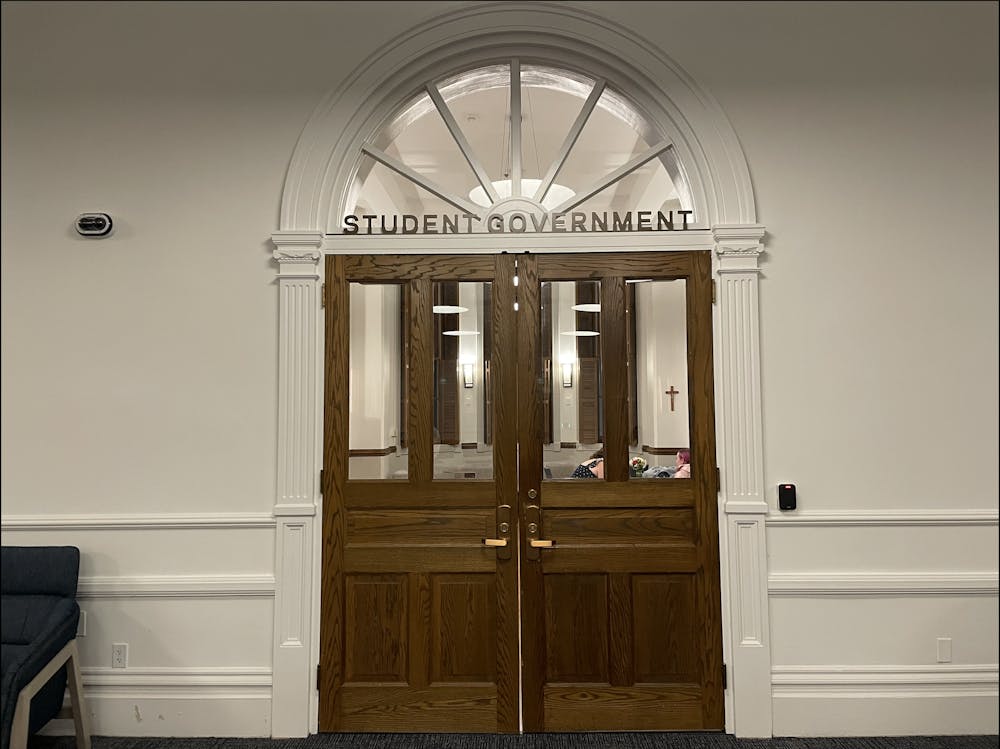
Notre Dame student government has created a new department of student athlete relations partially in response to an ongoing $2.8 billion lawsuit, House v. NCAA, that has the potential to upend college athletics.
The suit, which began over a dispute about name, image and likeness (NIL) revenue sharing, was granted class-action status in 2023. If approved, the lawsuit would provide billions of dollars in back-pay damages to former student athletes and also allow colleges to begin revenue-sharing programs enabling them to pay athletes directly. Previously, student-athletes could be awarded scholarships from colleges but were not paid directly.
Importantly, the settlement was also drafted to include limits on the number of athletes that schools could have on their rosters. These roster limits would replace the NCAA’s current scholarship limits, which would force some colleges to cut student athletes.
However, on Wednesday, the judge overseeing the settlement, Claudia Wilken, ordered the two parties involved in suit to rewrite the section of the settlement dealing with roster-limits, stating that she would not approve the case if it would harm student-athletes who were part of the plaintiff’s class.
As the settlement was being negotiated, Notre Dame’s student government formed a new student athlete relations department, created by an omnibus senate bill that reshaped the executive cabinet. That bill, the first of the 2025-26 senate’s term, was passed April 2 with 32 affirmative votes, two negative votes, and four abstentions.
Student body president Jerry Vielhauer ran with the creation of this department as a part of his platform.
The director of the student athlete relations department, Robbie Wollan, who is also a walk-on member of Notre Dame’s football team, said there were a number of needs that prompted the creation of the department.
“There’s been a lot of press about athletes’ mental health over the past decade or so, but still a lot of people don’t know a lot about that … We have the sports psychologists, we have campus wellness centers, but there are a lot of challenges that student athletes face that are being brought up now, it’s not something that’s going to be in the future, we can change it right now,” he said.
Editor’s note: Vielhauer and Wollan were interviewed before judge Wilken ordered a modification of roster-limits.
Vielhauer was aware of the NCAA legislation when he went to create the new department, but his initial idea came while reviewing old student government administrations and centered more upon increasing representation for student athletes, noting that athletes make up roughly 10% of the student body.
“That is a very sizable portion of our student body, and for that group to not have any representation in student government was definitely, absolutely concerning to me … We have a lot of these diversity and inclusion departments to make sure that we are making every student feel like they’re part of the campus community, and I thought that we should not have student athletes not be included in that group,” Vielhauer said.
Wollan said that the department also has concerns over the House v. NCAA settlement.
“It will impact college athletes for the rest of college. The NCAA is making some really harsh decisions and not taking much feedback,” he said.
Wollan emphasized that if the roster-limits were adopted, the changes would mostly eliminate walk-ons, but noted that for many sports, scholarship athletes might also be cut. He added that Notre Dame is still waiting until the settlement is finalized before making roster cuts, but noted that some athletes have been told it would be in their best interest to enter the transfer portal.
Vielhauer hopes that athletes encouraged to enter the transfer portal won’t feel “forced to leave,” adding, “The detriment is this team limit cap. Our focus is going to be helping to take those athletes, who — they’ve been focusing on working so hard for this sport their entire life, and even after a couple years you’re on campus, to now be cut and told you’re no longer part of this team. What’s your friend group at that point? Where are your resources? Where do you want to feel welcome on campus?”
Wollan clarified that to support students impacted by the NCAA settlement, they’ll be aiding with the transition in terms of shifting away from reliance on sports psychologists to campus mental health resources, assisting them in developing closer connections with their academic advisors after shifting away from academic services for student athletes, “providing them more opportunities as they make that transition to being a student here.”
“Student athletes base so much of their identity on their sport. And if it is just completely wiped out in a split second by something that is completely out of your control, that’s very mentally and emotionally damaging to somebody,” Wollan added.
Wollan added that athletics director Pete Bevacqua has been transparent with athletes regarding the ruling and Notre Dame’s approach.
“Much of it is out of Notre Dame’s control, and they’re trying to handle all these decisions in the best way possible with their athletes’ best interest in mind,” Wollan said.
In written statements sent to The Observer after Wilken ordered a modification of roster-limits, both Vielhauer and Wollan said they are continuing to track the progress of the settlement.
“We are continuing to monitor this situation and evaluate the best next steps given whatever the outcome may be … At the end of the day, we are just going to be trying to figure out how to best support every student on campus, including our student-athletes,” Vielhauer wrote.
Wollan expressed gratitude for Wilken’s decision.
“Athletes around the nation are extremely grateful for Judge Wilken’s push to create a phase-in plan for roster limits. We are monitoring the process carefully, but will have to wait until a final decision is made to ensure we can make the best choices possible to support our student athletes. I am confident we will be prepared to take on whatever lies ahead, regardless of what decision is made,” Wollan wrote.
The department’s concerns are not limited to the House v. NCAA settlement, however. Vielhauer emphasized the need for stronger integration of student-athletes into the broader campus community.
“It’s very important to us to make sure athletes feel a part of campus, of that community, and that beyond just that, we also help to create a bridge and a strong bond between student athletes and the student body in general,” Vielhauer said.
He attributed the need for this bridge to “a kind of divide starting to happen on campus with NIL, because there’s a sense of jealousy I think a lot of students naturally will feel toward athletes being paid to come here and play a sport.”
Vielhauer clarified that this divide can sometimes stem from the frequency of student athletes not living on-campus. The University’s website states that “Notre Dame students are required to live on-campus for six semesters.” However, a number of student athletes who have yet completed this on-campus residency requirement are assigned dorm rooms but do not occupy them, opting instead to live off-campus.
Wollan dismissed that concern. “That is not a special privilege, they just financially can get a spot off campus while maintaining that dorm eligibility,” Wollan said.
Elaborating on the divide, Vielhauer said, “There are obviously special resources that student athletes have for a number of reasons. When everyday students don’t have the same resources, it can be difficult to at the same time see those athletes as having their own separate, real challenges.”
Wollan hopes to address misconceptions about the department, noting that they’ve received feedback in which “people are saying you’re giving athletes more physical resources, more exclusive opportunities,” despite this not being the case.
“We are not giving athletes more things. We’re helping maximize what they already have,” he said. He added that initiatives will include assisting students in getting more involved with dorm life, especially coaching intramural sports, as well as helping them to navigate opportunities to receive NIL funding and managing their responsibility to “represent Notre Dame at the highest level.”
“Notre Dame is always focused on leading. How do we get our student athletes, who have such an incredible platform, to lead Notre Dame to be one of the best universities in the world? Through college athletics, that’s a big opportunity to use that. I think a lot of schools aren’t making the most of that,” Wollan said.
Vielhauer shared that their team has been meeting with a lot of administrators regarding their platform, but they have not yet had time to discuss this with Notre Dame’s athletics department, and does not see this happening until the fall.
Vielhauer and Wollan are “leaning towards” having the department consist mostly of student athletes, providing them the biggest say in the matters the department addresses. Members of the department will be selected by the last day of classes and the department will begin to meet in the fall, consistent with other departments.
The Observer reached out to the athletics department for comment, but did not receive a response by deadline.


