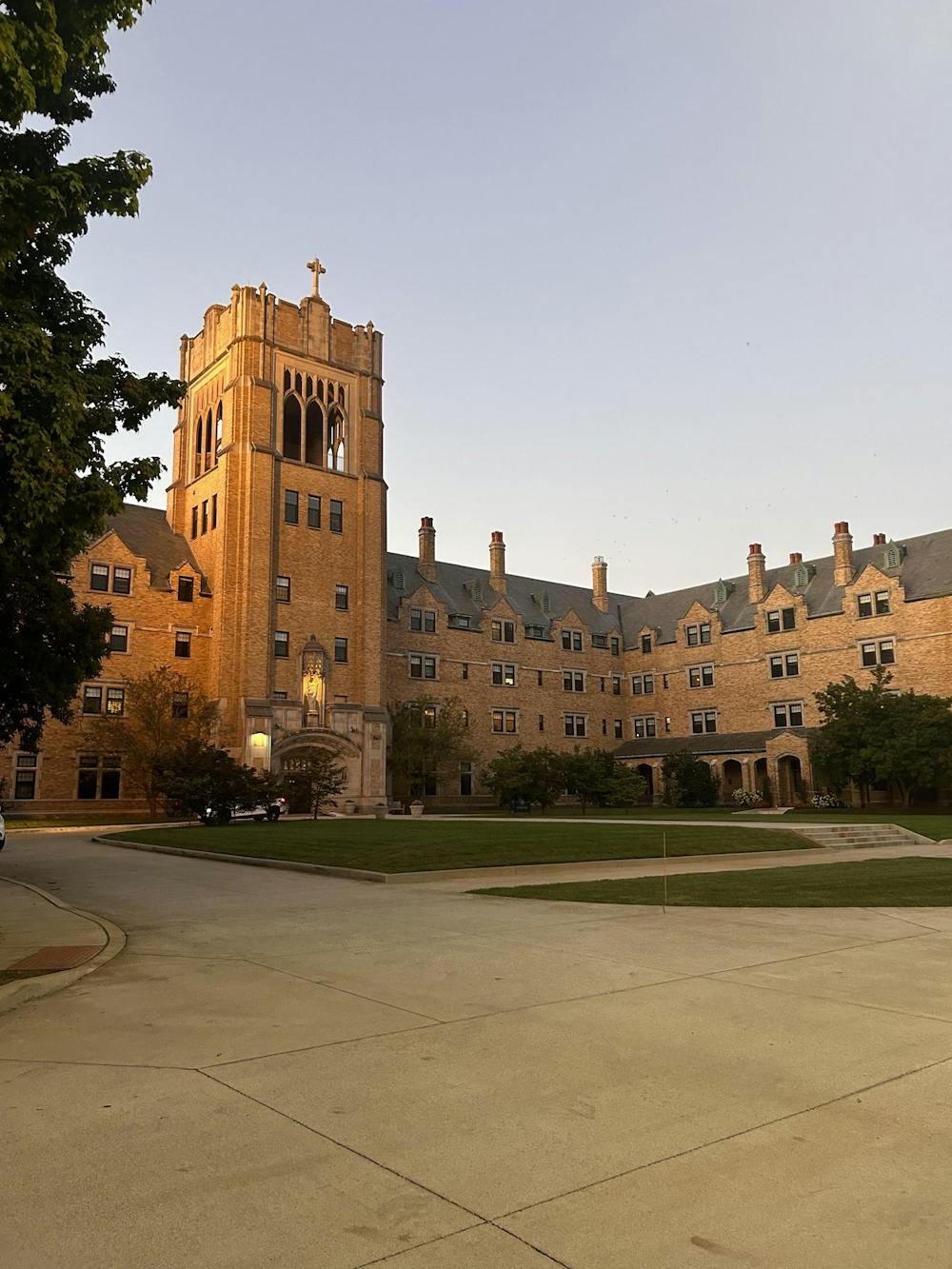
Saint Mary’s College's campus is home to a variety of wildlife, from squirrels to groundhogs to raccoons. It’s not uncommon for students to see animals in the grass or hiding between buildings. Sometimes, though, the animals wander out of their homes and into students’ homes.
Bats live all across campus and can sometimes be seen flying through the night skies at Saint Mary’s. According to the U.S. Fish and Wildlife Service, they play an essential role in pest control, pollination and the spreading of seeds across wide areas.
While they are an important part of the campus ecosystem, encountering one of these unexpected visitors in a residence hall can be startling. Campus Safety responds to reports of bat sightings by carefully and humanely removing them from buildings to ensure the safety of students.
An all-campus email from the director of the Campus Safety department, Phil Bambenek, described the catch and release method that the department follows when responding to bats in residence halls. This is so to not upset the bats’ role in keeping the number of insects like mosquitos to a minimum.
Charlie Simpson, executive director of marketing and communications, released a statement on behalf of Campus Safety and ResLife.
“Bats play an important role in the ecosystem,” the statement read. “Encounters in campus buildings are infrequent, but Saint Mary’s has a protocol consistent with Saint Joseph County Health Department recommendations to promote prevention and guide the college's response. Buildings are inspected regularly for signs of bats, and devices are used to safely repel them without causing harm. When bats are captured, they are released in accordance with Department of Natural Resources guidelines.”
The director of residence life and community standards, Juls White, sent an email out to residents of Le Mans and Holy Cross Halls — the buildings that are primarily affected — about mitigation strategies that are being explored, including the installation of ultrasonic devices in the attics that will be monitored.
Additionally, White noted students should close the windows above their doors at night to prevent bats from entering each room. Students should not approach any animals they may see in buildings.
Sophomore Taylor Fox said she hoped students educated themselves on what to do if they encounter a bat. “Just [be] mindful of the resources we have, and what to do in case something goes wrong,” she said. Fox also said she hopes students understand the steps they can take to prevent the issue from getting worse.
Bambenek emphasized the importance of students not approaching any animals they might encounter. “They are wild animals and may react in unexpected ways that could harm you,” he wrote.
Bats, along with other animals, Bambenek explained, can carry various diseases that can be harmful as well. “[As] a precaution, we recommend that residents who have come into contact with a bat, especially if they were asleep prior to discovering it, consider having [a] medical evaluation to rule out problems.”
Sophomore Gracie Kline agreed that student safety is a priority when students encounter bats “[Don't] mess with it … protect yourself,” she said. “[You] never know what a bat can have.”
Bambenek reminds students to report sightings of bats and other critters in buildings promptly. If students encounter a bat in a residence hall, they can contact Campus Safety at 574-284-5000 or through the SMC Safe app.