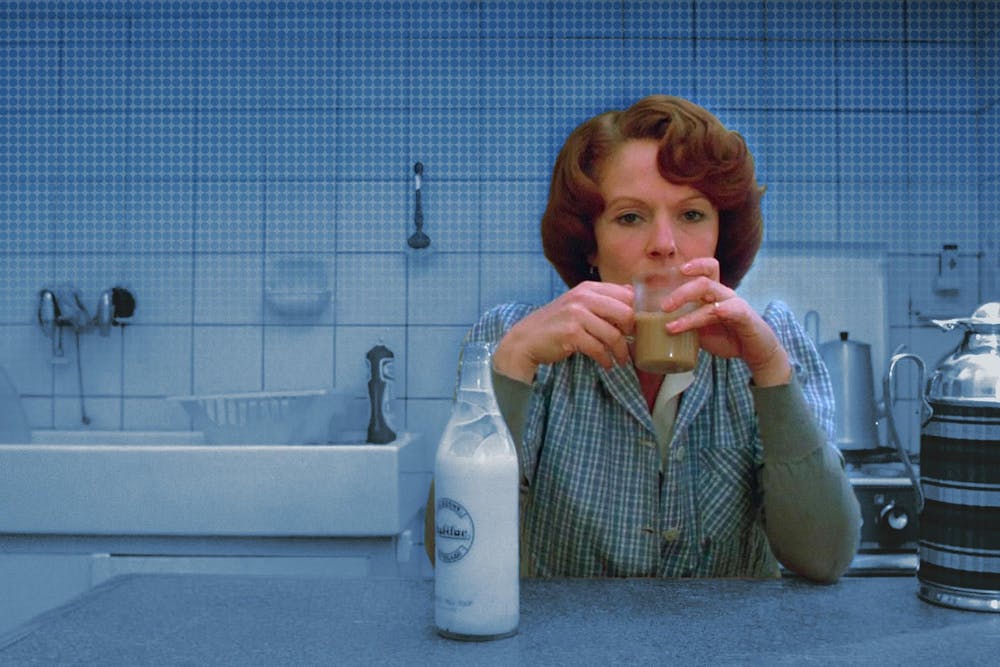
“Jeanne Dielman, 23 quai du Commerce, 1080 Bruxelles” is a film whose title is nearly as long as the work itself. As I was sitting down in the Browning Cinema for a casual viewing of the film, I was made aware that the film’s runtime sat at a staggering 3 hours and 19 minutes. Almost dropping my Diet Coke out of shock, I took a second to evaluate my situation. This film ranked number one on “Sight and Sound”’s Best Films of All Time list and has been extensively praised. In the end, I came to the conclusion that if a film so long were to receive such high acclaim, it must be worth it.
Though I was not expecting an action thriller, I did not realize that virtually every second of the runtime was dedicated to the titular character, Jeanne Dielman, completing house chores and tasks around town. This film ensures that you feel every second of the 199 minutes it plays; you even watch characters eat entire meals in silence without any dialogue or cuts. Why would anyone want to experience this, you may ask? I thought the same thing myself until the very end, when I was able to piece it all together. The mundaneness of our main character’s life is something that we are supposed to suffer through alongside her. By highlighting the negligible living conditions of housewives in the 1970s, this film seeks to provide a voice to the women who did not receive enough appreciation for their work and dedication.
The main focus of this film centers on the idea of routines and balance. Because Jeanne is a woman who spends nearly the entirety of her day at home, she maintains a picture-perfect routine of polishing her son’s shoes before he goes to school, preparing meals and watching the neighbor’s baby. But who is helping take care of Jeanne? Who is there to appreciate the meticulous care she puts into her home? The answer to this question is nobody. As Jeanne becomes more aware of her loneliness and her routine breaks down, we feel sorrow for her situation as we understand how vital this routine is to her life. Through understanding the psychological repercussions of this thanklessness and isolation, director Chantal Akerman creates a haunting piece of media that is not easily digestible.
Though I was immensely bored throughout the entire film and found my mind wandering at times, I realized that this was the point. This film is not meant to be something easily glossed through. As we students go about our daily lives filled with classes, studying, meetings and social events, we cannot help but compare our situation to Jeanne’s and feel a little better about ourselves. My takeaway from this piece is that there is always more life to live, and it falls upon the individual to accept or ignore this. I do not know if I will watch this film again, but I certainly learned a lot from it. Today, I ask you to challenge yourself and watch this movie so that you may reflect on how you approach life. You might hate it, but you won’t regret it.