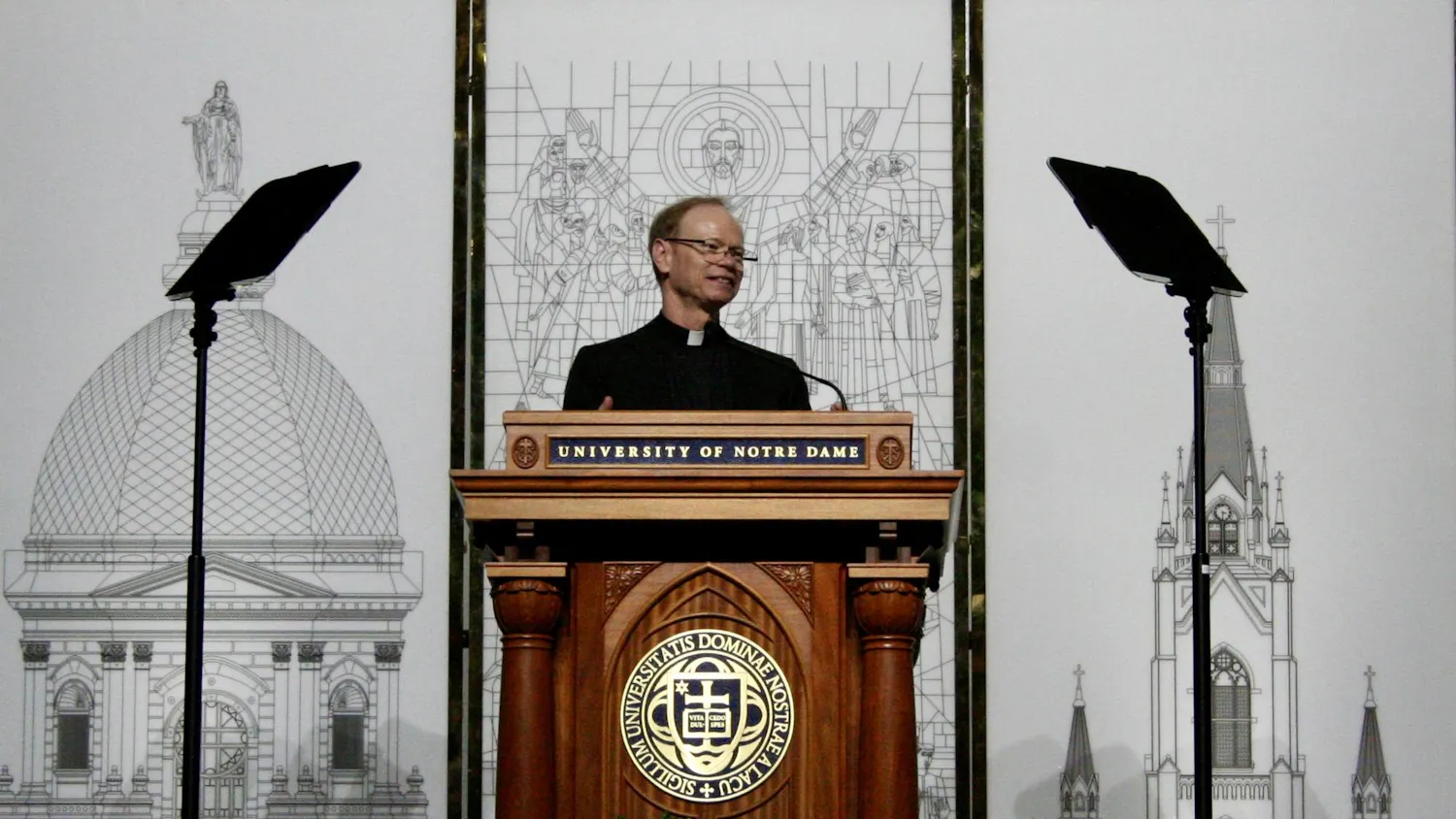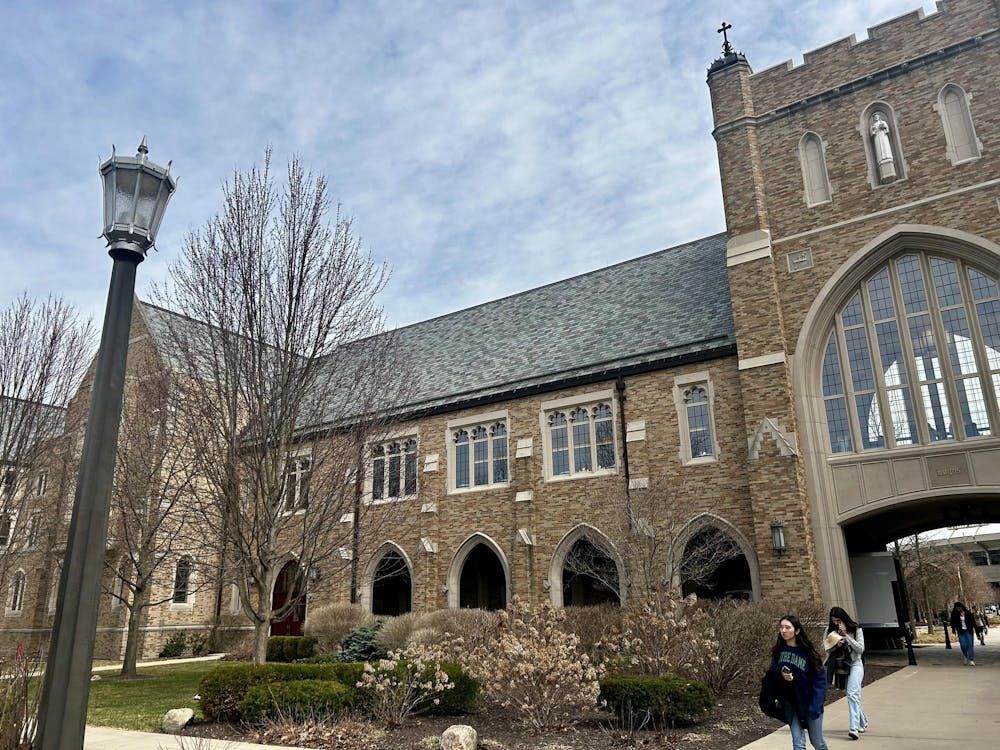
In late April, Notre Dame Law School’s Lindsey and Matt Moroun Religious Liberty Clinic represented St. Isidore of Seville Catholic Virtual School before the United States Supreme Court.
This highly publicized case centered around St. Isidore, a state-funded Catholic virtual charter school in Oklahoma. The Oklahoma Charter Board denied the school’s application, arguing that a Catholic school using state funding violated the Establishment Clause of the First Amendment.
The Religious Liberty Clinic, alongside defense firm Dechert LLP and Notre Dame alumnus Michael McGinley, represented the school in its legal fight against the charter board.
After losing at the Oklahoma Supreme Court, the clinic filed a certiorari petition asking the United States Supreme Court to hear the case. The court accepted the case in March and oral arguments began on April 30.
The central issue of the case rested on whether or not charter schools function more like public or private schools. The clinic argued that charter schools are similar to private religious schools that receive publicly funded vouchers, which has been enabled by the Supreme Court’s ruling in “Carson v. Makin.”
The Oklahoma Charter Board disputed this logic, contesting that a charter school received state funding and was therefore considered a public school. The state’s brief reads, “The Oklahoma Constitution and the Establishment Clause … both prohibit the State from using public money for the establishment of a religious institution ... Under both state and federal law, the State is not authorized to establish or fund St. Isidore.”
Following oral arguments, the Supreme Court split evenly on the issue. “When that happens, the lower court's decision is affirmed by default, with no opinion or legal rule announced by the Supreme Court,” clinic director John Meiser wrote in a statement to The Observer.
“It has essentially the same legal effect as if the Court had never chosen to review the case. In our case, that means the Oklahoma Supreme Court's decision invalidating St. Isidore's charter-school contract remains in place — and there are no other courts to which that decision can be appealed,” Meiser wrote.
Justice Amy Coney Barrett recused herself from the case, which is why a split decision was possible. Although she gave no official explanation, some speculate that the recusal was because of her close relationship with Notre Dame Law School Professor Nicole Garnett, who is the godmother of one of Barrett’s children.
“An evenly divided court is rare because in most cases the Court will sit with all nine justices — meaning one side will command a majority of at least 5-4,” Meiser wrote. “In those cases, the Court will nearly always issue a decision that not only decides the particular result for the parties in the case, but which also sets legal precedent that both guides and binds all other courts across the country.”
Because the Supreme Court upheld the earlier court’s ruling, St. Isidore will not be able to open as a charter school.
“We are all disappointed, of course, that St. Isidore was not able to open after years of hard work from Oklahoma's two dioceses to bring new educational opportunities to families who simply don't have them. But I deeply admire their resilience and commitment to this mission — and I am so happy to see them find another way to build a virtual schooling option for kids who need it,” Meiser wrote.
Although it cannot establish a religious charter school, the Archdiocese of Oklahoma City is forming a virtual Catholic school with a combination of private funding and the state’s new private school choice tax credit program.
“Just last week, the dioceses announced a new plan to open a statewide virtual school — St. Carlo Acutis Academy — outside of the charter school program,” Meiser wrote.
After the Supreme Court’s decision, the clinic has resumed a variety of other projects, including representing individuals seeking asylum from religious persecution and assisting a variety of religious non-profit groups.
“We've just started our new year with 28 law students working on a wide variety of projects … In any given year, our students will work on dozens of projects both in courts and outside of them. I think that the diversity of legal experiences that we are able to offer our students is one of the most valuable aspects of the Clinic and something we take great care to build,” Meiser wrote.
Law students are an integral part of the clinic’s success, and the clinic’s high profile cases give them opportunity to develop hands-on legal skills. “[Working with the clinic] has been very enriching and certainly the most practical, hands-on legal training I have received at the Law School,” 2L Cameron Grinnell wrote in a statement to The Observer.
3L student Isabella Fazio echoed Grinnell’s sentiment, writing that her “experience with the Religious Liberty Clinic has been deeply rewarding. I'm grateful that my research will help advance the protection of freedom of religion and conscience worldwide.”