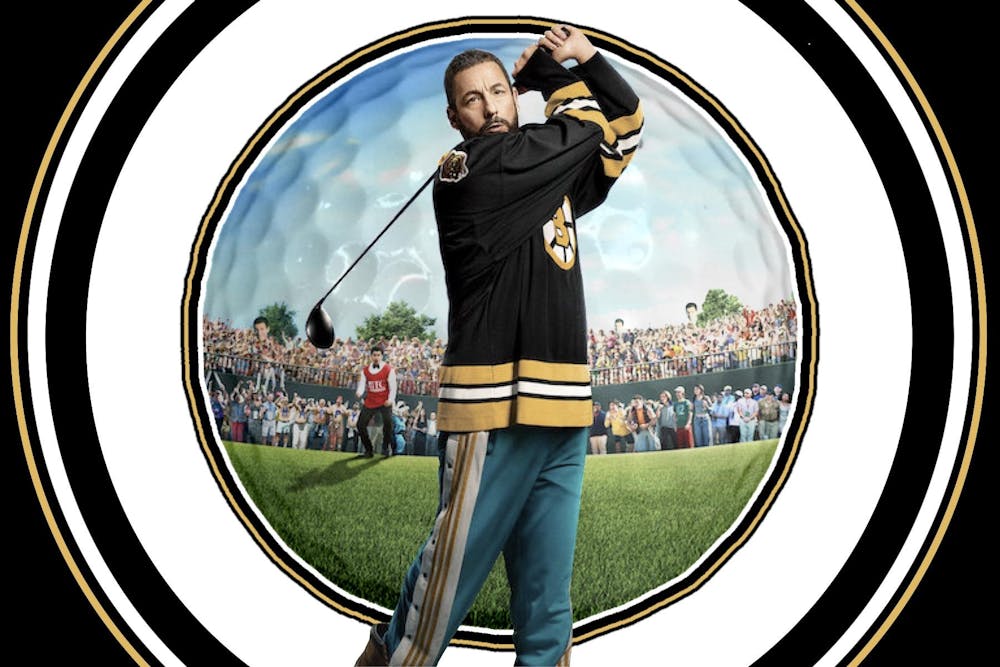
“Happy Gilmore” is a cultural classic, featuring a traditional ‘90s movie style, Adam Sandler and an underdog story. The movie put smiles on faces worldwide and is one of Netflix’s most viewed films (number six in Netflix’s global top ten movies). Thus, watchers worldwide were excited when the sequel “Happy Gilmore 2” was announced. However, a sequel made 30 years later concerned me, as it ran a high risk of not properly honoring the original film; luckily, I was proven wrong.
In the midst of Midwestern weather and midterms, I was happy to unwind with the comedy. Curling up under a blanket with comedies like these has always been an excellent way for me to unwind at home and here at Notre Dame. Although I usually find sequels to be obvious cash grabs that are monotonous and unnecessary, the movie adds to the original by nicely blending scenes together with new and old characters. Particularly, the return of Shooter McGavin, along with the introduction of Chubbs’ son, provides a sentimental note for viewers who’ve seen the original movie. Shooter’s transformation and new relationship with Happy made me care about him in a way I never did in the original by becoming a real ally. Chubbs’s son mimicked his father’s supportive role from the first film and gave Happy the supportive shoulder he ultimately needed. This added depth also made the film welcoming to newcomers, since you didn’t need to know the characters’ pasts to follow their journeys and enjoy the story: flashback scenes and tasteful exposition properly contextualized these relationships.
Compared to the original, the sequel is much more grounded in family values. Happy has shifted in maturity from being like a child to growing into a father who is determined to aid and support his family. The film was successful at illustrating the characters’ current struggles by balancing sadder moments with happier ones: not only did you get a good laugh, but you were actually able to relate to and care about the characters. The humor of Happy fighting with golf clubs and classic comedic one-liners adds a lightheartedness, while more somber moments give it an emotional depth. One scene that stood out to me was when Happy faced the possibility of losing his chance to compete. Instead of merely treating it as a traditional “bump in the road,” the film slowed down to highlight his frustration and his family’s encouragement. Moments like these, along with humorous and heartfelt dialogue, make the movie feel more substantial than a typical comedy sequel. These moments drive viewers to really root for the characters as if their victories mattered and were grounded in familiar struggles — a hardworking father, supportive family members and people determined to reach goals that most of us can empathize with.
This relatability factor continued by bringing in outside celebrities for smaller roles, which Sandler traditionally does in his films. As a Bad Bunny fan myself (yay, halftime show!), a smile grew on my face when I saw him appear on my screen. Cameos like this add a familiarity to the film that makes me even more emotionally connected to it. Overall, I would definitely recommend “Happy Gilmore 2” to anybody looking for a quick relief or fun laugh with friends. The sequel is able to speak to college students like me by being an enjoyable movie to relax with alone or with friends, while also appealing to the nostalgia of adults who grew up on the original film. The movie’s familiar faces, witty humor and wholehearted themes and dialogue make the film a great escape for anyone. Happy watching!