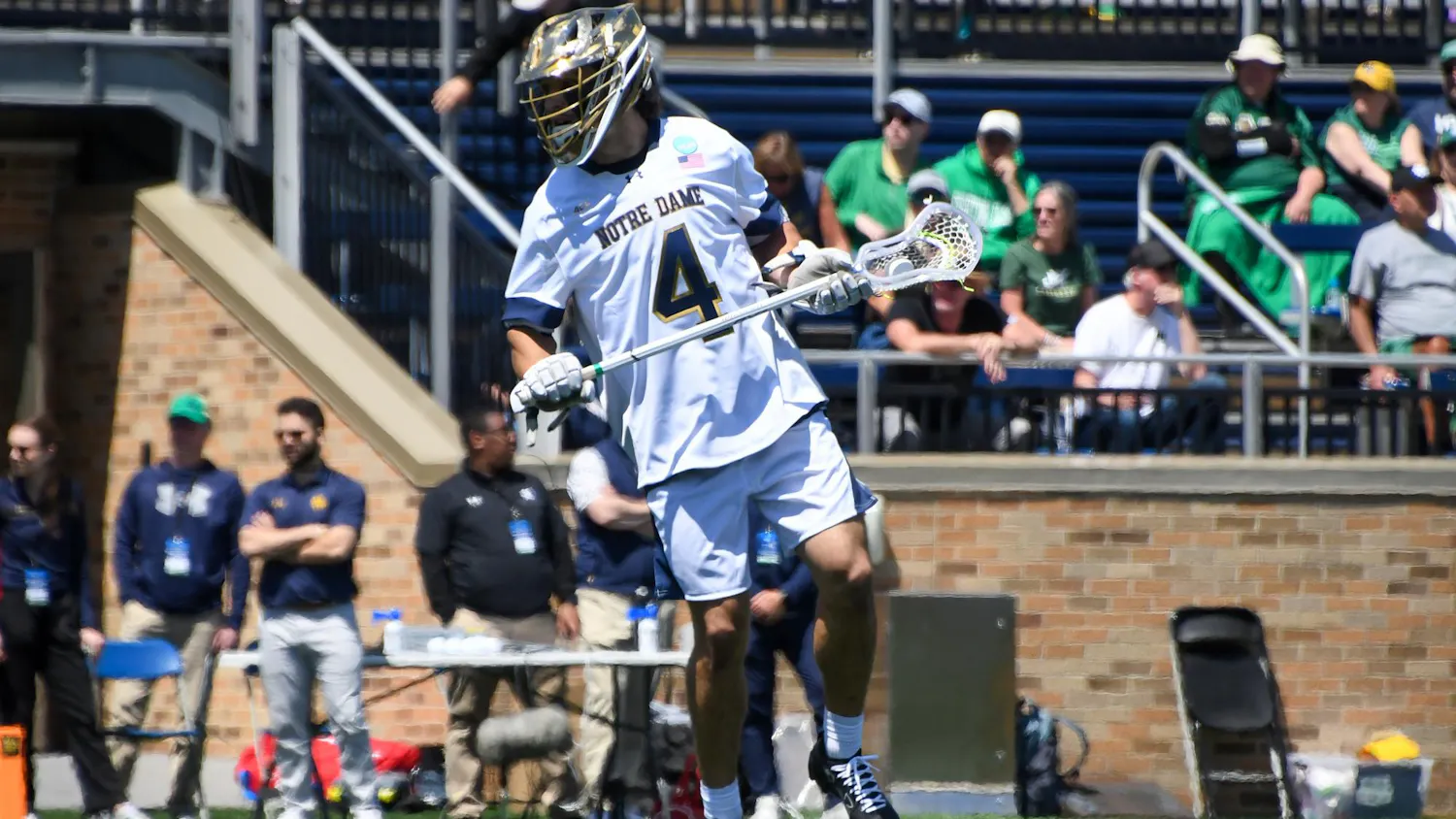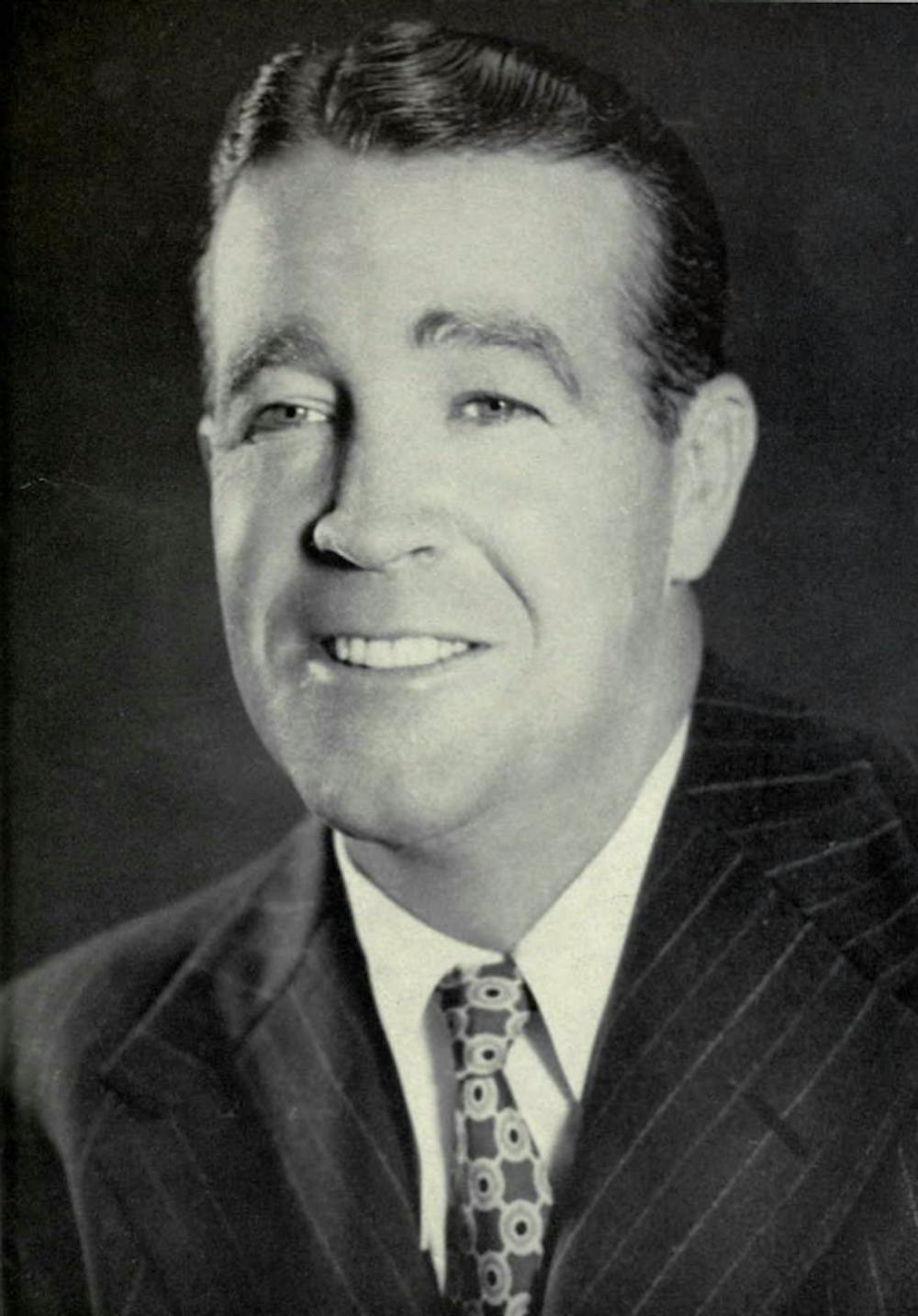
When Boston College and Notre Dame take the field Saturday afternoon in Chestnut Hill, they will continue the Holy War rivalry as the only two Catholic institutions still competing at the highest level of intercollegiate football. But the Eagles and Irish will also be battling for the Frank Leahy Memorial Bowl, a cut-crystal trophy honoring the only man to ever lead both historic programs.
Born in 1908, Leahy was raised in O’Neill, Nebraska, a small town on the South Dakota border that had a population hovering around 1,000 during the early 20th-century. He became a star football player at Winner High School, a fitting name for the accolades and accomplishments his career would bring, before taking his talents to South Bend to play for the legendary Knute Rockne.
A 1931 graduate of Notre Dame, Leahy was a standout tackle on both the 1929 and 1930 national championship Irish teams. Leahy departed South Bend shortly following Rockne’s tragic plane crash death, and the Irish struggled to replicate their success of the ‘20s in the pair’s absence.
During Notre Dame football’s ‘30s-era depression, Leahy established himself as one of the nation’s premier line coaches. After a year each at Georgetown and Michigan State, Leahy spent most of the decade at powerhouse Fordham, where he helped harden the Rams’ famed Seven Blocks of Granite offensive line.
Leahy then shipped up to Boston for the 1939 season, taking the helm of a mediocre Boston College program in search of football excellence similar to their Catholic counterparts in northern Indiana. Leahy quickly flipped the fortunes of BC football, finishing 9-2 in his first season, leading the Eagles to their first appearance in the final AP Poll. They shut out rivals Boston University and Holy Cross before narrowly falling to Clemson in the Cotton Bowl.
The 1940 Eagles, known around Boston as the “Team of Destiny,” scored the most points of any team in America en route to an undefeated national championship season. Their Nov. 16 rivalry with fellow Jesuit school and top-10 foe Georgetown was declared one of the greatest games ever by sportswriter Grantland Rice, the same man who bestowed the Four Horsemen nickname upon the 1924 Irish. The Hoyas hadn’t lost in three seasons, yet Leahy’s Eagles escaped Fenway Park with a 19-18 victory. They would garner six shutouts to run the table before clinching the perfect season with a win over Tennessee in the Sugar Bowl.
A contract dispute following a long-term extension at BC nearly prevented Leahy from returning to his alma mater in 1941, but he used the media to tell what the South Bend Tribune would call “the greatest lie of his life” to get out of his agreement. Once home, he led the Irish to an 8-0-1 record in his inaugural campaign using Rockne’s scheme before installing his preferred “T formation” the following season. A 9-1 1943 season that included five top-10 victories gave the Irish their first national title since 1930, but Leahy soon departed his post to serve as a lieutenant in the Second World War.
After returning to South Bend in 1946, Leahy’s Irish rattled off four consecutive unbeaten seasons, including three national championship crowns in 1946, 1947 and 1949. He had set a goal of ten straight seasons without a loss, but that 1949 crown would mark the beginning of the end for Leahy’s success and health, at Notre Dame.
Tired of Irish dominance, many of Notre Dame’s usual rivals threatened to drop their annual meetings unless the Irish diminished their scholarship count from 33 to 18. Leahy’s team struggled mightily in 1950 while adjusting to the changes, but they quickly rebounded to finish 7-2-1 in both 1951 and 1952.
The 1953 Irish once again finished unbeaten, but the season was marred by controversy in a 14-14 tie at Iowa and a health scare that left Leahy unconscious during the halftime of a win over Georgia Tech due to nervous tension and pancreatitis. Despite their unblemished record, the Irish didn’t win the national championship, and Leahy resigned just two months after the conclusion of the season.
Although he returned following the fainting against Georgia Tech, Leahy’s health had long been a concern to those closest to him. A tragic figure, he felt the only way to honor his former boss Rockne’s legacy was to achieve perfection every single season. He prescribed an intense workload to his players, but he embodied that desired determination and grit more than anyone in the history of Notre Dame’s program. The stress of coaching Notre Dame became a burden to his health and well-being, despite the unrivaled success that the program enjoyed under his leadership.
In many ways, Frank Leahy became the first representative of the stressful and successful duality of coaching major college football during his time at both Boston College and Notre Dame. Like many fans, donors, administrators and coaches today, Leahy drove himself towards perfection every day and every season during his 13 years as a head coach. He won 107 of 129 games, captured four national titles, had six perfect seasons and even mentored Notre Dame’s first four Heisman Trophy winners. However, he alienated many in Boston with the way he left BC, and burned himself out at Notre Dame due to the intensity with which he coached and lived.
Leahy was a relentless manager who preached a tough brand of football both in practice and games. His players would train until they bled, were consistently among the best conditioned teams in the country and even refused to settle for three points at the end of drives. Leahy demanded nothing short of flawless effort en route to team glory during his 11 seasons leading Notre Dame. Although a Leahy-esque undefeated season is out of the picture for this year’s Irish squad, if Notre Dame can emulate the legend’s toughness, they can capture his trophy on Saturday and take one more step towards returning to the gold standard of Notre Dame football, set long ago by Frank Leahy.