
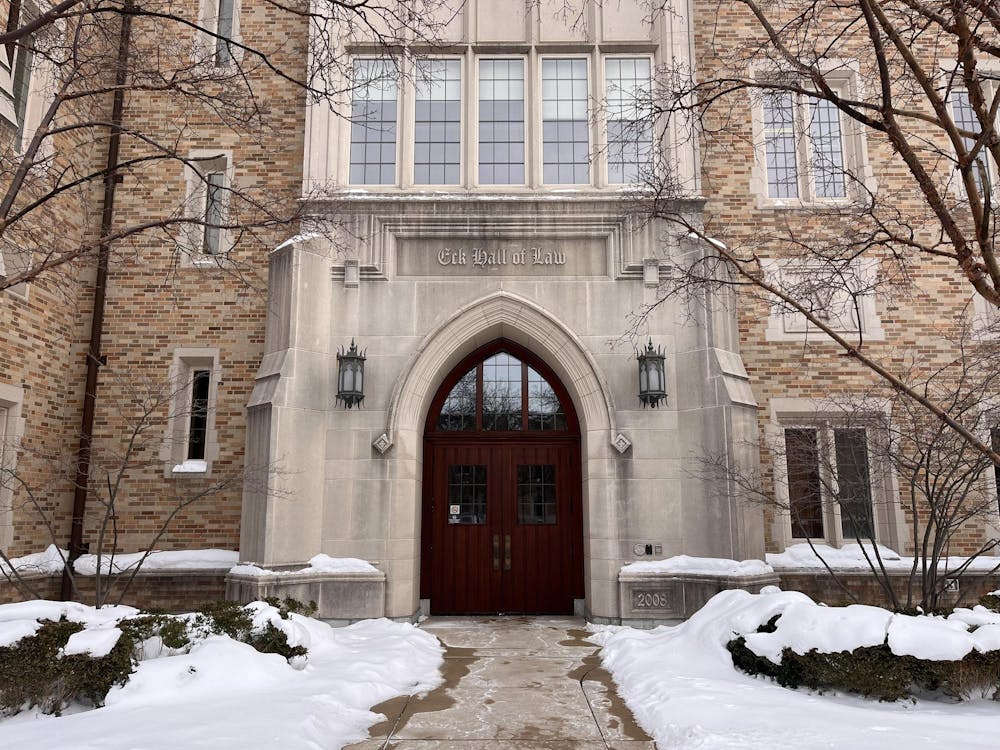
This January, Notre Dame Law School began accepting cases for its new Immigration Clinic, now its tenth clinic in operation. Designed and led by director Ashley Sanchez, the clinic offers pro bono legal assistance to members of the South Bend community while providing an experiential learning opportunity for graduate students.
Rather than waiting until they pass the bar, law students are able to take on cases and interact with clients before finishing their degree through University-run legal clinics that offer faculty guidance. “It's the opportunity for [law students] to dip their feet in the water of being a real lawyer and [without] having the stakes where everything falls on them,” Sanchez said.
These graduate students will be taking on a wide range of immigration-related cases within the South Bend community. “We're going to focus on family and humanitarian based immigration. So that means we’ll help people who want to get their green cards through their U.S. citizen family members and help people apply for citizenship, help people apply for asylum or people who are in removal proceedings, things like that,” Sanchez said.
This semester, the clinic consists of six graduate students, mostly in their second and third years. Working in pairs based on the type of language they’re familiar with, students are assigned clients and will begin to meet with them in the next few weeks.
“For my partner and I, we were assigned five clients, and they have a range of issues such as asylum DACA or green card applications. So we will meet directly with the clients, get their information, and then help them through the process of applying for the specific immigration relief that they've requested. We meet with our professor weekly. She's supervising everything that we do, but essentially we serve as lawyers for the clients that we work with,” Ana Obergfell, a third year law student, said.
In class, students focus on gaining practical skills and preparing for client interactions. “Today, we talked about interviewing clients and how to conduct interviews, and the questions you should ask. And then later this week, we're going to practice interviews with our classmates,” Obergfell said.
For Obergfell, these interpersonal skills are central to becoming an effective lawyer. “I think it can be difficult to have those kinds of conversations. So creating a safe space where clients can tell me their stories and then doing my very best to advocate for them and present their stories to the system is [my goal],” she said.
Aashiyana Adhikari, a first generation immigrant and a second year law student, is looking for something similar — a personal connection that can’t be found in textbooks. “I have my fair bit of law experience, but I've never talked to a client … I guess that is something that I'm looking forward to very much, because I really genuinely want to help people. And for me, Ashley and I are on the same level on this, I want to touch people's lives individually … I guess that is the feeling that I'm carrying with me,” Adhikari said.
Undergraduate interns, such as senior Rachael Kutsenda, can also gain real world legal skills with the clinic. Kutsenda has been working with the clinic since November, helping Sanchez review intakes and assess which cases are a good fit for the clinic’s capacity before its official start. For Rachael, her time with the clinic has grounded her studies in reality.
“I think right now working in this particular clinic feels especially meaningful given everything that’s going on in our country and surrounding immigration … Policies and rhetoric around immigration can feel overwhelming. But at the clinic, the work feels very tangible. You know, you’re brought face to face with people who are being directly impacted by these policies and need help now. So I feel like that's been just the most meaningful aspect for me is being able to put a face to a name and really see the impact that these policies are having,” Kutsenda said.
Sanchez further highlighted the relevance of the clinic’s opening, particularly as a source of guidance for the local community. “Immigration has just been a very polarizing issue for over a decade at this point, but things have really come to a head. And the situation is very scary for the public, and more and more people are looking for an attorney, someone to just guide them through the process and to answer their questions. And it's reached a point where people are really desperate and scared. So I think that's really just reflective of how much need is there, and [how we] can help fill some of the gap,” Sanchez said.


