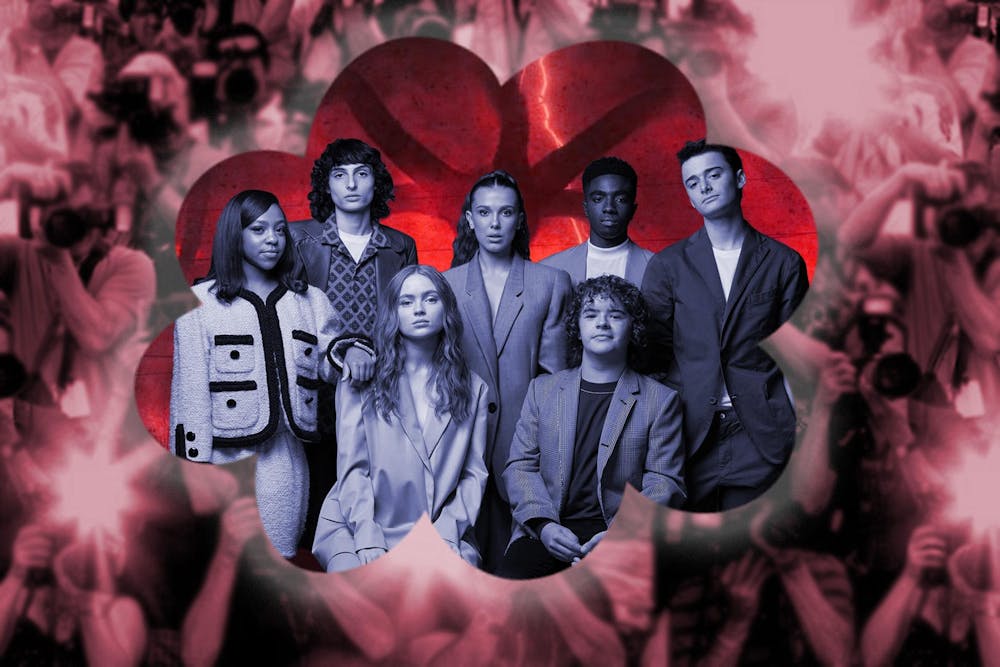
As a “Stranger Things” fan, I — like many others — was heavily disappointed by the series finale. As soon as episode eight, “Chapter Eight: The Upside Down” aired, my social media feed filled with clips comparing the early episodes to the final season. Ironically, the low-budget scenes from the early episodes were significantly better than the more expensive ones in the final season. Fans (as well as I), devastated by such an anticlimactic finale, clung to theories suggesting a surprise final episode would drop on a mysterious date, unwilling to accept the truth that the show had ended the (horrible) way it did.
Ultimately, progress and money failed to make the show “better.” The underlying issue, I believe, is that “Stranger Things” allowed fame — as it often does — to corrupt its identity and forget its original character.
Earlier seasons depicted a show that was confident enough to risk being disliked by popular culture. They prioritized atmosphere over spectacle — bikes on empty roads, nostalgia and friendships that felt real (without needing to prove anything). While the working budget was significantly lower in those first seasons, suspense came from silence rather than scale, and fear crept silently, not forcefully — a power these seasons leveraged well.
Then the applause got louder. And as the show’s success grew, pleasing the audience began to outweigh staying true to its original vision. Rather than storytelling, the show became all about managing others’ expectations.
This is where it all went wrong. The show’s core eroded gradually under the weight of expectation.
The outward pressure to deliver more twists, more monsters and more of everything turned what once felt intimate, inflated. Storylines began stretching past their “natural” limits, and plotlines multiplied without any clear direction, leaving the show unsure not only of how to end its conflicts, but of what those resolutions should even be.
I think “Stranger Things” offers a cautionary tale about what happens when creators — and individuals — rely too much on the public when deciding their personal identity. In trying to satisfy fans and algorithms all at once, what we see is a show that lost its way, and with it, the clarity that made it compelling in the first place — the desire to please, in this case, more detrimental than beneficial. Instead of trusting its vision, the series outsourced it, and instead of trusting authenticity, it opted for excess.
The irony in this shift is that the show’s original appeal rested on resistance to trends, and its fall rests on its reliance on them.
As with all things in life, sometimes the best decision is to stop outsourcing your next move and to act independently of what others expect. The key takeaway: When outside approval becomes the primary metric of success, authenticity is the first to die. In this way, the tragedy of “Stranger Things” — I believe — is not that it evolved, but that it forgot why it worked in the first place. The show did not need to be bigger or louder; it needed to be truer to itself.