It’s hard to believe that only two weeks ago, every turn, both in public and online, seemed to have some correlation to the “Stranger Things” finale. These reactions, the majority of which included disappointed outrage over the series’ end, had fans sleuthing to find alternate endings to the show. Turns out, there was in fact no alternate ending, and the writers further solidified their flimsy writing in press interviews and a recent documentary. This downfall of “Stranger Things” praise was a shocking turn for its 10-year run, but the entire internet banding together en masse to spread conspiracies was an entertaining demonstration of the show’s impact.
When Volume One of Netflix’s fifth season premiered on Nov. 26, fans were excited to see new and returning characters and plot points on the screen. By the time Volume Two premiered on Christmas, many had become apprehensive about how a two-hour finale on Dec. 31 would tie up all the loose ends. Well, it didn’t. In fact, the finale had such a negative reaction that multiple fans believed there was going to be a ninth episode to make up for the unanswered questions.
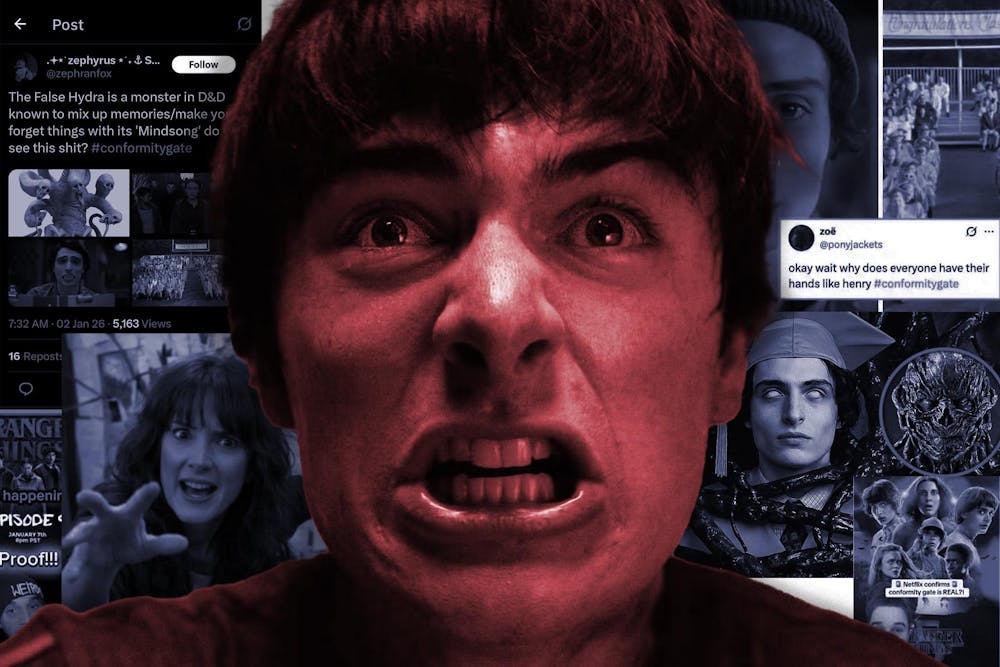
This belief, known as “Conformity Gate,” was so widely theorized that Netflix crashed on Jan. 7 from viewers anticipating another episode’s release. This new episode idea was supposed to prove that the eighth episode was truly not the finale at all. Instead, Conformity Gate claimed the finale’s 40-minute epilogue was actually an illusion created by the season’s villain, Vecna, and the ninth episode would reveal the series’ actual ending. Evidence for this claim was hints that would suggest characteristics of the epilogue are created from Vecna’s personal memory, including characters’ hair being parted the same way Vecna’s human form was, the Hellfire Club logo being different, the color changing on the WQSK radio station tower dial and the door handle from Mike Wheeler’s famous Dungeons & Dragons basement being switched around.
Fast forward to Jan. 7, and the episode did not occur. This leaves these conspiracy claims with only two explanations: poor writing and disappointment. The irregularities pointed out by fans seem to be a result of the show’s creators, the Duffer Brothers, making mistakes. This inconsistency doesn’t come as too much of a surprise, considering that a behind-the-scenes documentary revealed the season was not fully written when filming began. The much-discussed shock of the finale, supernatural protagonist Eleven’s death/disappearance, further proves their questionable writing. The Duffers confirmed that the ending was meant to be open-ended, where fans could decide if El truly died in the destruction of the Upside Down or if an illusion was made by her sister, causing her to escape from the government hunting her down. The writers believed that this ending would give power to the audience to decide, but instead, it just seems like a lazy crutch that opens the possibility for a later reboot if they want to profit again. The Duffers have also mentioned in interviews plot points that are canon but are never shown, such as the show’s main parents, Joyce and Hopper, realizing that Henry Creel, or Vecna, was their past classmate off-screen. The development and traits of many characters also seemed flawed and inaccurate, such as past besties El and Max not having a meaningful reunion after El practically brought her back to life. Overall, the Duffers just were not organized and thorough planners this season.
The Conformity Gate theories were also a coping mechanism for the clear disappointment many fans felt for the ending, along with the denial that the show was truly over. Whether this frustration was because of El’s fate, romantic ships not sailing, the plot armor given to every other main character except for El and the anticlimactic final battle with no Demogorgons in sight, the ending did not feel satisfying. No matter what the ending presented, there would always be people complaining, but the excess of fans being outraged to the point that a Change.org petition has almost 400,000 signatures demanding unreleased footage proves a lot.
I even found myself frustrated and crying while the credits rolled, mostly out of sadness for Mike and El’s lack of a reunion. However, I was also upset by the symbolism of youth that this show meant for me and many others. This denial and frustration with the ending, in a lot of ways, may be the result of people mourning their childhood. After all, this show began in 2016, and we know the currently trending wave of nostalgia for that year. People grew up with this show for a decade, and accepting it is truly over is accepting that a significant part of their childhood is over.
With all criticisms said, one evident thing about “Stranger Things” is the community it created. Whether this involved people writing fan fictions for their desired endings, Finn Wolfhard poking fun at Conformity Gate on his “Saturday Night Live” hosting debut with Caleb McLaughlin and Gaten Matarazzo or the many inescapable social media posts discussing the series, everyone was talking about “Stranger Things.” Conformity Gate or not, this show made a unique impact that can’t be easily replicated.