The United Nations Security Council has backed an initiative led by the U.S. to establish a Board of Peace to oversee peace-building efforts in Gaza, but the recently-ratified charter extends above and beyond what was originally agreed upon.
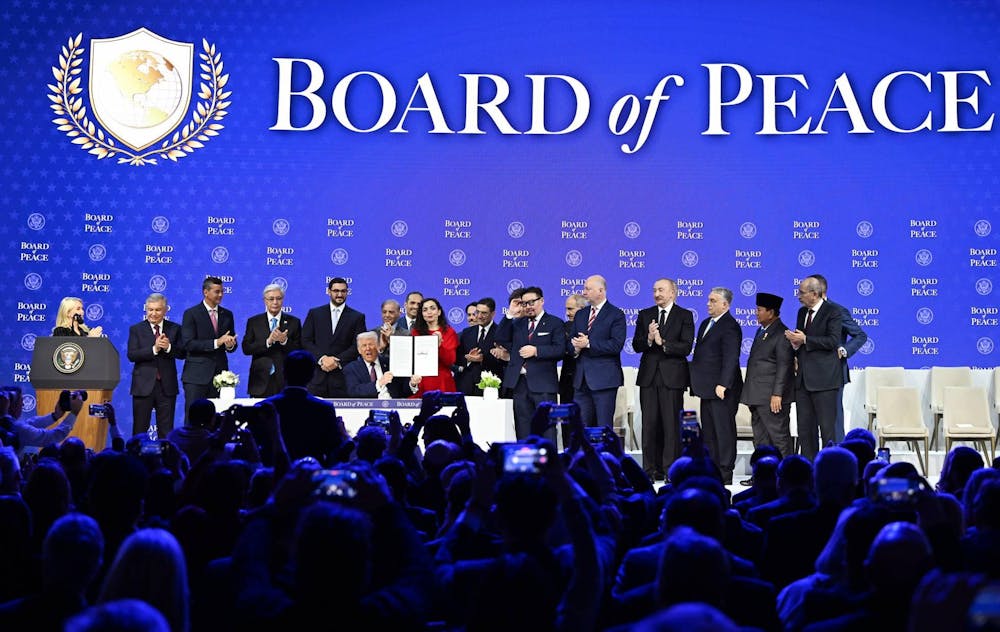
President Donald Trump ratified the charter to create the board on Jan. 22, signing it at the World Economic Forum’s annual meetings in Davos, Switzerland.
It is not uncommon for the Security Council to create sub-councils to oversee specific projects, with the crisis in Gaza the intended impetus behind the Board of Peace. Notably, the charter President Trump ratified does not specifically call out Gaza as its primary focus for peace-building.
The current charter outlines the role as “an international organization that seeks to promote stability, restore dependable and lawful governance, and secure enduring peace in areas affected or threatened by conflict.”
Professors found it difficult to speculate about what the organization was intended for, given the perceived divide between Trump and the Security Council on the body’s purpose.
“It has not done anything so far except create a lot of concerns for the international community,” professor Josefina Echavarría Álvarez said.
Laurie Nathan, professor of the practice of mediation in the Kroc Institute of Peace, laughed describing the benefits of joining the board.
“You get to hobnob with Donald J. Trump. Seriously, this is the kind of transactional politics Trump engages in,” she said.
George Lopez, a professor emeritus of peace studies who previously worked for the United Nations and more recently served as vice president of the United States Institute of Peace in Washington, D.C., said the Board of Peace is the next “great international organization that will replace the United Nations.”
Trump has invited multiple countries to the board, stipulating entrants pay a $1 billion permanent membership fee in return for special priorities. It is unclear what the money will be used for.
Caroline Hughes, chair in Peace Studies, expressed surprise at not seeing Ireland, Bangladesh or Fiji on the invitation list, yet the Cayman Islands was.
“Most of the European Union countries and most of the liberal democracies have declined and so he has what amounts to a ragtag bunch of authoritarians of various stripes that have joined the board,” Nathan said.
Lopez explained that historically, United Nations councils were able to enter crisis areas and dedicate resources to improve a situation, but such groups include “sufficient expertise about a particular crisis” and have “lots of political credibility, all with lots of versatility” — characteristics Lopez said she doubts the Board of Peace has.
Alex Funk, co-political director of Notre Dame College Democrats, expressed concern and disapproval of Trump’s proposed board. She cited how power would not be limited to peace negotiations between Israel and Hamas and that his power over the body could continue after his presidency ends.
“This ‘Board of Peace’ is peaceful in name only,” she wrote. “Trump even stated ‘Once this board is completely formed, we can do pretty much whatever we want to do.’ The ‘Board of Peace’ represents an attempt by Trump to further consolidate power and to create a new world order with just him in charge.”
Shri Thakur, co-president of College Republicans wrote, “The Notre Dame College Republicans strongly support the president’s peace initiatives in Gaza and encourage all nations, especially our NATO allies, to consider joining the Board of Peace to this end.”
Hughes expressed concern over how global order was trending. She noted a troubling financial pattern, emphasizing the board is a “pathologically flimsy ... ideological front.”
“Everything that Trump has said about the rebuilding of Gaza exactly sounds like that kind of approach that you go into the rubble, you buy up land that people are selling either because they are terrified or maybe they are dead or maybe that have lost everything and they just need money, and then you convert it into luxury developments. Those same people either leave or they will be employed as waiters, golf caddies and kind of low wage service industries,” Hughes said.
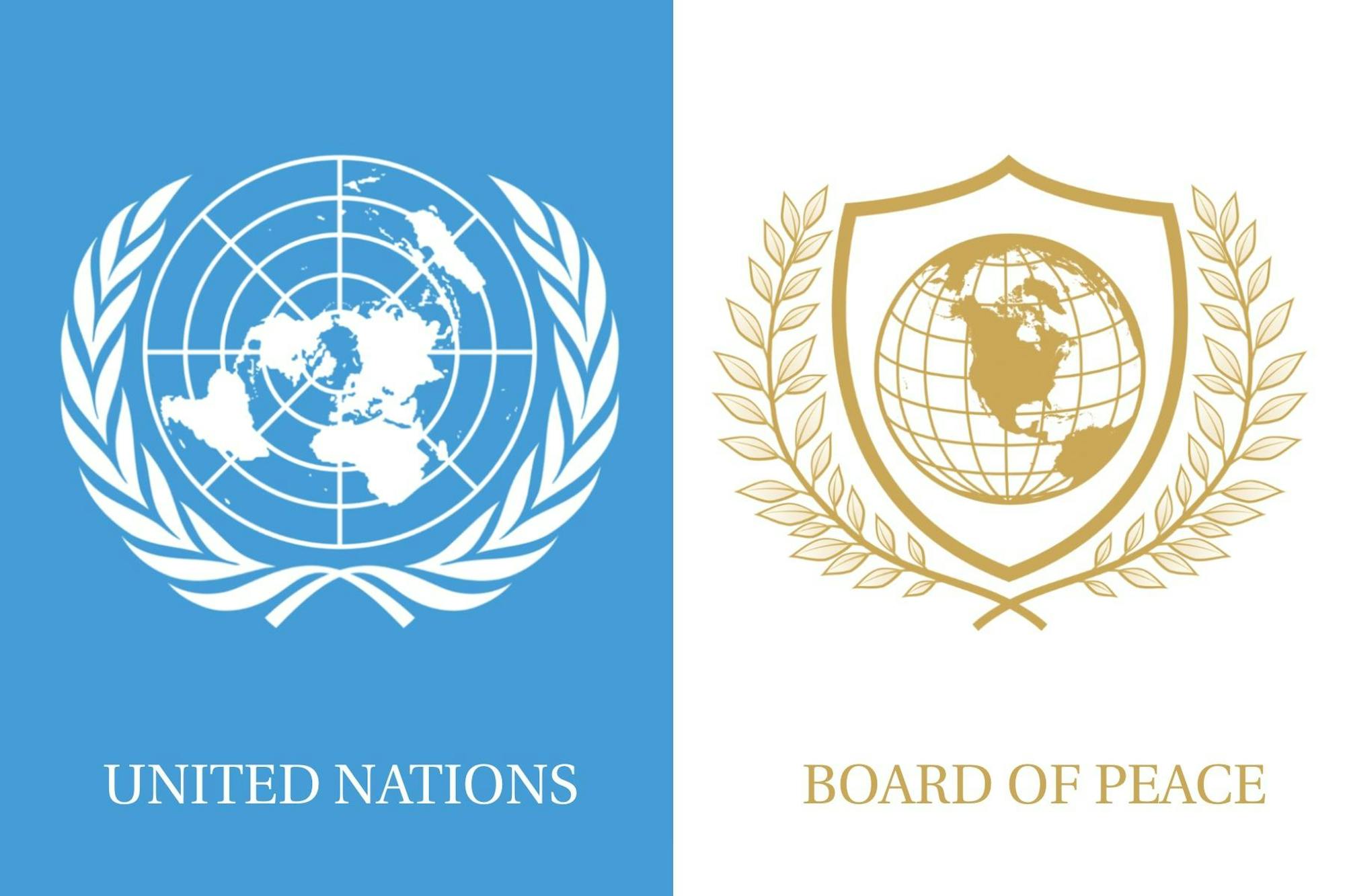
During the signing ceremony, the new logo for the Board of Peace was unveiled, with many noticing its similarities to the UN logo.
“It obviously has a visual resemblance to the logo of the United Nations, but with major differences that are quite striking,” said Echavarría Álvarez. She elaborated on the differences, citing the North American centric map and its gold color.