
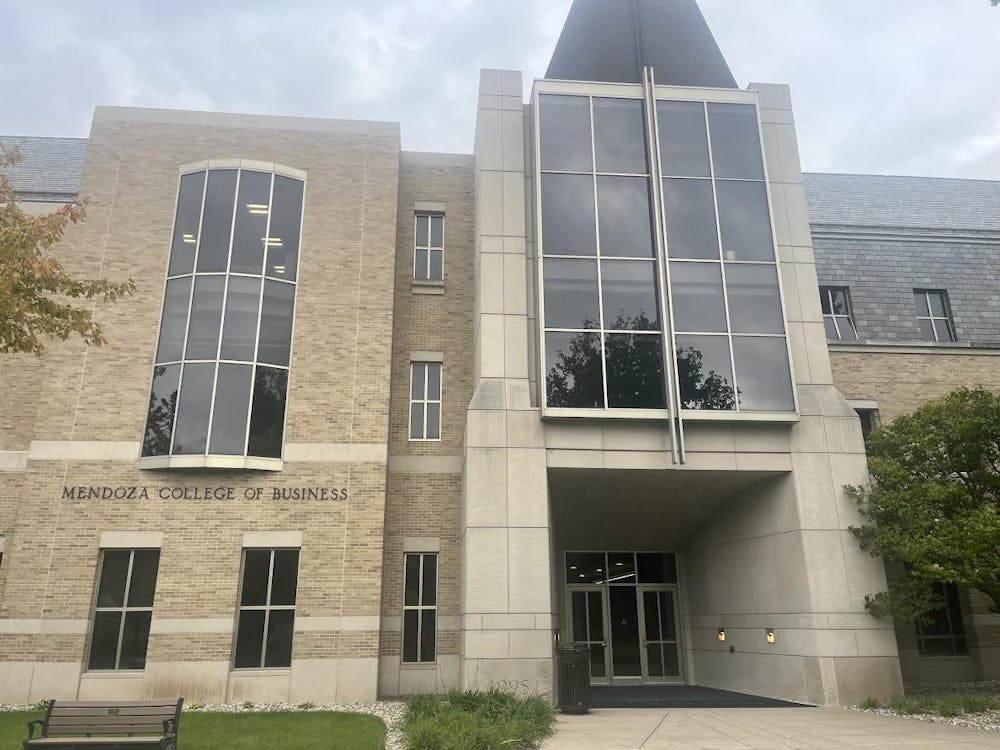
The Sheedy Family Program in Economy, Enterprise and Society is composed of a cohort of 25 to 30 students, led by director of the program Paul Blaschko, who are encouraged to foster deep and sustained dialogue through lasting relationships within the community.
“The Sheedy Family Program is a rigorous intellectual community that supports students studying business and liberal arts by encouraging them to connect these interests. The community aspect of this is crucial,” Blaschko wrote. “By studying what they love, and then integrating that into their aspirations for work, we want our students to develop the skills and confidence to find work that’s meaningful and significant.”
Calling members of the program “Sheedy’s,” students in the cohort take classes together while also participating in networking events and off-campus experiences.
“Sheedy’s” take three classes together. Business in Context, taught by Prof. Chris Hedlin, asks them to explore big questions like ‘What makes an economy just?’ and ‘When is business good?’ The second class, the one I teach, is focused on work, meaning and happiness. And the third is taught by two investors-turned-podcasters, Rick Buhrman and Paul Buser, who apply these questions through dialogue and experiential learning, like trips to investing conferences or short immersion experiences like internships,” Blaschko wrote.
Blaschko said shared experiences outside the classroom are central to building the program’s sense of community. Additionally, the cohort attends monthly dinners where students have the opportunity to meet and engage in dialogue with Notre Dame alumni in executive positions at corporations such as JP Morgan, Nike or Facebook. The program also includes travel opportunities designed to expose students to different professional environments and encourage reflection on career paths.
“We go on retreats and business treks together, to Chicago, New York City, Michigan and more. We find great value in setting aside time where we can focus together on questions, we might not otherwise have time to contemplate in the classroom or during a busy week,” Blaschko wrote.
Students in the program say these shared experiences help them connect academic interests with professional goals. Jerry Vielhauer, a junior studying political science with minors in constitutional studies, business economics and theology, said the program has been central to his academic and professional development.
“The Sheedy Family Program has been a formative part of my Notre Dame experience. From monthly dinners with alumni in unique careers to dialogue group discussions with classmates on meaningful questions, Sheedy has helped inform my perspectives through career-driven discernment. The program has helped me learn how to frame my story to employers while incorporating both my liberal arts and business backgrounds,” Vielhauer said.
The program is accepting applications until Feb. 13 for the 2026–2027 cohort. Blaschko said the application process focuses on curiosity, dialogue and long-term engagement rather than traditional measures of achievement.
“Notre Dame has an astounding number of programs and opportunities, and it’s important for our candidates not to get caught up in the ‘maximizing’ mindset. Our philosophy is that it’s better to commit to a limited number of high-impact opportunities and really invest your time and energy, rather than spreading yourself so thin that you can’t really get the thing you’re after,” Blaschko wrote.
Blaschko went onto explain the type of community they are trying to build.
“In Sheedy, we’re aiming to cultivate community, a ‘network’ of sorts that students can rely on in the long term ... We want students who can grow through dialogue and who really want to chew on important questions with their professors and peers. More than anything, we want students who are willing to show up, to do the work and to maintain a posture of openness, humility and concern for the common good of the university and those in our community,” he said.
For students interested in applying, Vielhauer offered some advice.
“My advice to applicants would be to be authentic in your responses and showcase how your unique academic path allows you to contribute to Sheedy,” Vielhauer said.
Paul Kaminski, a sophomore studying finance with a minor in European studies, said the program encourages students to reflect on the broader impact of business careers.
“It is a great program because it allows you to really dive into what a business career implies – what impact it really should have, not only on you, but on society as a whole. It dedicates a lot of time to building relationships and soft skills that actually help you to pick a career and prepare for work in that industry,” Kaminski said. “I mean, I’ve done my most meaningful learning in weekly discussion groups outside of class, and you make some great friends through it. And of course, you can’t forget the great monthly Sheedy dinners. You have to love getting a nice meal.”


