In the summer of 2013, Notre Dame’s preeminent tennis player of the ’90s, Ryan Sachire, took over the men’s head coaching job from Bobby Bayliss, marking a new chapter for a team with a long and respected history at college’s highest level. The following spring, the Irish ended the season ranked No. 13 in the ITA rankings, their best finish in decades. In the NCAA Championship, Notre Dame reached the Sweet 16, another testament to the success of the Sachire method.
Since his first season coaching, Sachire has helped the Irish reach 12 NCAA Championship tournament appearances, as well as guiding players to six All-ACC honors, among other accomplishments. More importantly, Sachire has instilled a culture of discipline and unity within Notre Dame’s tennis community, intangibles that eclipse the results or numbers on a scoresheet.
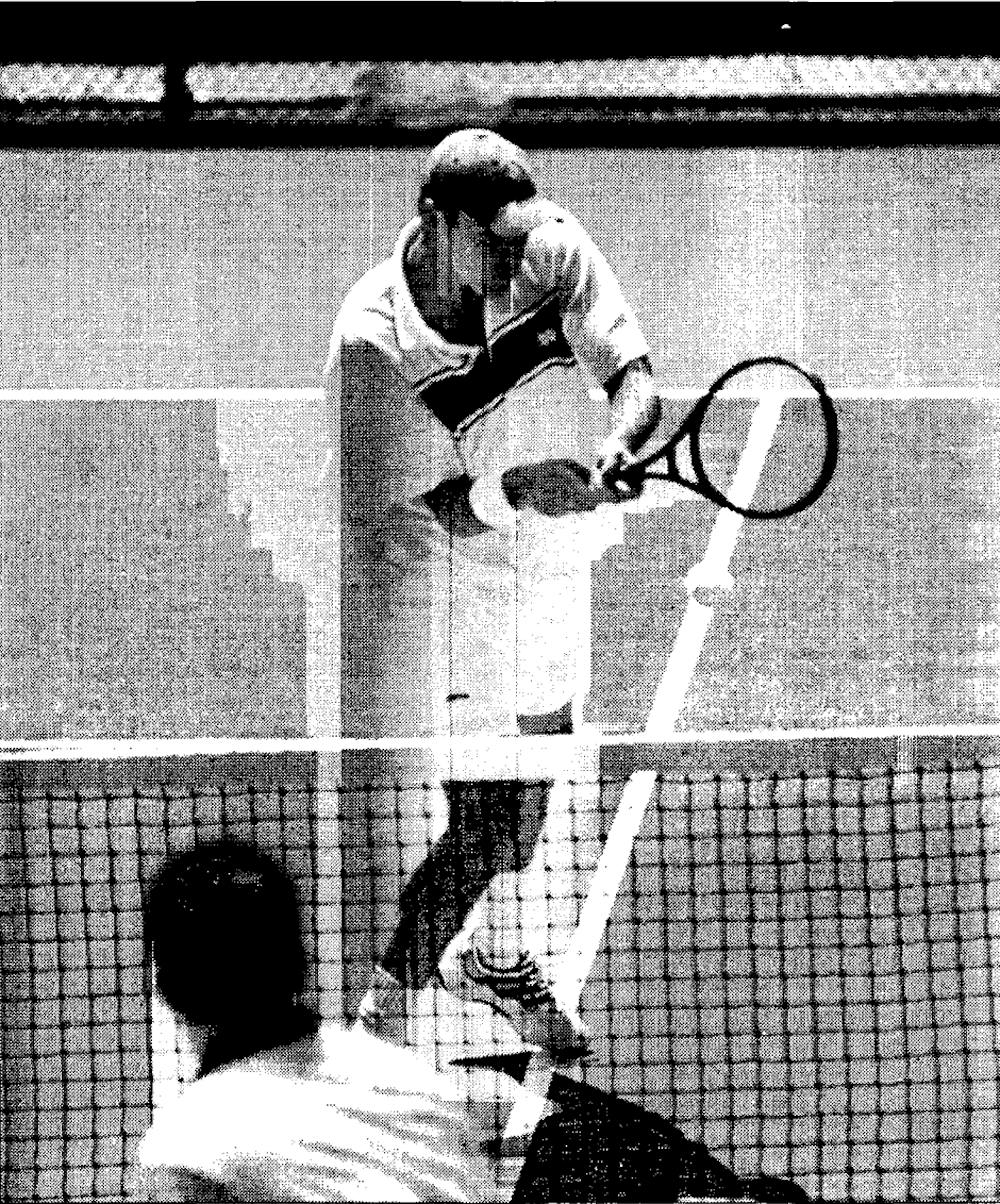
Ryan Sachire began his tennis journey in Canfield, Ohio, where he won two state championships during his high school career. He went on to have a legendary career as a Notre Dame player, finishing second on the all-time wins list and making the final of the 1998 ITA Championships, where he lost to future ATP world No. 4 James Blake. Sachire helped the Irish go 67-33 during his tenure as a player, leading them to the 1999 Big East Conference Championship. After graduating with an economics degree in 2000, Sachire attempted to make his mark on the professional tour. While he never entirely broke through at the highest level, Sachire still found success. In July 2003, he was ranked No. 391 in singles, while in June 2004, he reached a career-high of No. 184 in doubles. During his stint on the ATP, Sachire won 16 doubles titles, including two ATP Challenger events. He faced off against the legendary American doubles duo, the Bryan Brothers, numerous times, including in two finals. Sachire retired from the pro tour in 2005, but didn’t hang his racket up for very long. He had a brief coaching gig at Baylor before receiving the assistant coaching job at Notre Dame in 2006, which he held until Bobby Bayliss retired in 2013.
While professional experience is not required to be a high-level tennis coach, it certainly helps improve the experience and performance of players on a high-level team. “I think the pro experience has certainly helped me interact with our guys, with recruits, because obviously many of them have the aspirations to play at the next level. Yes, I did have success and then did have a good career, but I also didn’t fully ‘make it’ to that highest tier on tour, and so I think as much as trying to help our guys with what I did successfully, I also help our guys not make the same mistakes I made and maybe have a better chance of success on tour,” Sachire explained.
College tennis is no longer a destination for players, but rather an elite organization forging top ATP prospects. “I think the stat is something like, college tennis has produced more top pros currently than any other than any federation, than any country. There’s very little difference between playing the top 200 ATP tennis and playing No. 1 for Notre Dame,” Sachire revealed. Strategy and fundamentals have always been important, but team management is becoming increasingly relevant on the college scene, and the team’s recent success has served as testimony to Sachire’s experience navigating the pro landscape that is now intertwined with the college one.
While the Irish have been largely successful during Sachire’s tenure, they had a bit of a down year last season, at least from a results standpoint. The team went 14-15 overall, including 1-12 in ACC matches. After the collegiate season ended in May, all of the Notre Dame players returned to court, grinding out ITF matches throughout the summer and fall. The offseason was a successful one, and two months into the 2026 season, the men’s team is 9-2, with the only losses coming to Wisconsin and No. 1 Ohio State.
“Last year, we had a number of those situations where we didn’t quite get across the finish line. This season, we returned a lot of guys from last year’s team, and the message was that we needed to go through that experience to learn what it takes to get over that hump and win ... to turn a 4-3 loss into a 4-3 win. So much of it is mental. It’s that deeper level of confidence to be able to play your best tennis when it’s required. It’s so easy to say that, but it’s hard to do, and so much of accumulating that ability takes failing at first and learning from it,” Sachire said of the offseason.
From the looks of it, the team has learned from the defeats of 2025. The players have remained cool under pressure, and other than against Ohio State, most of the important points have gone their way. Sachire’s focus on the mental aspect of the sport has allowed the Irish to adapt and grow from the low points they experienced. As a result, the team looks to be on its way to a turnaround season.
Ahead of Notre Dame lies one of the hardest schedules in the country. “You can’t get too high, you can’t get too low, because you’re gonna have a great challenge the very next weekend. It’s about focusing on what’s ahead of us at the moment, and not looking too far down the road, not looking behind us, just taking one day at a time. You try to have the best day you can have, knowing that you’re gonna have some setbacks along the way, as well as some great moments. Regardless of how today went, tomorrow, we gotta come back and do the same thing,” Sachire said.
The men’s tennis team still has a long way to go this spring, but Irish fans can relax, knowing it’s in safe hands. Sachire made his mark at Notre Dame as a player, and he is slowly but surely making his mark as a coach and mentor. With experience at the helm and a strong team, Notre Dame tennis is trending up this year.