
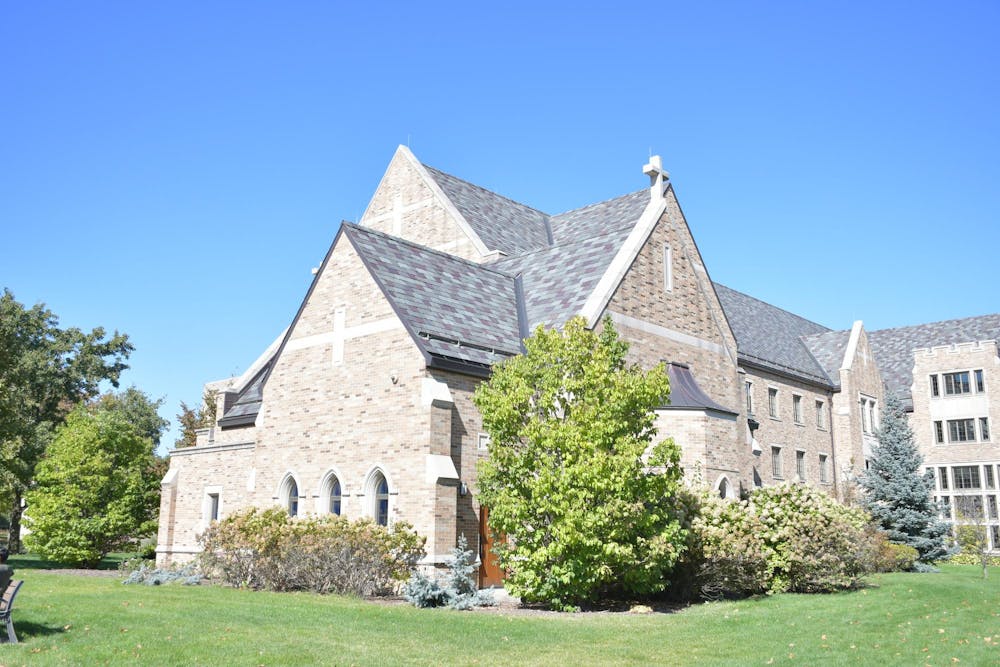
At the beginning of the 2024-25 school year, at least 55 transfer students were unable to receive a housing placement through the University. The opening of Graham Family Hall meant that male transfers could fill newly-opened slots, leaving female transfer students disproportionately affected by the shortage of housing for all transfers. This year, 15 new female transfer students were in the same position. The opening of Grojean Hall next fall means this will likely be the last class of transfers to lack adequate housing.
Dan Rohmiller, the director of Residential Life for Housing Operations, shared that midway through the semester, some of these 15 transfers on the waitlist were able to move into residence halls.
“Only a handful of students were unable to accept a space in the fall or otherwise declined to move on-campus,” he wrote in a statement to The Observer.
One student who accepted one of these mid-semester spots is sophomore Grace Vecchi, who transferred from Texas Christian University this fall. Vecchi originally moved into The Foundry before accepting a housing spot off the waitlist in late September and now lives in a double with a junior in Flaherty Hall.
She explained that upon her acceptance to Notre Dame, she and the other transfer students were told by Residential Life that unless they were close to the top of the waitlist, they should make arrangements for off-campus housing. She believes she held the lowest spot on the waitlist.
Housing is not guaranteed for transfer students, who instead apply for housing from a waitlist. They are then entered into a lottery for the available on-campus housing spots. Vecchi noted that herself and many of the other transfer students in similar situations had to sign year-long or half-year leases for off-campus housing before they heard back regarding the wait list.
After Vecchi was offered a spot, she continued to pay her lease even while accepting the spot and moving to Flaherty. She paid roughly double for housing last semester. She said she was ultimately able to “settle a deal” with The Foundry, and her roommate from the apartment moved into a single unit for this semester.
She believes that most of the other students who took the University’s housing offers were paying double for housing as well.
“I think it’s just such a big part of Notre Dame, everyone is meeting people in the housing. And I definitely think it was very isolating when most people who are off-campus are seniors, so they’re off-campus with their friends,“ Vecchi said. “A lot of times, it was really hard to meet people because you’re only on campus for class, it’s harder to integrate into the community, I felt like.”
“People stress how big of a deal like dorm life is here,” she continued. ”So it’s just one of those things that kind of, I felt [it] would complete the experience of transferring here.”
For the spring semester, housing was offered to all of the remaining transfer students living off-campus. Rohmiller did not clarify how many offers were extended, but three students accepted the opportunity to live on campus. Housing spots often open in the spring as more students leave to study abroad.
Sophomore Allison Pessôa was offered one of these spots, but declined, electing instead to uphold her year-long lease at the Foundry.
Two days after Pessôa, who transferred from the University of North Carolina at Chapel Hill, signed her lease, she was offered on-campus housing. She elected to remain at the Foundry due to receiving the housing offer on such short notice.
Rohmiller confirmed that Residential Life anticipates the opening of Grojean Hall will address the bed shortage for future cohorts of transfer women. Their experiences will be similar to that of Lilly Post, a spring semester transfer who was able to move into Walsh Hall immediately. Post, a sophomore, characterized her experience as smoother than expected and attributed much of it to being placed into Walsh.
“I talked to other transfers who are placed on campus, and I think they have a little bit of a slower start than I’ve had. Walsh being such a small dorm and getting the random roommate experience has been really helpful. I think transferring in second semester is definitely unconventional, and I found it to be a little bit more challenging, assimilating so quickly, but I think the girls in Walsh have been hugely helpful,” Post said.
Her transition wasn’t entirely without anxiety, though. Post was notified about her housing situation a week before she was set to move in. Due to this condensed timeline, she believes the transfer process can be intimidating and a hassle for transfer students.
It is unclear whether on-campus housing will officially become guaranteed for transfer students next year, or if Residential Life just anticipates the problem to ease with Grojean’s opening.
Transfer students who didn’t immediately receive a placement were offered to participate in Residential Life’s Hall Connections program, through which they were placed with a partner dorm and invited to attend events at that dorm.
“The Hall Connections program seems to have been well-received; students reported feeling more connected to campus and their assigned hall community as a result of the Connections program,” Rohmiller wrote.
While Vecchi hoped to participate in this program, she said she ultimately did not receive much communication from the hall she was paired with. She noted that since the off-campus transfers were split between dorms for the program, it was hard to integrate.
Pessôa echoed similar sentiments. “I will say I don’t really think it’s had a significant involvement, or at least been a significant part of my own integration into the Notre Dame community. I feel like a lot of that has come from my faith-based organizations, or my classes, or just clubs in general,” she said.
Vecchi added that because she transferred from a school where she had been involved with Greek life, she had found it comforting knowing that at Notre Dame she’d be placed in a hall which would help her meet people. She felt there were enough other “big draws” to Notre Dame, and even once she knew housing wouldn’t be resolved immediately, she was still excited to come. Vecchi expects the increase in beds on campus will significantly improve the transfer student experience.
“Just to be able to start in one spot and meet people from the beginning, I think will be a really big deal,” Vecchi said.
Pessôa similarly expressed her excitement. “I’m excited that those girls get to feel like they’re part of the campus community, and they especially get to feel like they’re not, I guess jumping into a lion’s den,” she said.
Editor’s note: a previous version of this story said that Allison Pessôa moved on-campus this spring. She did not. The Observer regrets this error.


