As name, image and likeness rules reshape college athletics, more programs across the country are cutting Olympic sports teams. In turn, the very essence of college athletics is becoming lost.
This is a shame.
The point here is not to criticize football, basketball, hockey or any other revenue sport. Instead, it’s an ode to what college athletics once was and still is, thanks to non-revenue Olympic sports.
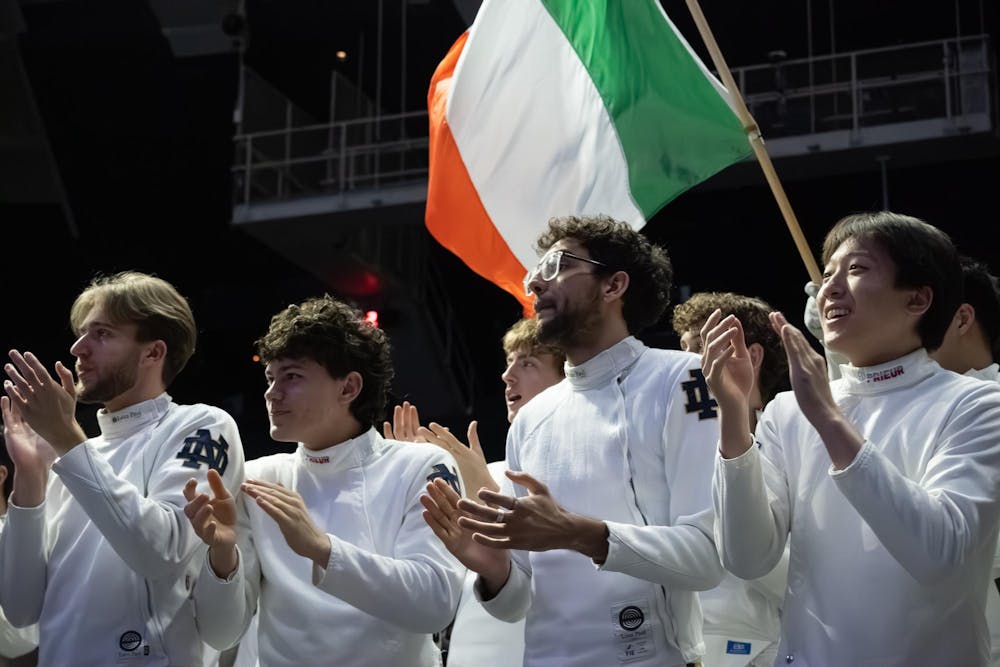
Thursday through Sunday, the University of Notre Dame hosted the 2026 NCAA National Fencing Championships at the Joyce Center. Hundreds of young men and women flocked to South Bend with a dream to win a medal, and over four long days, they competed relentlessly. Athletes from all around the world left it all out on the strip as family, teammates, coaches and friends watched on with a palpable excitement.
Sitting back and watching this mayhem unfold was nothing short of a delight. To see the fencers scream after a big win was a treat. To see the skill they competed with was amazing. And the best part? Seeing young men and women who have dedicated their lives to a craft compete at the highest level.
Sports are beautiful in that way.
But as the tournament continued to progress throughout the day, one thought kept creeping into my mind: Where is this going to be in 20 years?
With the increasing amount of money being poured into NIL deals for major revenue-driving sports, Olympic programs are at a crossroads. After the House settlement on college sports in June 2025, which allowed schools to directly pay college athletes, an estimated 32 Division I Olympic sports programs have been cut — a number only expected to rise in the coming years.
Roster sizes have also been trimmed significantly, and many athletes who committed to schools have had their offers revoked. St. Francis University, for instance, a Division I program across all sports, decided to move down to Division III.
I’m no legal expert and don’t have any practical way for the NCAA to go about this, but I believe the idea of saving Olympic sports at all costs should be at the forefront of its mind. Instead, the NCAA seems fixated on a different question: How much money can we make today?
Olympic sports provide the unique opportunity not only to pave the way for stars such as Notre Dame senior fencer Eszter Muhari to qualify for the Olympics, but also to shape more well-rounded individuals. Isn’t that the job of the university system — to form holistic individuals?
The dismantling of Olympic sports would do the opposite. Such sports provide a platform for thousands of student-athletes to learn how to be graceful in victory and strong in defeat.
Evident from this long weekend in South Bend, these sports also teach athletes how to be exemplary teammates. With only a limited number of fencers obtaining spots in nationals, each and every fencer on the strip had an army behind them. Although some of these young men and women may have been frustrated with how their respective seasons went, perhaps missing out on a spot in nationals by a small margin, they were still there to cheer on their teammates.
Olympic sports also have a unique, magical ability to bring people from vastly different backgrounds together. Just look at Notre Dame’s fencing team.
In men’s competition, the three competitors in the individual championships were sophomore Ahmed Hesham from Egypt, freshman Kruz Schembri from the U.S. Virgin Islands and junior Chase Emmer from the United States. In the women’s competition, two Americans and a Hungarian represented the Irish.
This same dynamic is present across nearly all Olympic sports. People who grew up in completely different worlds are coming together in pursuit of a shared purpose.
If Olympic sports are lost, the NCAA doesn’t just lose programs. Athletes don’t just lose opportunities. Instead, we collectively lose a forum where young men and women from all corners of the world come together to pursue something greater than themselves.
And in doing so, we lose a crucial piece of what collegiate athletes were always meant to be.