In September 2024, I wrote a column titled “Notre Dame had political angst. Do we now?” I argued no, that there was little angst in the form of activism. During the 2024 presidential campaign races, we were tuned in, but it felt weird that few demonstrations transpired — especially when our history is steeped with rallies on regional and national issues. Though we weren’t rallying, we were informed.
Now, it seems that campus is more political — that is, more angsty — on what shapes what’s in our immediate proximity: our education, our days, our lived experience. Beyond that? Attention pales.
The most recent outbreak of widespread activism and discussion followed Susan Ostermann’s appointment and later withdrawal. Students buzzed when updates emerged. A prayer service at the Grotto was organized to protest her appointment. Columns and letters to the editor published in this paper spearheaded other angles of debate. This engagement showed that we are familiar with issues close to our lives, and some are willing to spur with the other in public forums.
In the fall, Charlie Kirk’s assassination also catalyzed a mass of viewpoints published in The Observer’s opinion section. For how political our generation made his death, that news didn’t garner any large organized efforts on campus. Instead, the pulse was felt by individual visits to the Grotto, administration emails and dialogue. There wasn’t a demo on political violence on Kirk’s platform, either for or against, despite Instagram flooding with unserious memes and more factual infographics condemning and endorsing his platform.
In my opinion, we seem to only consume news that directly affects our generation and ZIP code, even during a war with Iran, ICE raids, “No Kings” rallies, the capture of Nicolás Maduro and other conflicts.
Not only have I noticed it, but my friends have felt the same.
One friend recently grabbed dinner with an acquaintance. Somehow the topic of their parents’ jobs was mentioned. The acquaintance nonchalantly said his mom helps develop bombs.
My friend said, “Pause.” She wasn’t judging him, but rather his tone. Why would he say without hesitation, so nonchalant? She told him that maybe he should dodge the question next time someone asks, perhaps telling them a PR answer. Maybe “she works in defense,” not something as sharp as making bomb technology.
The acquaintance looked back at her with a stare of confusion. “Why does it matter?”
She had to explain the war in Iran. The ongoing fatalities in Gaza and Israel. The lingering taste left in people’s mouths.
“Oh.”
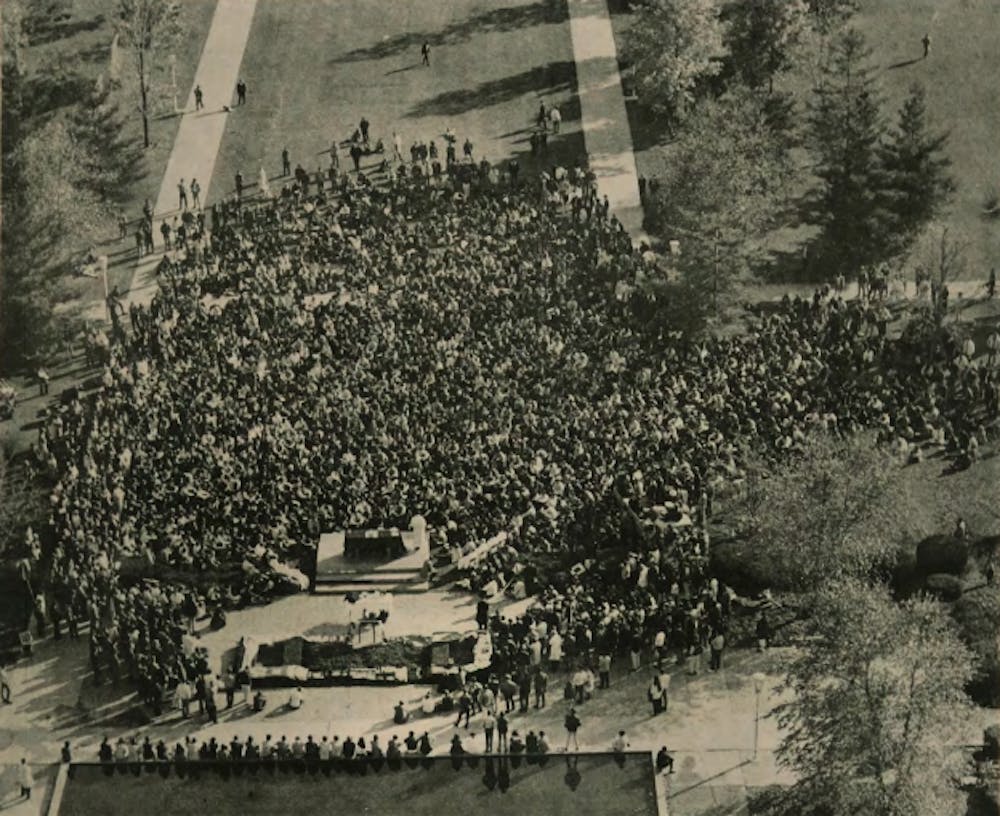
I am disappointed in the acquaintance’s lack of knowledge, not because I’m a news junkie, but because students once knew (and seemed to care) a lot more. It’s a bit odd for a campus that used to act on national and global issues — the Vietnam War, Iraq War and anti-apartheid in the 1980s among many others — to now refrain from consuming news.
I’m a part of this. I don’t know every nuance or what causes global conflicts. (Oil, probably.) But I do think not knowing — and not caring enough to change it — is an indicator that we are losing interest and energy in a world that Notre Dame students once grasped.
That education and visibility have been lost on campus over decades. It’s not clear when that started. Maybe sometime in the early 2010s, when the largest political news was when *insert politician* would speak at commencement. When global conflicts seemed to ease. Then the social media era emerged. Blinders engaged. Ignorance stemmed from nothing-out-of-the-ordinary politics.
Although activism has moved to Instagram stories, other universities, like Harvard and Berkeley, have remained steadfast in their political angst. We haven’t. And it seems there isn’t anything fighting this festering issue.
Perhaps we are a little too comfortable in the 46556 bubble.
Redmond "Reddy" Bernhold is The Observer's opinion editor emeritus and a senior studying biochemistry and journalism. He originally hails from Minster, Ohio but calls Siegfried Hall his home on campus. When not writing, he explores South Bend coffee shops and thrift stores. You can contact Reddy at rbernho2@nd.edu.