
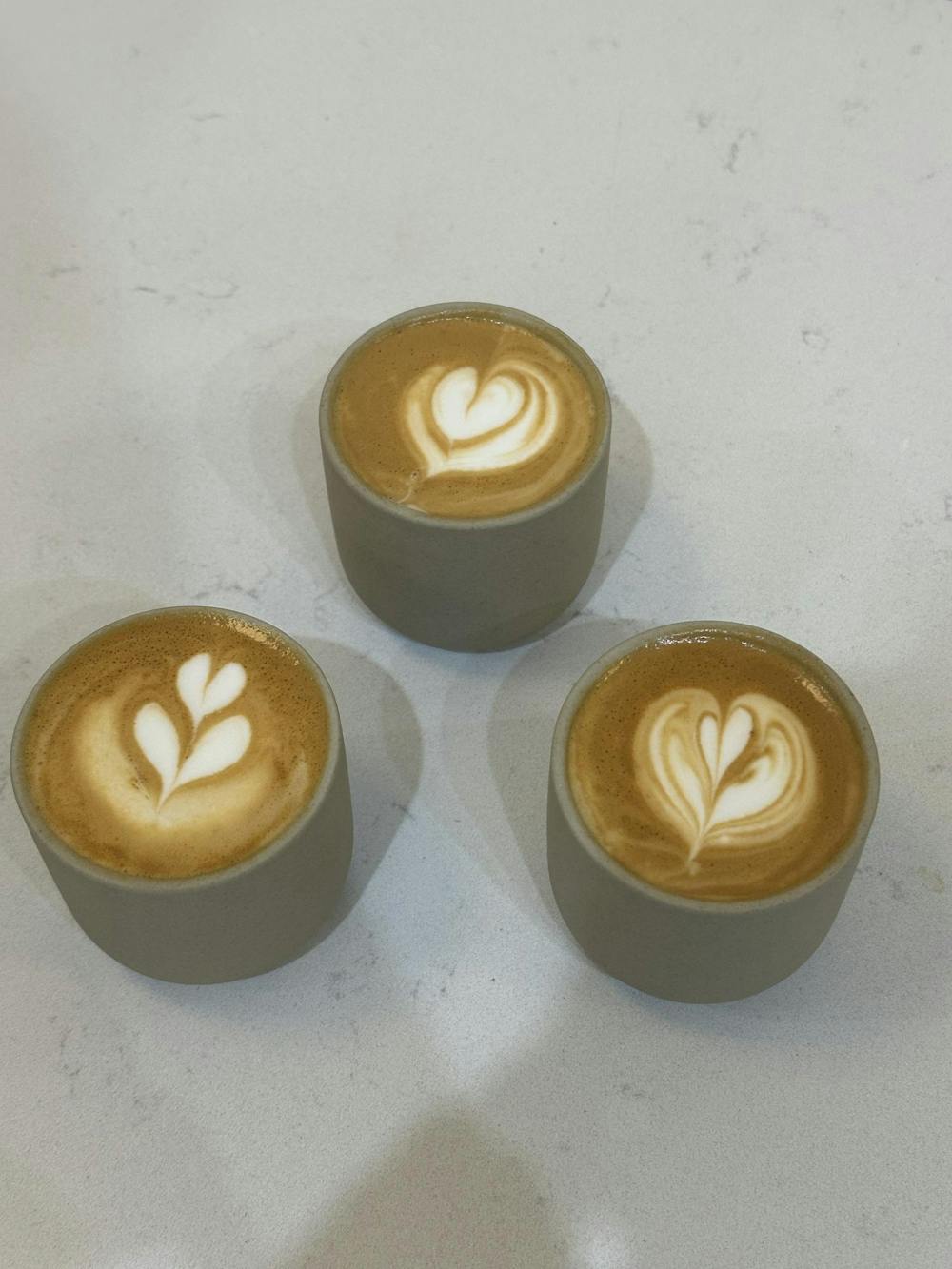
This Lent, I gave up nothing dramatic. Not sugar. Not Instagram. Not alcohol. Just excess coffee.
I allowed myself one cup a day. That’s it.
For someone who treats coffee less like a beverage and more like a survival strategy (I drink it more than water), this felt … ambitious. I’m a senior balancing seminars, deadlines and a never-ending stream of assignments. Coffee — for me — is more than a ritual; it’s my assurance of productivity and comfort.
So why reduce it? And trust me, I still get mad at myself for choosing to. But at the end of the day, when I think about Lent, it isn’t about punishment — it’s about recalibrating.
The first cup of coffee wakes me up; it sharpens my mind; in a sense, it feels earned.
The second cup is a habit. The third is — I admit — pure anxiety (the same could be said for the fourth, fifth and so on).
What I noticed during the first week of Lent was not caffeine withdrawal (though that was real). It was the way I reached for coffee automatically — mid-afternoon slump, social break, mild stress, slight boredom. Coffee had quietly become my solution to everything.
Tired? Coffee. Writer’s block? Coffee. Existential dread in a seminar? Coffee.
Limiting myself to one cup forced a small but uncomfortable question: What am I actually trying to fix?
We often imagine sacrifice as subtraction, but what it really does — at least in my case — is reveal attachment.
I wasn’t addicted to caffeine. I was attached to its stimulation — to the feeling of being constantly “on.” Coffee had become sacramental: the liquid, unconscious, proof that I was busy, driven and serious.
To have only one cup, I had to accept something: I will get tired. I will slow down. I will not optimize every hour. And maybe that’s the point.
I think we don’t normalize saying “This is enough.”
Enough caffeine. Enough stimulation. Enough output.
One coffee a day doesn’t make me less productive (at least not yet). It has made me more intentional. Now, when I do take my first (and only) coffee of the day, I savor it. I don’t scroll while drinking it or gulp it between emails. Drinking my coffee has become more of a moment than a mechanism.
Lent asks us to practice restraint, not because desire is bad — but because, sometimes, unexamined desire ends up running the show. And, really, the second (third, fourth or fifth) cup is rarely about the coffee — at least not for me.
Fasting, in any form, confronts us with a truth: Most of what we consume is not for survival — it is for comfort, distraction. Almost to the extent that unconscious consumption outweighs the conscious.
As with anything, when you take something small away, you discover what is underneath it. For me, I took four coffees a day away and discovered it was restlessness. And in that restlessness, I found an invitation: Maybe I don’t need more energy; maybe I need more stillness.
One coffee a day won’t change the world, but it might change the way I move through it — and sometimes, for 40 days, that’s enough.


