The University celebrated the 20th anniversary of its “What Would You Fight For?” campaign by bringing together faculty, students and media professionals to reflect on its storytelling impact and future.
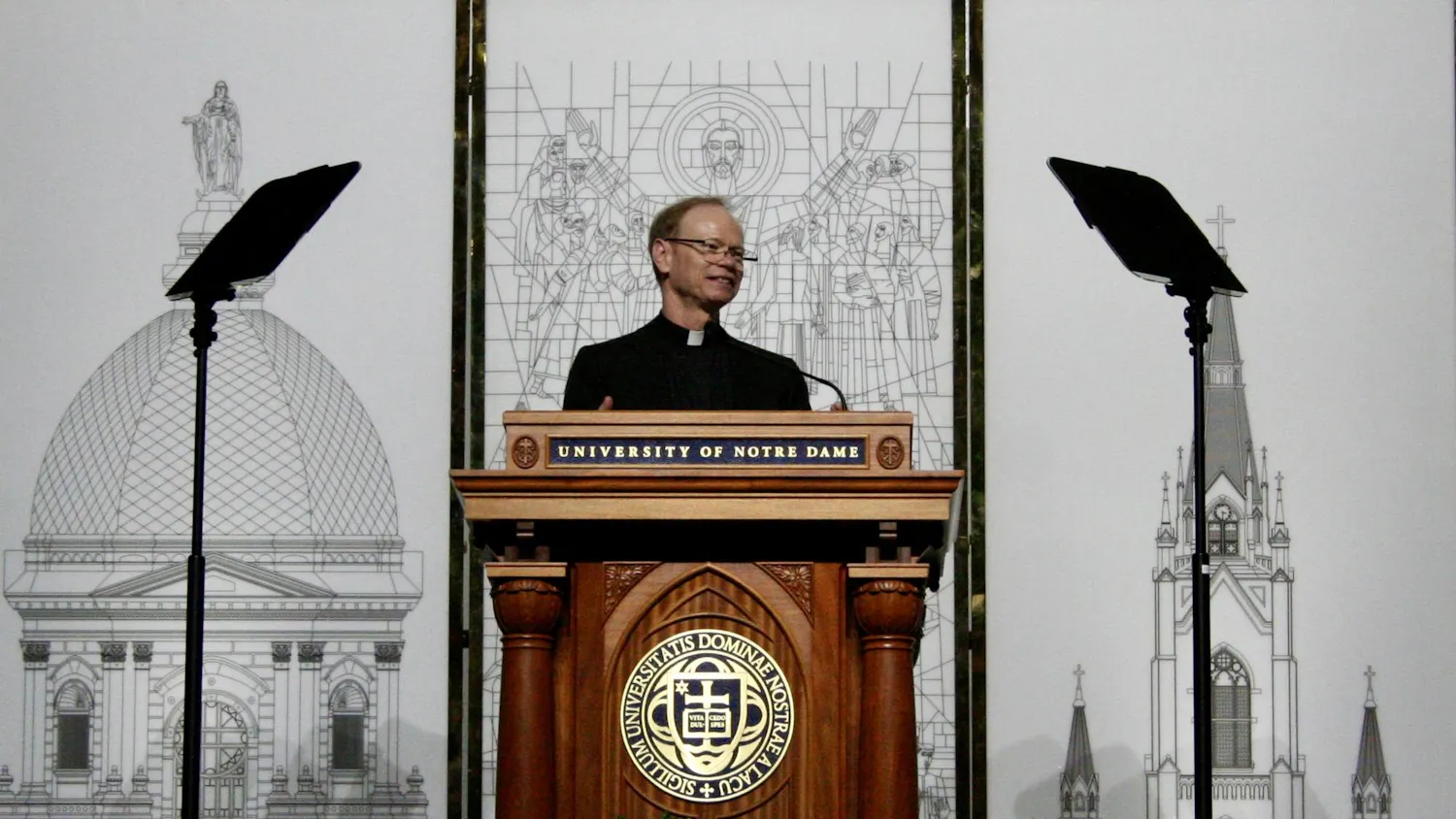
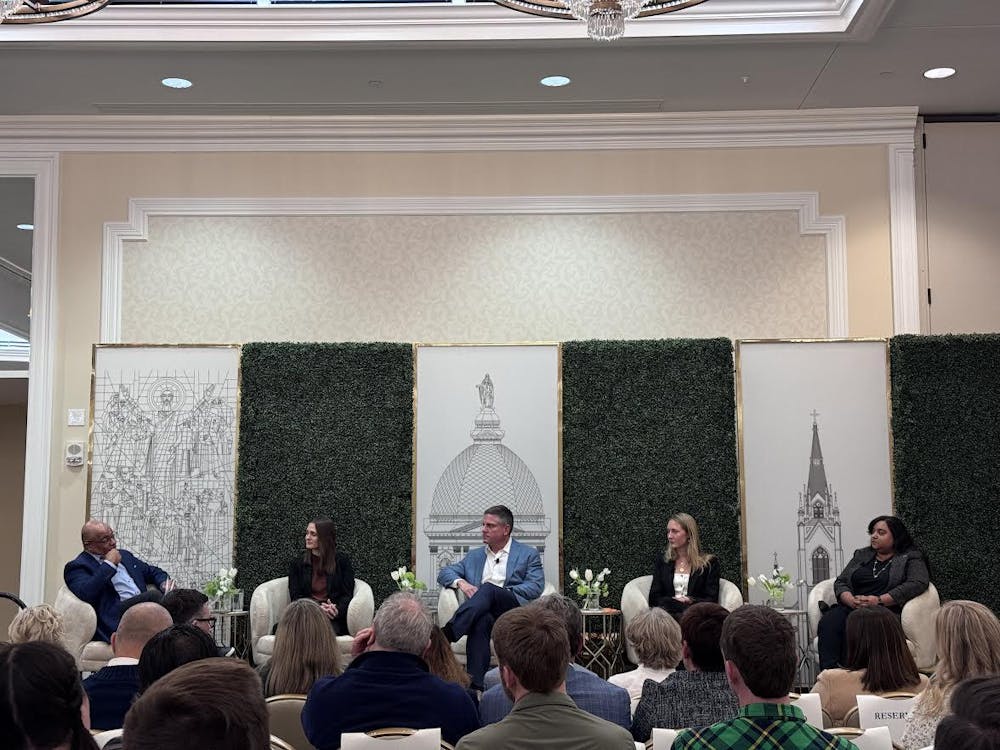
University President Fr. Robert Dowd opened the event, followed by a panel moderated by NBC Sports host Mike Tirico. Panelists included NBC Sports coordinating producer Rob Hyland, supervising producer Lindsay Schanzer, aerospace and mechanical engineering professor Meenal Datta and sophomore Lauren Eglite.
The “What Would You Fight For?” campaign, launched two decades ago, highlights research and initiatives at Notre Dame through short video segments aired during NBC broadcasts of Notre Dame football games. Speakers emphasized the campaign’s role in connecting academic work with a national and global audience.
The series has received national recognition, winning a Sports Emmy in 2024 for outstanding public service content. The WWYFF team expects to learn next week whether the series has been nominated again this year.
Hyland said the campaign was designed to move beyond traditional university advertisements and instead focus on human-centered storytelling.
“Twenty years ago, Notre Dame came to NBC and said, ‘Let’s do something different,’” Hyland said.
Hyland added that the goal is to capture viewers’ attention quickly during broadcasts and highlight meaningful stories tied to the University’s mission.
Schanzer said the production process begins well in advance, with teams reviewing faculty research and selecting a limited number of stories each year.
“We receive pitches from across Notre Dame’s research faculty,” Schanzer said. “We can only do six pieces each year, and we decide which work best for the medium that we have.”
Each season, the series features six two-minute segments, making selection highly competitive among the University’s faculty and student researchers. Schanzer said the storytelling approach prioritizes emotional connection, combining research with personal narratives to engage viewers. Datta said being featured in the campaign allowed her research to reach audiences beyond academia.
“As a faculty member, your work gets out in journals or publications that most of the public is not reading,” Datta said. “It was an incredible opportunity to reach everyone.”
Datta added that the campaign also generated responses from patients and families impacted by her research, reinforcing its real-world significance.
“What touched me the most was communication from patients and their families,” Datta said. “Remembering that what we do is for people was a very important reminder.”
Student panelist Lauren Eglite, a sophomore studying chemical engineering, said the campaign influenced her academic path and connection to the University. She recalled seeing a WWYFF segment about peanut allergy research while attending a Notre Dame football game as a child.
“I remember seeing it and thinking there might be a cure for something I had struggled with my whole life,” Eglite said.
Eglite said the experience eventually led her to study chemical engineering at Notre Dame and participate in a follow-up video for the campaign.
“I think this video series really drew me to Notre Dame,” Eglite said. “It inspires hope and shows what people here are able to do.”
Speakers also emphasized the campaign’s broader reach beyond football broadcasts. Datta said the segments are amplified through social media, University websites and continued audience engagement.
“For me, it feels like the campaign never ended,” Datta said. “It continues to reinforce the story in different ways.”
Tirico said the campaign’s placement during Notre Dame football games allows it to reach a wide audience and connect sports viewers with academic work.
“It’s more than just a football team and a commercial,” Tirico said. “It’s a story of what an institution is all about.”
Panelists concluded by highlighting the campaign’s role in fostering connection and pride within the Notre Dame community and beyond.
“It’s about connecting people with people’s stories,” Tirico said. “And finding others who care.”