
Do you know what a Vulcan is? Have you ever heard someone yell “frak”? Have you attempted to grow potatoes in your own poop? These are all famous sci-fi references. I have indulged in all forms of science fiction for most of my life, starting with the post-scarcity world of Star Trek and branching out into complex and deeply human stories. For the past week, I have felt a little closer to every short story, book, movie and TV show. I even changed my lock screen to a picture of the Earth peeking out behind the moon, a reminder of the shifting perspectives we face as we inch further into the cosmos.
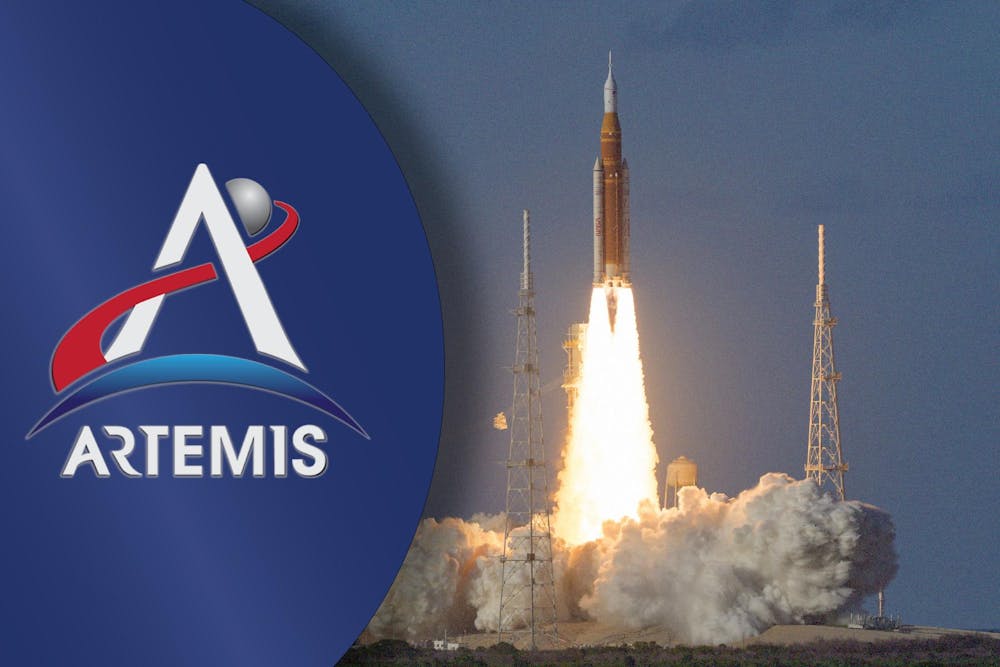
Artemis II is more than a week into its flyby mission around the moon. After a gravity assist from a slingshot maneuver, four humans traveled farther than any others ever have. For a brief moment, they were more than 250,000 miles from Earth. It is an incredible feat of both engineering and the human spirit. But people keep (fairly) asking: Why? We have an affordability crisis, war in the Middle East and a variety of other concerns in our atmosphere. We can not afford to turn our focus elsewhere right now.
In a recently revisited 2022 “Late Show” interview, Commander Reid Wiseman noted the reason behind the lunar flyby: “We want to go to Mars.” The red planet is more than 33 million miles away (47 times the total distance of Artemis II) in the most optimal launch window. Even that is just a theory. It would be a multi-year mission and a feat of human ingenuity to even launch a rocket to go to Mars. Who knows what would happen along the way, as fans of “The Martian” can certainly tell you.
This most recent trip to space has the scientific goal of understanding how human bodies behave in space by studying everything ranging from bone marrow to cognition. In this sense, we can prepare for further exploration and counteract the unsavory side effects of deep space. More importantly, we will restore national pride through the American space program.
So far in history, humanity has touched the final frontier but never embraced it out of fear of expense or failure. Both are bound to happen. It is worth it anyway. There is nothing more human than setting off a massive explosion to explore a new frontier. There could be something (or someone) out there that changes our world. Even if there isn’t, pushing the boundaries of space will always be worth my tax dollars. You cannot put a price on an American flag planted on the moon. This is a symbol of national pride worth our talents, efforts and money. It is our duty to our species to disperse a fraction of our funds to feed the most primitive human desires: curiosity. It’s the reason we innovate and challenge ourselves. It should be protected at all costs.
NASA’s annual budget sits at $24.5 billion. The Trump administration has threatened budget cuts, all while asking for $1.5 trillion for an increased defense budget. Twenty-five billion dollars is a fair amount for Americans to pay for missions like Artemis II. It may just be a lunar flyby for now. One day, though, we could watch our species step on red sand. Even further in the future, a human could look up at Jupiter from the surface of Titan.
Humanity should continue its progression into the stars. We should also learn from our mistakes — we have to keep going this time. This matters especially in a time of economic turmoil. It means something when we fail. It means everything for our humanity. Humans do not love keeping peace or paying taxes, but we do love exploration. Godspeed, Artemis II. I hope your mission pales in comparison to what we do next.
Duncan Stangel is a first-year global affairs major at Notre Dame. Currently residing in Alumni Hall (the center of the universe), he hails from the small town of Cumberland, MD. When he's not saving kittens from trees, you can find him stumbling to Debart with a caffeine source in hand. Contact at dstangel@nd.edu.


