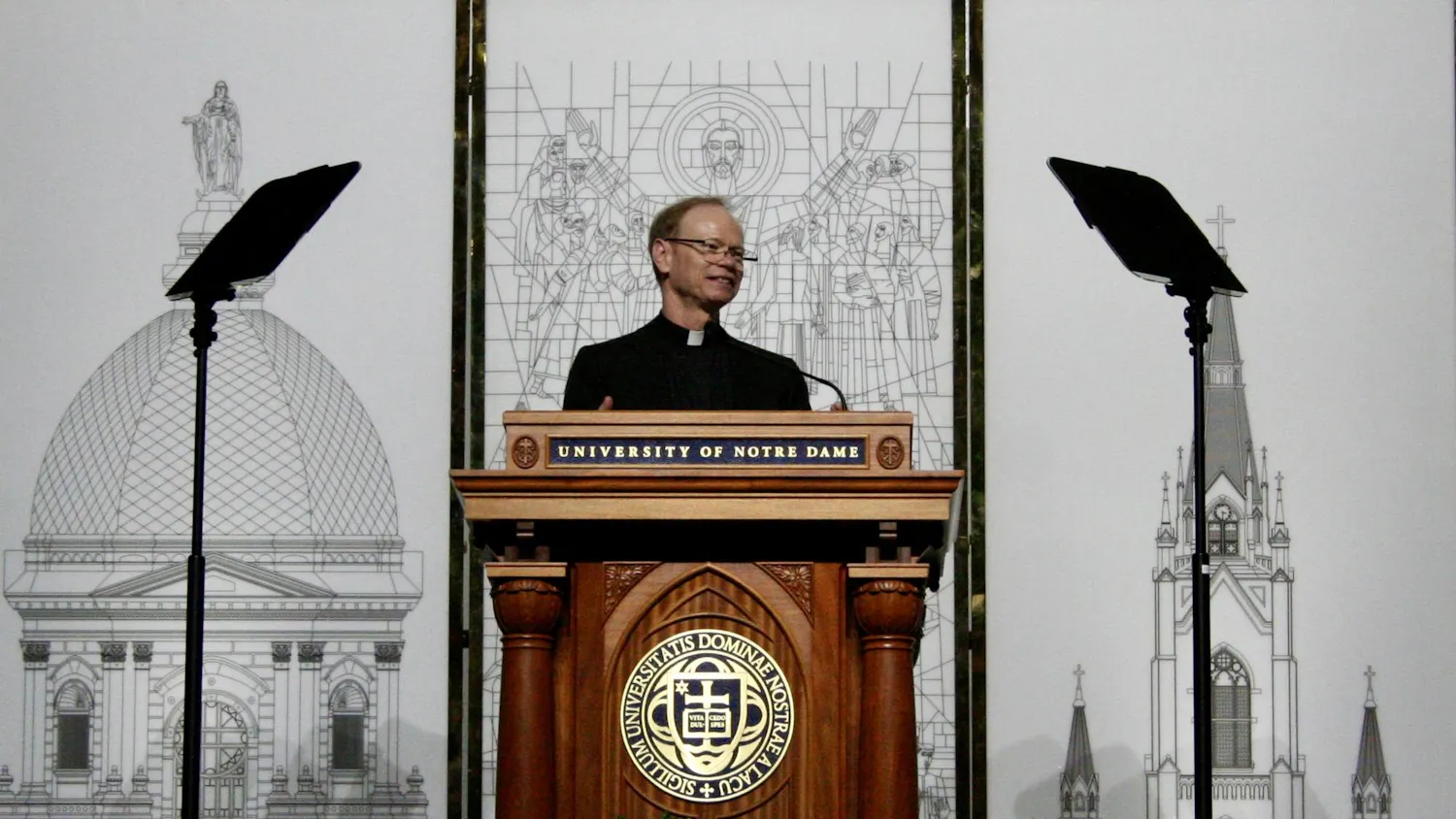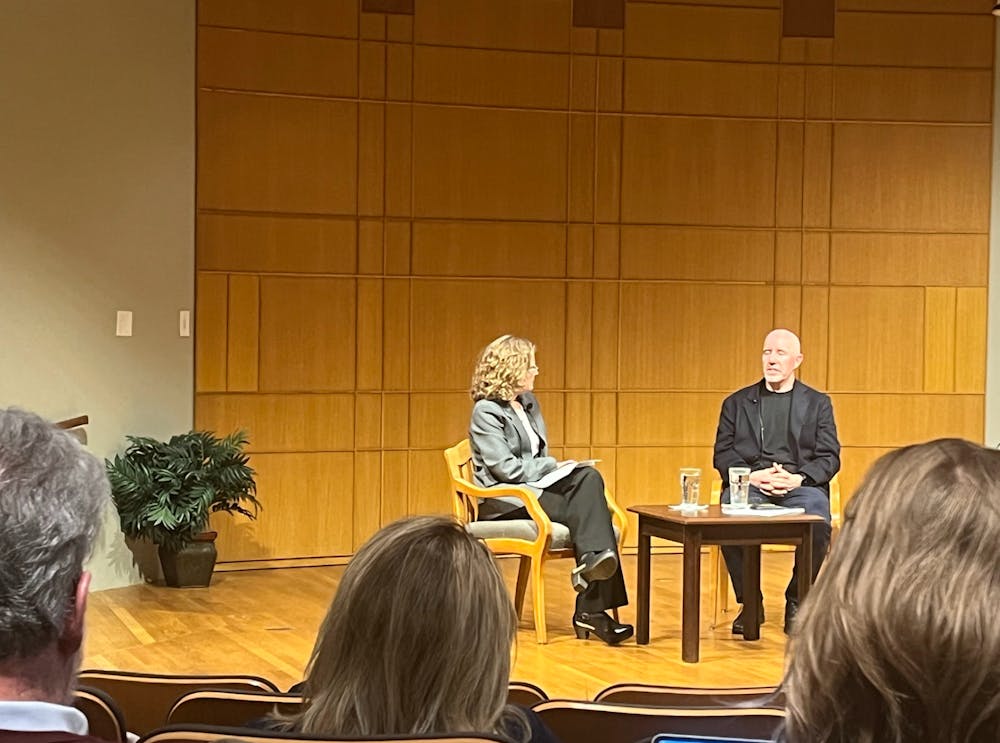
On Monday, Paul O’Brien, the executive director of Amnesty International USA, delivered a lecture titled “What Comes Next for Human Rights?” for the Kellogg Democracy in Dialogue Series. Amnesty International is a global organization dedicated to the research and protection of human rights. The lecture was sponsored by the Kellogg Institute for International Studies and co-presented by the Institute for Latino Studies and the Klau Institute for Civil and Human Rights. Exploring the downward trend in human rights in recent years, the lecture focused on how society can collectively rebuild an international legal system that can protect human rights.
O’Brien began the conversation by discussing recent political developments in the United States and their effect on human rights. He argued that the recent decline in human rights did not occur in a vacuum but rather as the result of a much larger political shift.
“The modern human rights movement has had a rough 21st century. This last year in the United States is not the start of something — the darkness has been dropping for more than 20 years. In 2005, when I was still in Afghanistan, it was, by Freedom House analysis and other metrics, the last year when global civil, political, and democratic rights were expanding,” O’Brien said.
O'Brien argued that political leaders in the United States and around the world have collectively contributed to the erosion of core human rights norms and the weakening of the systems meant to uphold them.
“The Trump administration and the copycats now metastasizing in other countries are going after the two golden rules of the human rights community. First, that no one is above the law, and second, that human rights belong to everyone today. Those two golden rules are in tatters,” he said.
O’Brien said the degradation of human rights is clearly visible in immigration policy, especially in light of recent violent confrontations between Immigration and Customs Enforcement and American citizens. Recounting visits to detention centers and border regions, he described the Trump administration’s immigration enforcement policies as a mass deportation machine fueled by fear, racism and increased militarization.
Despite the what he described as the increasing incompatibility of human rights advocacy with modern-day society, O’Brien emphasized the resilience of human rights work and highlighted a new form of political activism in the United States that has arisen in response to repeated human rights violations in the past several years.
O’Brien discussed how community-based activism is often at the front lines, working to respond to the attack on human rights.
“Human rights work was always designed to do the following things: to counter anti-rights attacks, slow them down, make them more publicly toxic, and bring more people to the struggle,” O’Brien said.
O’Brien ended his lecture on a positive note, emphasizing how the human rights movement has experienced a resurgence. He called on institutions and communities to engage and mobilize, leveraging their influence to promote rights and justice throughout the world.
“We need to raise our collective voices to reach the shorelines where so many people are still watching and waiting to decide if they want to fight for human rights,” he said.