The Anti-Defamation League, a Jewish advocacy organization that seeks to combat antisemitism, has released its annual campus report card evaluating the current state of antisemitism on college campuses and how higher education institutions are responding.
The ADL’s antisemitism report card assesses 150 schools based on 32 criteria, divided into three categories: “Publicly Disclosed Administrative Actions,” “Jewish Life on Campus” and “Campus Conduct and Climate Concerns.” The ratings given in each category contribute to a college’s overall grade.
The ADL gave the University of Notre Dame a B grade on April 13, an improvement from the C grade it had in both 2024 and 2025. The ADL notes that although Notre Dame operates as a Catholic university and does not have a Hillel or Chabad organization on campus, it maintains a sizable Jewish population and an official Jewish student club recognized by the University. The report also highlights Notre Dame’s efforts to combat antisemitism through events such as Antisemitism Awareness Week and its investment in Jewish and Israel-related studies.
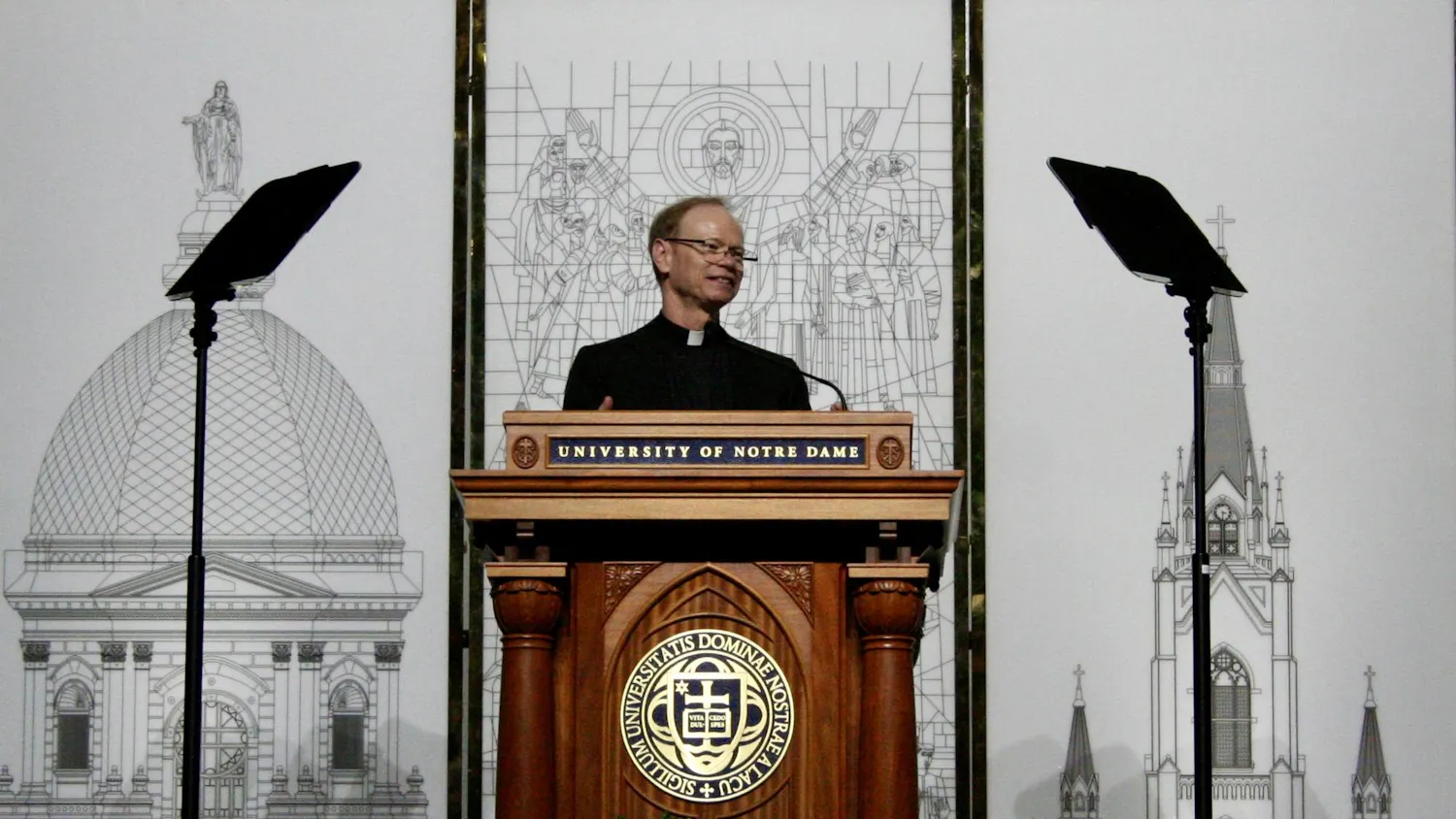
The ADL report also outlines specific administrative policies and responses taken by Notre Dame, especially in light of the Israel-Hamas war that began Oct. 7, 2023. It notes that the University has taken significant steps to condemn Hamas and antisemitism, pointing to former University President Fr. John Jenkins’ statement condemning the kidnapping and killing of Israelis by Hamas. The same statement also called for a permanent cease-fire and the flow of humanitarian aid into Gaza.
The University, in a statement to The Observer, highlighted its efforts to combat antisemitism.
“In the context of our mission as a Catholic university, Notre Dame seeks to ensure that all members of this community experience a true sense of belonging. We recognize and prize the many contributions of our Jewish students, faculty and staff, and we condemn in no uncertain terms all forms of anti-Semitism. As noted in the ADL’s positive assessment of Jewish life on campus, the University routinely hosts events and discussions aimed at educating members of the campus community about the history and dangers of anti-Semitism,” a spokesperson said.
“Thanks to the efforts of our Jewish student organizations as well as various University departments, there are many opportunities for our Jewish community members to gather for fellowship and mark religious holidays. Together, these efforts and resources contribute to the broader aim of building the beloved community on campus,” the statement concluded.
The report identifies several areas for improvement, especially in the wake of campus protests in spring 2024 that urged Notre Dame to divest from Israel and re-evaluate its ties with Israeli universities and institutions.
The ADL’s report docks the University for the “level of hostile anti-Zionist student groups” on campus as well as for lacking a Jewish alumni group, a group supporting Jewish employees and a pro-Israel student group on campus.
Student Voices for Palestine, a student group at Notre Dame that has protested Israel’s wartime actions, condemned antisemitism while dismissing ADL’s definition of antisemitism as overly broad.
“SVP stands firmly against anti-Semitism on Notre Dame’s campus and beyond. As a part of our commitment to make campus a welcoming place for students of all identities, SVP highlights Jewish Voice for Peace’s rejection of the ADL’s political definition of anti-Semitism, which dangerously conflates anti-Semitism with criticism of any actions of the state of Israel, repressing free speech,” the organization wrote in a statement to The Observer.
Zane Zachary, a senior and the president of the Jewish Club of Notre Dame, dismissed the ADL’s critiques of the University.
“The ADL seems to rank based on the presence of organizations that may be pro-Zionist/Israel, along with service organizations like Chabad. I personally don’t think the ADL’s ranking prioritizes what the broader Jewish community values,” he wrote in a statement to The Observer.
“For example, the ADL ranks schools based on whether they have faculty and student training on antisemitism. It’s odd to flunk us on that because we have virtually no antisemitism. It’s like prescribing a treatment without showing widespread illness,” he added.
Zachary characterized Notre Dame’s ‘B’ rating as “flattering” but added that he thought the University deserved a higher grade.
“Overall, ND achieved the outcome that matters, the outcome that the ADL wants. Notre Dame just used different methods than what the ADL wants. So, I think we deserve a +A because we don’t need a dozen three-letter nonprofits to descend upon South Bend to fight antisemitism,” he wrote.
The ADL found that the University “met expectations” in regard to publicly disclosed administrative actions and received an “excellent” rating on criteria related to Jewish life on campus, while reporting little to no concerns regarding the campus climate for Jewish students.
Jeffrey Campbell, a Notre Dame economics professor who is Jewish, expressed his views on the report and the overall climate toward Jewish students.
“Earning an A on this report requires a university’s administration to fulfill its Title VI responsibilities to all of its students, at least a small Jewish student life on campus and a lack of anti-Jewish hate. Our administration does well vis-a-vis Title VI, and there are signs of Jewish student life. Neither our students nor faculty & staff accept anti-Jewish hate generally, but a loud minority hates the Jewish state and Jewish self-determination. Without their actions, we deserved an ‘A.’ At other schools, this anti-Jewish hate has gone mainstream, and they earned Cs or Ds. So I think that Notre Dame is a good place for Jewish students, and our B grade does not contradict that assertion,” Campbell wrote.
Notre Dame has hosted several discussions and panels with the goal of promoting respectful and informed dialogue on antisemitism. These events have included “Antisemitism and Other Hates,” “Safety through Solidarity: The Fight Against Antisemitism,” “One Year After October 7: Historical Backdrop and Future Prospects” and “Beyond ‘Eternal Hatred’: Reconsidering the Nature of Antisemitism.”