Notre Dame, as it is widely known, is a place rich in tradition. The University is differentiated from its peer institutions by a unique system of residential life and hall culture. Every year, students wearing “The Shirt” pile into the Notre Dame Stadium to cheer on the football team and hear the “Victory March” performed by the Fighting Irish band, the oldest continuously running college band in the United States. And the school's iconic golden dome has towered above thousands of students across generations — from the time of Fr. Sorin to the present day — who have called the university home. These constants define student life.
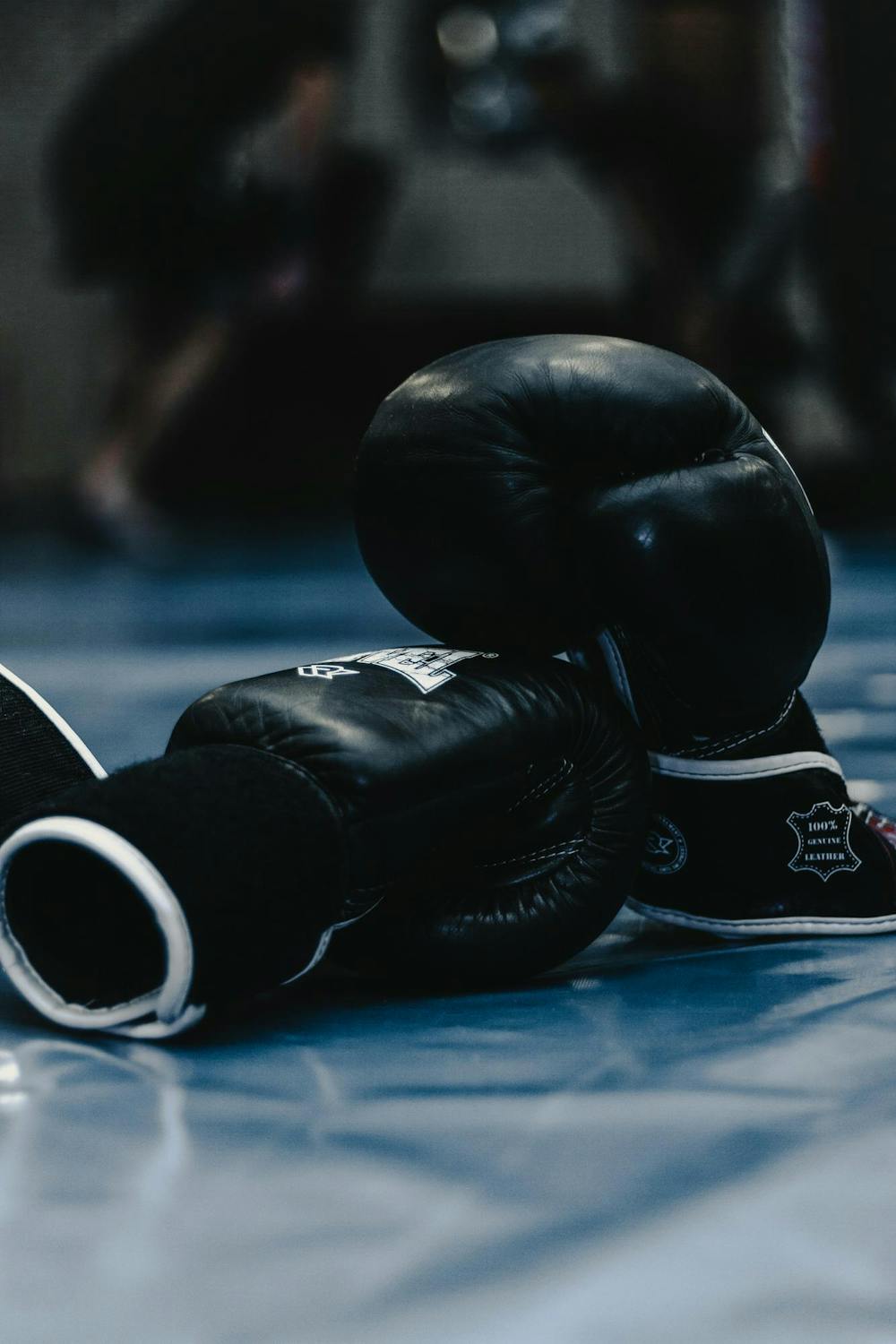
Another of Notre Dame's oldest and most distinctive traditions is the Bengal Bouts program. The club was founded by legendary football coach Knute Rockne in 1920 and took on its hallmark philanthropic cause of fundraising for the Holy Cross missions in Bangladesh in 1931 under the leadership of iconic Coach Dominic “Nappy” Napolitano. Since its founding, generations of Notre Dame men have participated in the program, and this year witnessed the 95th Annual Bengal Bouts tournament. Founded in 1997, Baraka Bouts has presented similar opportunities to women for the past 21 years. Bengal Bout's storied history has promoted the program’s persistence even though other traditional Notre Dame programs, including interhall tackle football, as well as boxing programs at other universities across the country, have been slashed due to mounting safety concerns.
Indeed, it was this rich history which, in part, led me to participate in Bengal Bouts during my junior year. I suppose my motivations to participate were the same as those that compel many Notre Dame students to participate in various organized activities, particularly athletics: to meet new people, stay in shape and develop an interest while taking a break from school work. However, Bengal Bouts, in particular, captured my fascination because my grandfather, who attended Notre Dame from 1945 to 1949 yet passed away before my birth, participated in the program, and — even if only in a back corner of my mind — I was attracted by the prospect of taking part in the same hallowed activity, on the very same ground nearly three-fourths of a century later.
As the season kicked off my junior year, I made participation in multiple Bengal Bouts practices part of my weekly routine. For the first couple of months, practices consisted exclusively of conditioning. They were tough, sometimes leaving my arms quivering as I attempted to exhaustedly scoop dining hall food onto my plate at dinners immediately following practice. But it was a good kind of sore. I look back with pride on this part of the season. I was probably in the best shape of my life, made friends and met several great coaches, whom I came to, and continue to, respect. As the season progressed, more and more contact was introduced for new boxers like myself, and I looked forward to participating in the upcoming tournament in February of 2024.
In order to compete in the tournament or showcase match, boxers were expected to complete five spars prior to the competition. In the hours and days following my fourth training spar in late January 2024 — and what proved to be my last ever time boxing — I began to experience a headache, which I hoped would resolve itself. It did not. Still hoping to participate in the showcase, but thinking it imprudent to step back in the ring without first being evaluated, I received medical treatment and was diagnosed with a concussion. A follow-up appointment was scheduled for four days later in the hopes I could be cleared if my symptoms had subsided. However, they did not. Nor had they by the following appointment, or the appointment following that one.
To make a long, rather exasperating story short — one involving many doctors, scans, and challenging conversations — I continue to experience chronic headaches nearly 14 months after that fateful event, which continues to impact my daily life in dramatic fashion. Some days, my headache is better; other days, it is worse, but it has been over a year since I have been pain-free for any substantial amount of time. It has been 14 months of waking up with the pervasive yet horribly familiar sensation of a dull throbbing in my head and attempting to make my peace with the reality that today has brought the same disappointment as yesterday and, if the past offers any sort of pattern, tomorrow will as well. And this interval has offered me ample time to reflect upon the irony that, of all events, it was my participation in an activity sanctioned, facilitated and even exalted by Notre Dame, in which I was injured in such a fashion that has made my academic commitments — substantial to begin with — feel like all that much more of an uphill battle.
I am now a senior with roughly three weeks left in my college career. Acknowledging that the sun is setting on my time at Notre Dame and hoping to find some meaning in this struggle that I often fear has been utterly gratuitous, I seek to share my story and open a dialogue on the subject.
Of course, mine is just the latest voice to enter into a much broader conversation about sports, head trauma, and policy. Some degree of cognizance regarding the long-term detriments of concussive and sub-concussive injuries in athletics, particularly boxing, extends back a rather long time. The term “punch drunk” was coined in 1928 by Dr. Harrison Martland, a New Jersey forensic pathologist, who published the first clinical description of a degenerative neurological condition affecting prizefighters. In 1983, George D . Lundberg, MD, the editor of the prestigious Journal of the American Medical Association, launched a multi-part polemic against the sport, which he famously called an “obscenity” that “should not be sanctioned by any civilized society.” His argument was rooted in both concern regarding its destructive medical implications, as well as a sociological critique of the sport for romanticizing and perpetuating a culture of violence (Dr. Lundberg’s opinions are not necessarily my own). However, such critiques remained relatively marginal, and it was not until the early 2000s that brain injuries sustained by frequent participation in high-impact sports captured public attention.
The issue was thrust into the spotlight largely by Dr. Bennet Omalu, a Nigerian-American neuroscientist who first reported evidence of chronic traumatic encephalopathy, or CTE as it has since entered the popular lexicon, in NFL players. The 2015 film Concussion recounts the story of his startling discovery of the degenerative brain disease caused by repeated head impacts in the brains of some of the league’s greatest former stars. More centrally, however, the film highlights his struggle against a stubborn and adversarial NFL as he sought to defend scientific truth and player safety. As an immigrant and newcomer to American culture, Omalu was perceived as an outsider attacking football, one of the country’s most revered traditions and a near-symbol itself of American identity. Despite his initially unwelcomed message, Omalu secured a significant victory in 2016 when an NFL executive finally acknowledged the link between participation in football and CTE.
The Bengal Bouts website features a quote from a 1955 Sports Illustrated columnist Bud Schilberg, presumably to illustrate the culture of safety long valued by the program: “you will see contestants ... boxing under rules of safety precaution that have precluded any serious injury”. Writing in 1955, Mr. Schilberg can be forgiven for lacking a modern conception of neuroscience and his crude understanding of an “injury.” However, today, we cannot.
I believe that in 2025, it is time to re-explore the Bengal and Baraka Bouts programs, the latter of which, in my understanding, suffers from a higher per capita rate of concussions (in the most literal possible sense as per capita derives from the Latin “by heads”). This involves evaluating the propriety of the University’s funding, promoting and facilitating of such programs. For the many to whom Bengal and Baraka Bouts constituted a joyful and valuable part of their college experience, I do not seek to discount your perspective. I believe you. I simply ask that you listen to mine as well, along with those students who have presumably experienced similar struggles, yet for a variety of reasons — shame not being the least of which — often appear far less visible.
I am not a professional scientist nor an expert policymaker, and I will not presume to be one. I know that all my experiences sum to a grand total of a singular datum and will leave the admittedly complicated task of evaluating aggregate social costs and benefits in the hands of those more capable than myself at performing such analysis.
However, I will offer one final point for reflection. Despite the persistence of several celebrated customs, Notre Dame has also markedly changed since my grandfather graduated in 1949. Three years after his graduation, a young priest from Syracuse, New York, Rev. Theodore M. Hesburgh, would become the 15th president of the University. Five years later in 1954, The US Supreme Court would decide, in Brown v. Board of Education, that “separate but equal” educational facilities, in the context of race, are unconstitutional. Fr. Hesburgh would serve as a vocal proponent of civil rights, both in the ring of national politics and on Notre Dame’s campus. Twenty-three years later, Notre Dame welcomed its first class of women to the University. Today, we rightfully celebrate these developments as enriching changes that charted the school on a more welcoming and vibrant path by bringing individuals of varied backgrounds together and fostering critical discussions among them in service of being a powerful “means for good” in the world.
The lesson that emerges from these developments, in my opinion, is that tradition has immense value but must be exercised with discernment, lest the errors of the past similarly become the mistakes of the future. It is time to reevaluate if organized student fighting — an activity differentiated from other contact sports in that blows to the head are not merely incidental, but rather an expressed objective — continues to justify the risk or if it is a practice best parted with in light of new evidence and in service of higher priorities. It is time to discuss if the previously mentioned goods of participating in recreational athletics at Notre Dame — comradery, physical fitness and the love of sport — should, either wittingly or unwittingly, come at the long-term expense of student health.
I understand this is a thorny issue that touches upon nearly a decade of venerated tradition, the whole truth of which I possess only a sliver. However, I do know there are many remarkable, intelligent and well-informed leaders at this University, both administrators and students, whom I encourage to engage sincerely and thoughtfully in reflection on this issue.
Alex Stevinson
senior
Apr. 29