Following the termination of nearly $20 million in federal grants, the University of Notre Dame’s Pulte Institute for Global Development has undergone major structural changes, reducing staff by two-thirds and pivoting its operations to ensure long-term sustainability.
“To date, over $25 million of direct federal grants have been terminated. $20 million of this, about 80%, has been at the Keough School, mostly through terminated grants at USAID or the Department of State,“ Mary Gallagher wrote in an email to The Observer.
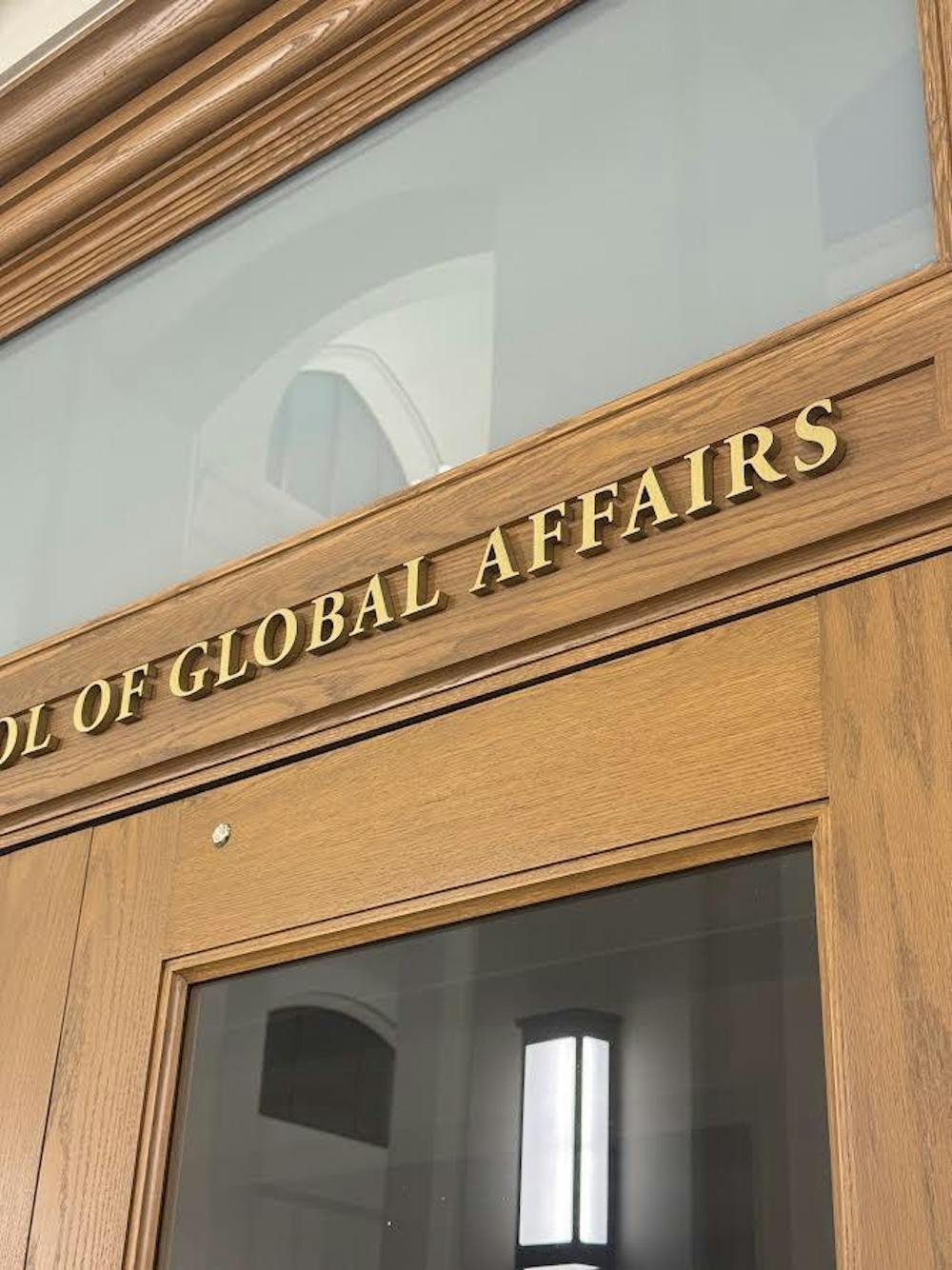
Gallagher is dean of the Keough School of Global Affairs. She was appointed to this position in May 2024.
The Pulte Institute for Global Development works to address global poverty and inequality through research, policy and practice. As part of the Keough School of Global Affairs, the institute partners with governments, non-profits and the private sectors to develop sustainable solutions in areas such as health, education, entrepreneurship and humanitarian assistance.
The cuts stem from recent executive orders and a shift in U.S. foreign aid policy, which triggered stop-work orders on federal contracts primarily those issued by the U.S. Agency for International Development (USAID) and the Department of State.
“This has had a direct impact on the Pulte Institute for Global Development and the Peace Accords Matrix (PAM), a research and policy project at the Kroc Institute for International Peace Studies,” Gallagher wrote.
Before the stop-work orders, the Pulte Institute had 40 staff members and two teaching faculty. With grants terminated, Gallagher said the Institute had to restructure and reduce staff significantly.
“When federal funding that the institute relied on was pulled, (mainly through the dismantling of the U.S. Agency for International Development), the Pulte Institute had to pivot to an organizational structure that would continue to support the core mission of the institute and yet be financially sustainable,“ Gallagher wrote.
University and Keough School leadership worked to place affected employees in other positions across campus.
“Currently, most affected staff were either given new positions in the restructured Pulte Institute or have found new positions at other units at Notre Dame, including in the Keough School,“ Gallagher said.
Although research operations were directly affected, Gallagher noted that academic programs for students remained intact.
“This change affected our research operations, but did not directly impact students’ academic programs or curriculum. Some students hired on affected grants did lose access to part-time hourly employment,” she wrote.
In a post on its website, the Pulte Institute addressed the ongoing impact of its work, writing, “Research in this field has shown strong returns–estimated at $17 in social value for every dollar invested, according to Nobel laureate Michael Kremer. And while the policy environment may be uncertain, our responsibility to support vulnerable communities is not.“
The transition process included consultations with Pulte staff and affiliated faculty. Students, faculty and staff were kept informed throughout the changes. Gallagher added that in the case of the Peace Accords Matrix (PAM)—a project under the Kroc Institute—bridge funding was secured as the team anticipates a new grant submission.
The new structure of the Pulte Institute is already in place, and while some operations have scaled back, Gallagher emphasized that the institute continues to support global development work aligned with its mission.
In the same post, the Pulte Institute concluded its thoughts on the changes, writing, “The Pulte Institute is grateful for its home at the University of Notre Dame within the Keough School, where research to end poverty and ensure sustainability remains an institutional priority and where partners and benefactors share in this commitment. As the institute launches its new organizational model and cultivates new funding sources, we do so with focus, intention and a renewed sense of purpose.“