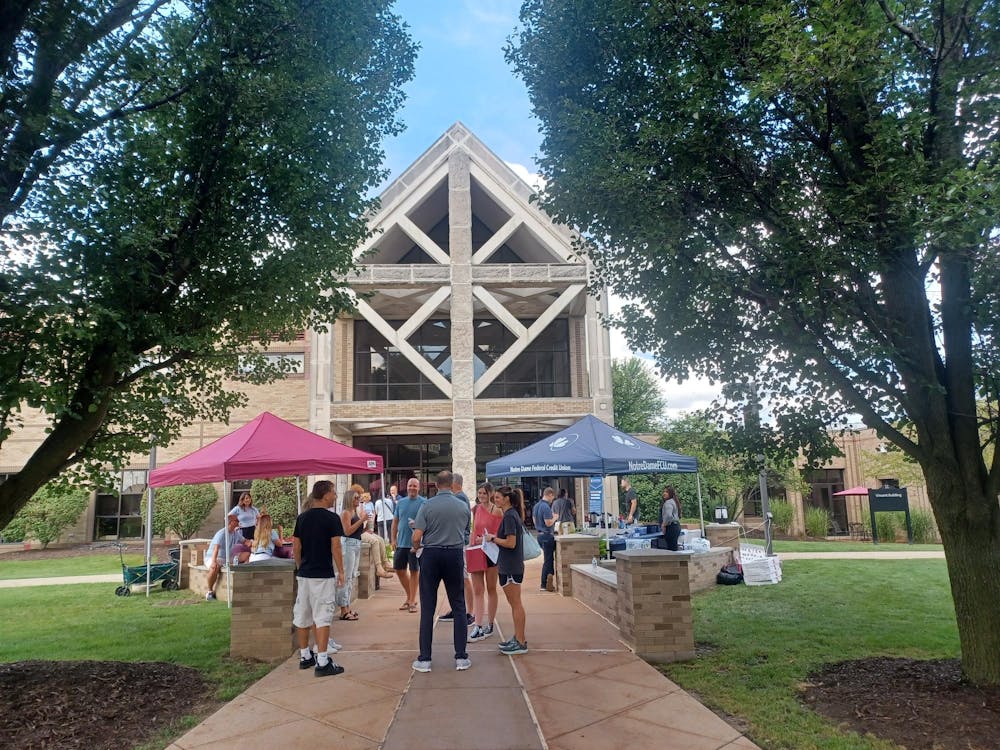
On Friday Holy Cross College conducted their annual matriculation ceremony for incoming freshman in the class of 2029. Freshmen, with the help of their families, moved into their dorms between 9 a.m. and 1 p.m. Parents were also invited to the ceremony, which began at 7 p.m. in front of the Pfeil Center.
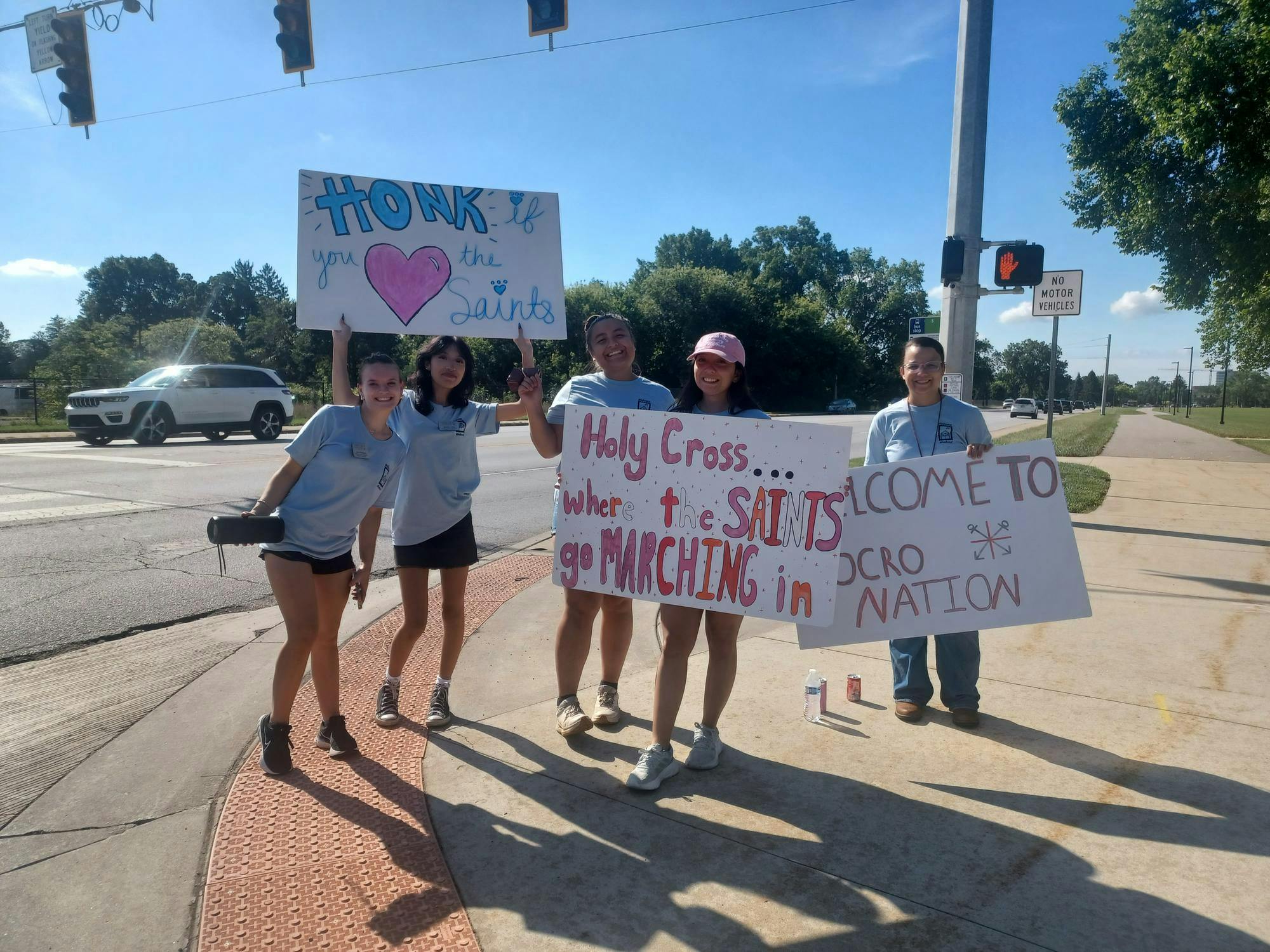
The move-in crew, a group of upperclassmen students throughout the halls, assisted freshmen with their move-in process. Freshman Madeline Cloud said that the crew were helping, “asking what room you were in, grabbed your stuff, moved it.”
The matriculation ceremony was held near the Millenium Arch, signifying the students' new journey. Parents and current Holy Cross students welcoming looked on and celebrated the new students as they walked across.
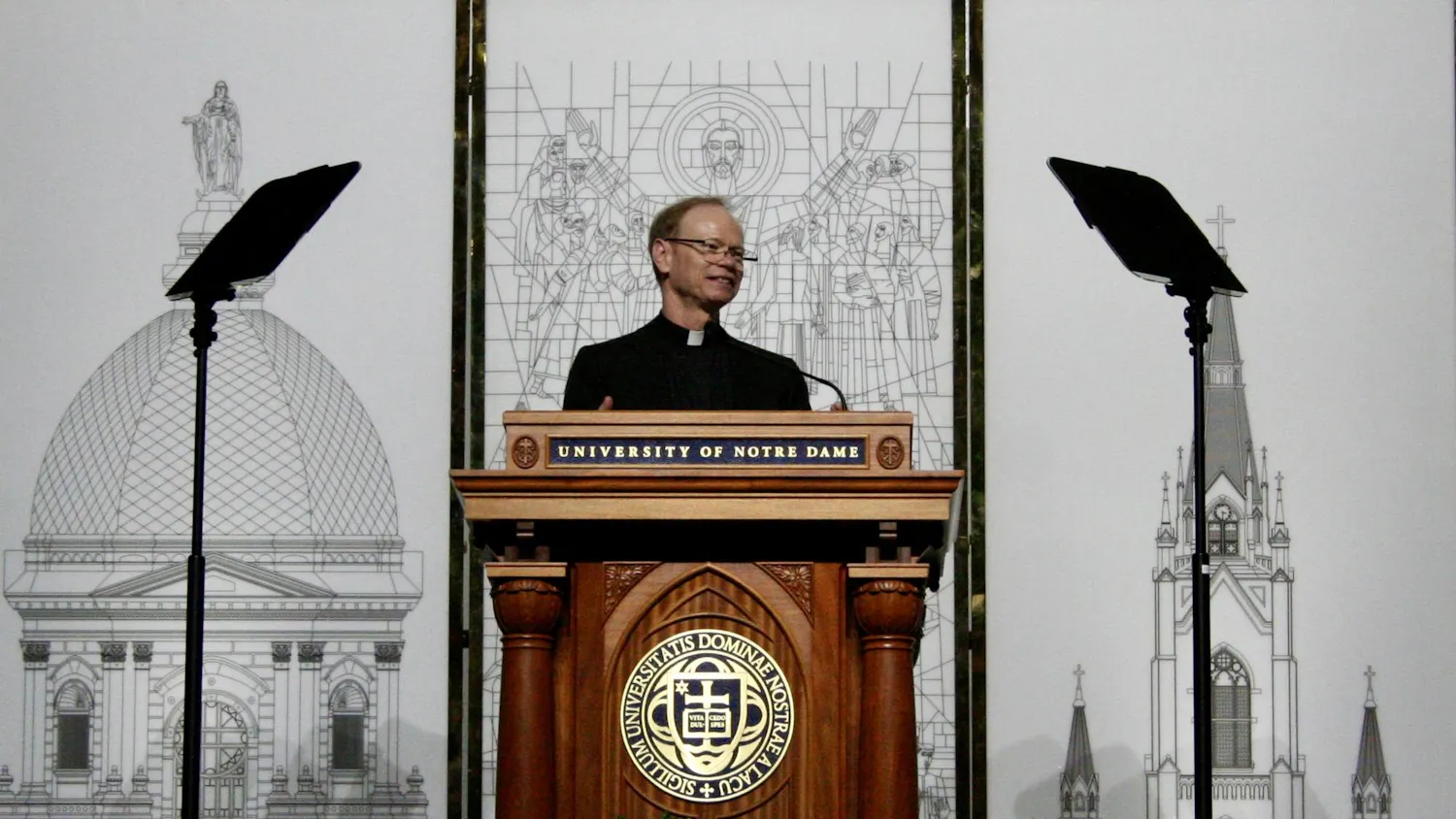
College President Marco Clark said that the ceremony, started in 2003, is significant to students joining the Holy Cross community hoping to make an impact. Students participate in the ceremony twice: once at the beginning of their college experience and again at the end of their four years.
“We talk a lot here about something we call the Holy Cross way and it exists throughout the tri-campus community. A sense of welcome, a sense of joy, a sense of family and as we welcome them into this community they are also making a commitment to participate in that. To create a sense of community, to engage in that community in such a way that they bring their unique talents and gifts to it,” Clark said.
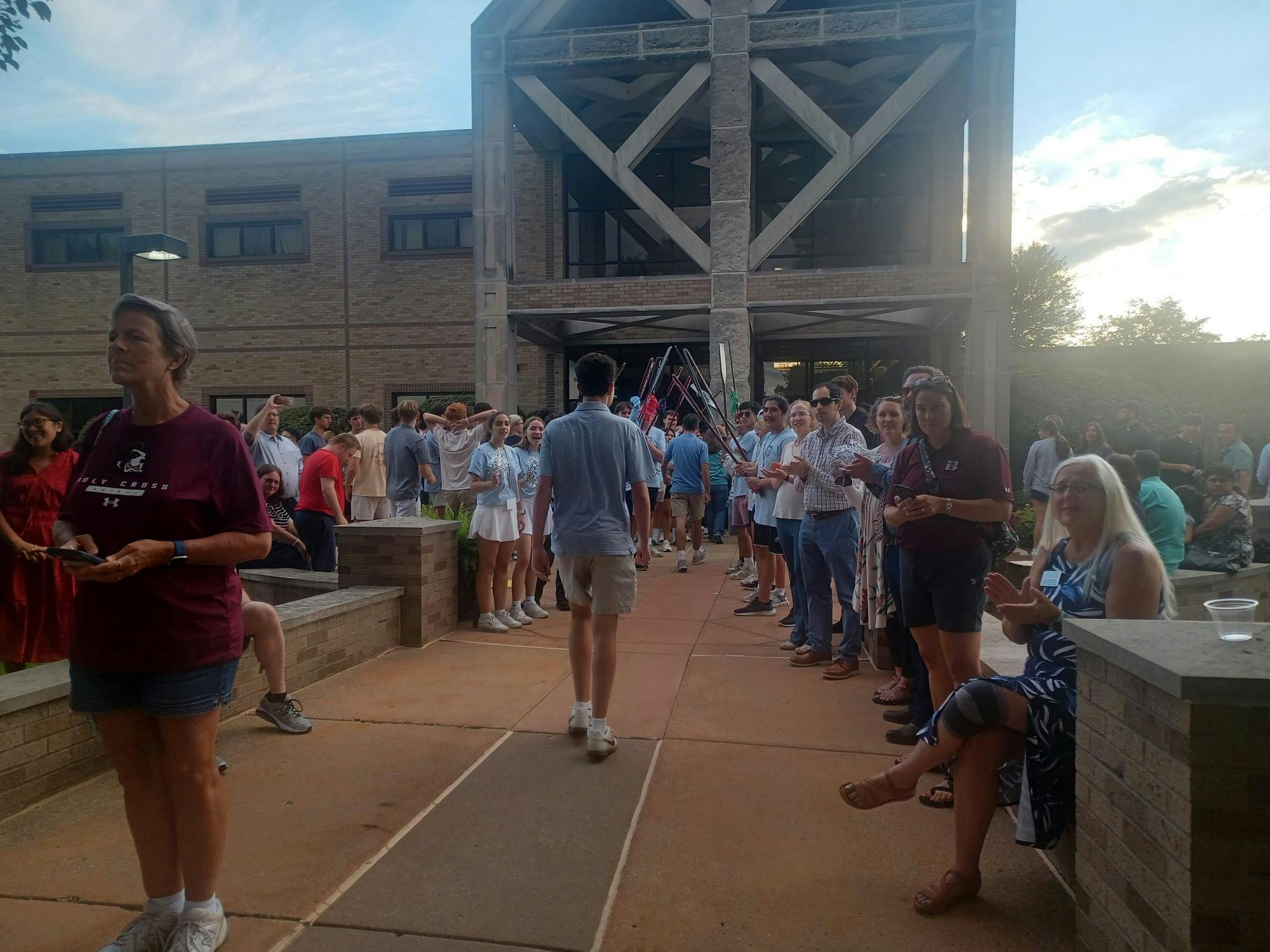
During the matriculation ceremony on Friday evening, students were able to walk through a welcome aisle with sticks raised by returning students. The aisle was also filled up by parents attending the ceremony.
According to an email from Matthew Palmer, associate vice president for integrated marketing and communications, 31% of Holy Cross students come from Hispanic or Latino backgrounds and 20% of students are considered first-generation. Clark said that the College has made significant efforts to recruit students from unique backgrounds throughout the years.
“We have students coming in from 39 states and 19 countries in this class and so that is pretty remarkable to us, this small Catholic college in Notre Dame, Indiana,“ Clark said. “We also are one of the Cristo Rey preferred university network partners. We are now identified federally as a Hispanic-serving institution. So I think that students see a real sense of community, a sense of welcome and a sense of belongingness.”
Some of the College's new initiatives and developments to enhance the student experience include the construction of a new residence hall, a new integrated community that includes seminars for every cohort year, a new business curriculum and the addition of a computer science professor that teaches quantum computing. Eva De La Rosa, a junior, discussed her excitement for the new business curriculum.
“I am really looking forward to our classes and how they're going to change. As a business major, they have changed the way that the business major, the courses and the curriculum is going to look for the freshmen. I'm very excited for that and very excited to see how that's going to transition for me as a junior this year,” De La Rosa said.
Clark said that the class of 2029 is “probably the most competitive and selective class that we’ve had perhaps in the history of the College” when considering GPA. He also said that “this is the largest enrollment that the College has had in our history.”
After the matriculation ceremony students broke into groups, introduced themselves to each other and paired up for different activities. Events included included a TikTok challenge with the song “Sweetener,” sports and drawing challenges near the Pfeil Center, along with Kahoot trivia.
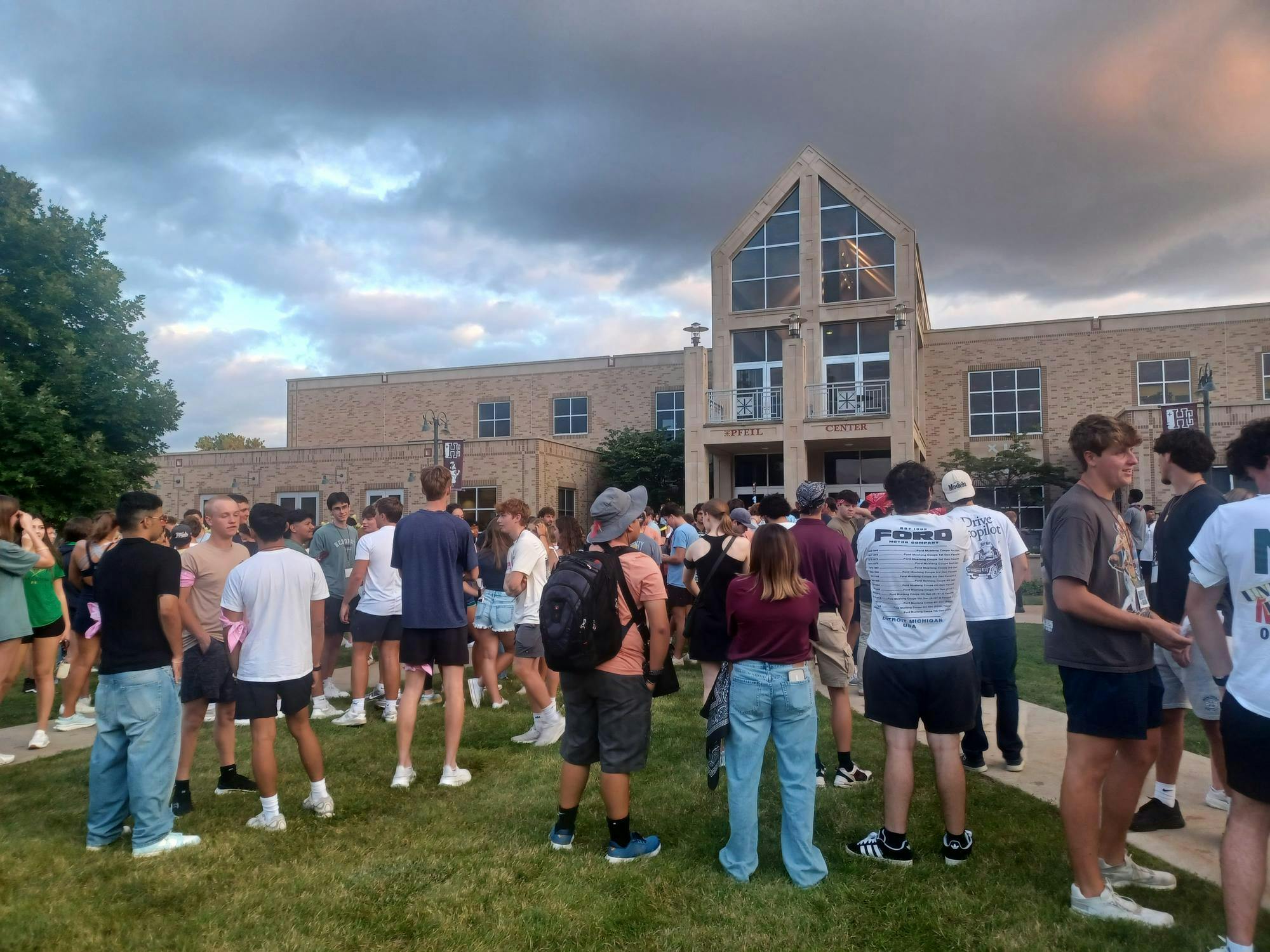
Holy Cross students oversaw the organization and planning of the event, which was intended primarily for students at the College. Yet, Clark discussed the importance of the input and collaboration between the tri-campus community.
“We live in a world today where in so many ways we face an existential crisis and right here in the tri-campus community we have a chance to prepare the next generation of leaders who can make a difference,” Clark said. ”As they step into this, they get a chance to begin forging a future for themselves and we get a chance to walk that journey with them.”