“I know that despite all these thoughts, tomorrow I will wake up and I will still be me.”
In a way, she was right. She could abstract with accuracy the injustices she witnessed and bore, the complex oppressions that very few grasped but all acted upon, the incomprehensible cruelty of others. She had the cognition to observe and the heart as recipient of the horror, but to all this her hands were ultimately tied. Why, how was her awareness to change the world? Indeed, on the morrow the world would appear identical, and soon the days were to mellow and blend one atop the other, without it ever sparing a moment for her emotion. No matter the depth of her volition, there was no link of causation. Such violent flare, constrained in an effectless body. Alas, she went on speaking.
A petrified morality, carved into the bedrock beneath the weight of a willfully ignorant universe.
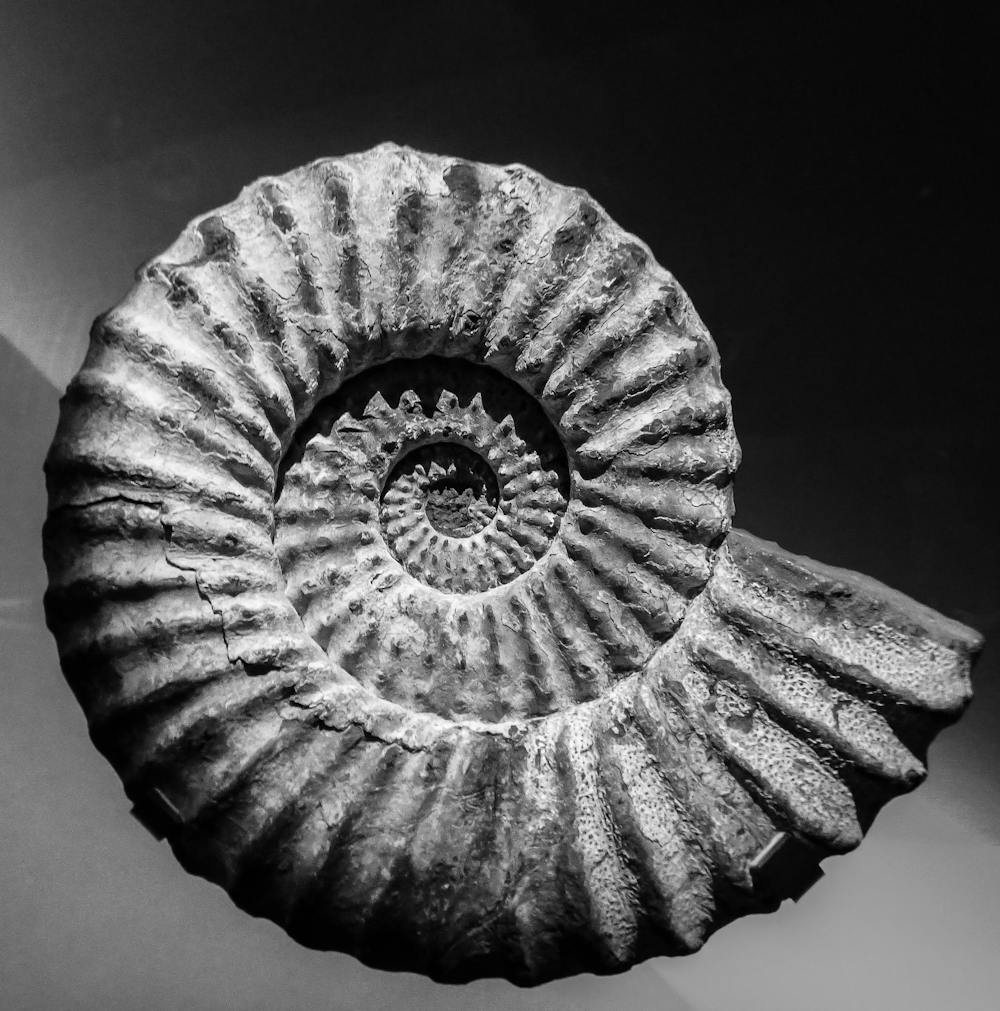
“If future archeologists look at my bones, that’s all they will see.”
It was this sentence that stirred something within myself. For there is truth in the fact that the medium with which historians and sociologists will comprehend you is, above all else, reductive. May they know your name, your dates, your familial and professional ties, your gender and roles, but they will never know you.
Within your fossil there will be none of your joys, nor your beliefs, nor your thoughts. No trace of your hopes in the marrow, nor of your dreams in the cranium. Naught of you. The subjective you may attempt to portray in stone to leave behind — your writings, your arts, your legacies — but your echoes will never live up to your experience.
No one is truly remembered, for no one knows the depths of another’s soul.
Does that turn the immaterial, that which is the true essence of you, outright worthless?
On the contrary, it uplifts it as most sacred. It is, in the end, the lone rebellion against the uncaring world.
At times, you will not possess the power with which to shape the world. Nevertheless, you can forever shape yourself. In the absence of dominion of your surroundings, you were imparted with the absolute of the self. And therein lies the beginning of material change: in you.
The blessing of recognition bestowed upon the lucky few is no shackle to perpetuate the semblance of imprisonment. Rather, it is the key required for freedom of the miseries of the world. To come to terms with the terrors beyond and with one’s practical limitations is a harrowing, but necessary experience for realistic change.
Yes, to be moral in an immoral world is fundamentally harder. It takes a much greater strain on yourself to feel, than to succumb to naiveté. The pain may incline someone to give into ignorance, to don a facade of bliss. The easiest, and perhaps the most cowardly, thing one could ever do is to close oneself to that which provides comfort lying nearby, to blind one's eyes and embrace apathy, to create logical fallacies depicting those who are far away as anything less than fellow members of humanity.
Nevertheless, it is this very strife which permits one to leave this world better than one found it. The change one seeks cannot possibly commence from the material reality, where cruelty and discord are inevitable fundaments, but from the idealistic psychology waging internal warfare. In the discomfort of the distance between how things are and how they ought to be is the motivation to strive for it. Only upon the wrath of injustice could one ever seek justice.
Indeed, when enough of the gifted hold true and come together, then and only then does the possibility of positive change emerge. They may not appear as much: the buds of morality and truth brewing within some with no immediate and effective might. But we must not forget that we exist in a continuum, where others may come to know the truths that you do, if you wish to share them. The seeds of change are nurtured by each other’s companies, and will only flourish if they have one another. Then, the immaterial can turn material.
Your fossil will not be you, it never could have been. It will not have borne these truths and these duties. It will not have felt the horrors and acted nevertheless. That is only you.
Perhaps, the world tomorrow will be the same, but you do not have to be. And through you, someday, the world might change too.
Carlos A. Basurto is a senior at Notre Dame studying philosophy, computer science and German. He's president of the video game club and will convince you to join, regardless of your degree of interest. When not busy, you can find him consuming yet another 3-hour-long video analysis of media he has not consumed while masochistically completing every achievement from a variety of video games. Now, with the power to channel his least insane ideas, feel free to talk about them further at cbasurto@nd.edu.