Last Saturday, in another orientation activity, our groups walked around different parts of London, guided by a professor. As we walked through the East End, looking at street markets, old insane asylums and the apartments of Jack the Ripper’s victims, it became clear that London has faced great unrest and struggles. In the past, London has encountered devastating fires, plagues and wars. Now, the latest battles of the past week are a Tube strike and a human rights demonstration, giving everyone a taste of London’s rich culture of protest.
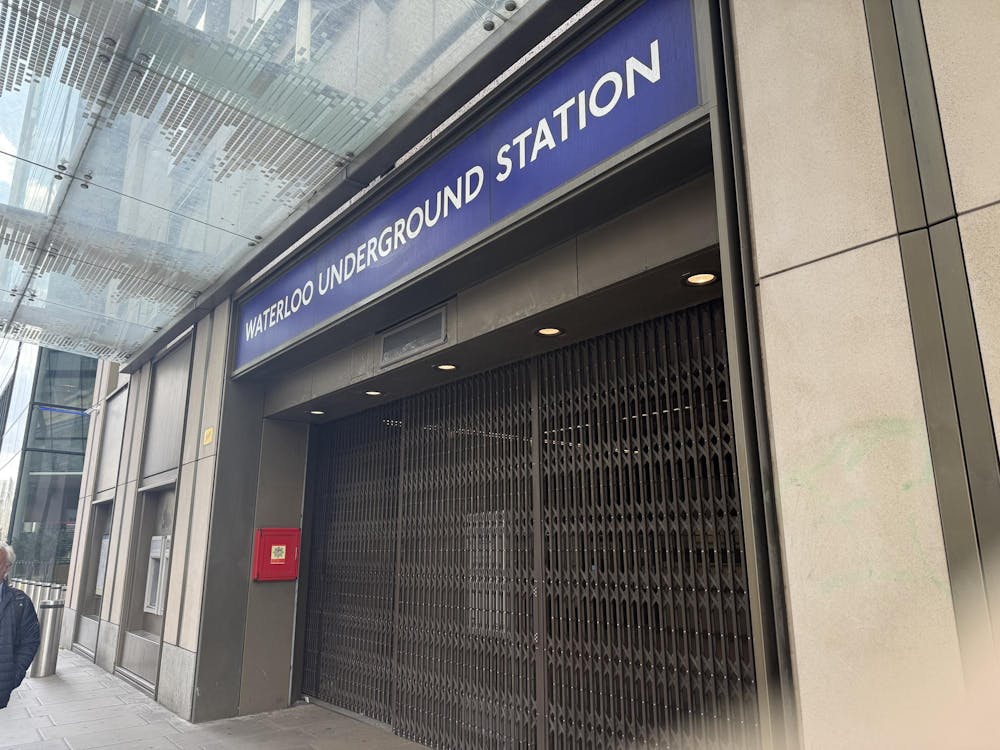
The London Underground staff have begun a five-day walkout, resulting in the shutdown of most major tube lines. While my walk to Fischer Hall will not be affected by this strike, many people will be unable to make their daily commute. The streets have become littered with people, classes have been cancelled and every commute has doubled in length.
Members of the Rail, Maritime and Transport (RMT) union are demanding better pay and working conditions, such as a 32-hour workweek. However, the city has deemed these requests unaffordable, and they have engaged in negotiations with the union. Transport for London has offered the workers a 3.4% pay raise, which the union did not accept. While I usually support strikes and unions, the Tube strike is holding the city for ransom. To satisfy their conditions, the London Underground would have to raise fares, which (for travel between Zones 1-2) already cost Londoners about £140 a month.
As a result, the average Londoner is the one who is feeling the effects of this protest. On Monday, Lime bikes saw a 58% increase in the number of trips taken. Others opted to take a £22 boat ride across the River Thames or just accepted the hour-long walk. Commutes have become not only more difficult but also more expensive.
While the RMT union seems to be holding all the cards in this strike, other recent protests in London have reared a vastly different outcome. On the Saturday of my orientation walk, around 1,500 people gathered in Parliament Square in Westminster to peacefully protest the ban on Palestinian Action, which was labeled as a terrorist organization. During the demonstration, 857 people were arrested under the Terrorism Act.
The British government cites Palestinian Action as the source of millions of pounds worth of damage. Human rights organizations have criticized the government’s decision, claiming it limits the free expression of peaceful protestors.
This week, multiple protests have occurred, and while some have been successful, others have led to catastrophic results. The clear difference between the two demonstrations is that one is from a legally viable union, while the other is in defense of a “terrorist” organization. However, it does not seem fair to categorize these two groups as simply “legal” and “illegal.” Protests are not meant to be in accordance with the government. They are meant to give citizens a voice when they feel there is injustice.
Being unionized does not give union members the right to hold the city hostage for absurd demands or to threaten to disrupt every citizen’s life. It is also not right for the police to brutally shut down another protest, which drew in great nonviolent support, because they do not have the law behind them. Freedom of expression is not when it complies with the government’s standards; it is for when the people feel they have been misrepresented.
Famous street artist Banksy responded to the Palestinian Action protest by painting a mural of a judge beating a protester with a gavel on a wall of the Royal Courts of Justice. While the mural was covered up shortly after it was painted, it mocked the British justice system for suppressing its citizens’ demonstrations. The British government might paint over the blood on the walls and handcuff ordinary citizens as if they were Taliban members, but they will never be able to strip people of their voices. Protests will continue to happen until people feel like their demands are met. It does not feel fair to throw money at a union just to get them to start doing their job, while innocent people are marked as criminals. Will the British government continue to cower at some people’s requests and just arrest the others who dissent? Or, will they take the difficult, but needed action to reform justice and uphold their duty as a democratic government?
As I walked through the East End, I saw that London is not just Buckingham Palace or Westminster Abbey, but it is also a place where civil unrest is evident and inevitable. You can either let it infect you like the plague or slaughter you like Jack the Ripper, or you can let it push you forward, like the tide of a £22 boat ride across the River Thames.
Abby Hernan is a junior, majoring in political science and applied & computational mathematics and statistics, from Orlando, Florida. She is currently studying abroad in London and is excited for her semester out of South Bend. When not writing for The Observer, you can find her buying overpriced coffee, scrolling through X or roaming the halls of Lewis. Reach out to ahernan@nd.edu.