In the Sept. 12 edition of The Observer, Aynslee Dellaca’s piece entitled “Why the servant’s heart is dying” articulated today’s mainstream culture and how it is leading to individual isolation and a loss of interconnectedness among human beings. I agree with many of her assertions and the theme overall that service to mankind is losing luster to a society that increasingly craves instant gratification and a virtual sort of existence.
I majored in philosophy, politics and economics in undergraduate studies before earning my master of nonprofit administration degree from Notre Dame this past May. On the way to earning the former, we studied different moral, political and economic theories on how a society ought to run in order to produce the optimal society.
Of course, people can reasonably disagree on what constitutes an “optimal” society. But, in the context of Notre Dame’s mission, I think of an ideal society, in the theoretical realm, as one in which everyone views each other with dignity, has an eye for justice and has a propensity to extend grace in line with Christ’s life and teachings.
As we are imperfect, and in the vernacular of the Catholic framework, sinful, human beings, there will be lapses in virtue and outright vicious acts in the real world. If the world did always operate consistent with the Catholic Church’s philosophy and theology, there would be no need for nonprofits. As we would say in class, “The best nonprofit is no nonprofit,” as nonprofit organizations are intended to medicate social illnesses.
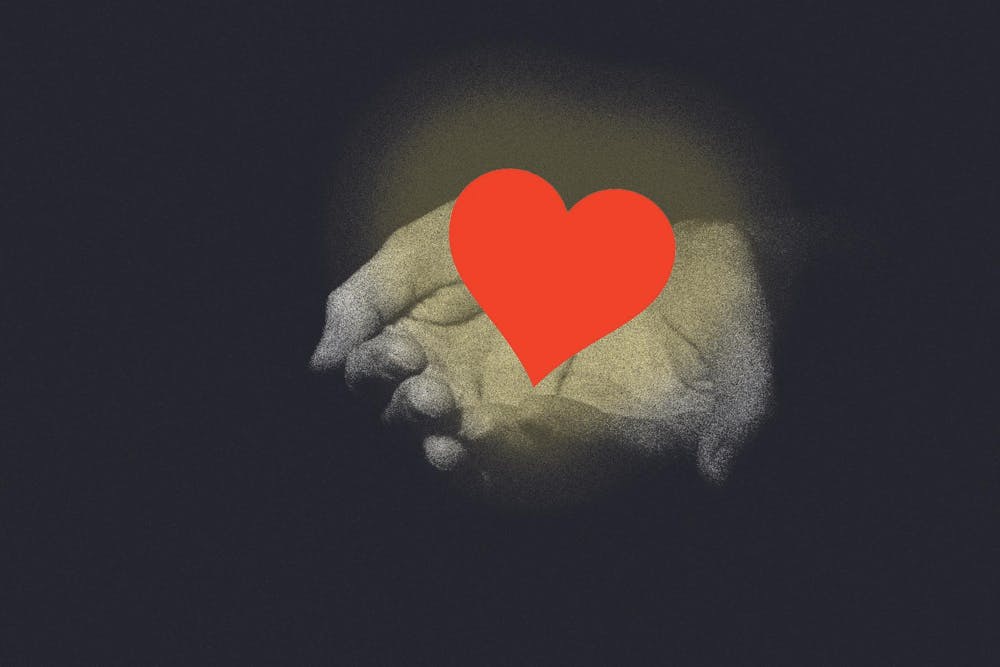
While I agree that the culture and landscape for individuals have evolved, I do consistently see that the servant’s heart is still beating. In my service as a volunteer firefighter and paid emergency medical technician during my undergraduate years, I witnessed the aftermath of many traumatic events. It makes you appreciate the value of human life in a way few other things can.
Despite the suboptimal circumstances in which we operated, I saw people risk their own hearts to save others. It is worth stating that it is not integral for an act to be life-endangering to be inherently courageous or altruistic. But, at its core, service to others is sacrificing various aspects of one’s life in the name of love for others. It is giving talent, treasure and crucially to nonprofits, time to others without expectation of anything in return. It is Christ’s love applied to our own lives.
During my undergraduate studies in a state school, we often read and discussed political philosophy that did not include or necessitate the existence of a deity. I, among many others, often thought beyond the curriculum to question if faith in a creator could be reconciled with some of the theories we studied. Sometimes they could, and for others there was no reconciling to be had. This is where Notre Dame showed me how God is not only important to have in creating a service-driven and peaceful society, but he is necessary.
I love my alma mater and will always support the university, its students and its culture. But I must say the culture at Notre Dame is one that not only encourages service and love for our fellow human beings, but Our Lady’s University also exemplifies it. That is evident every day in the student body, faculty and staff here on this extraordinary campus.
The first thing the instructor taught us in the EMT curriculum was that we are not medical providers; we are patient advocates. In other words, we do whatever is in the best interest of our patient. Right now, we as the Notre Dame community are collective emergency medical technicians. And it is our job to care for and advocate for our patient, the Servant’s Heart, always in its best interest.
Nik Filip
Class of 2025, Executive Master of Nonprofit Administration
Sept. 25