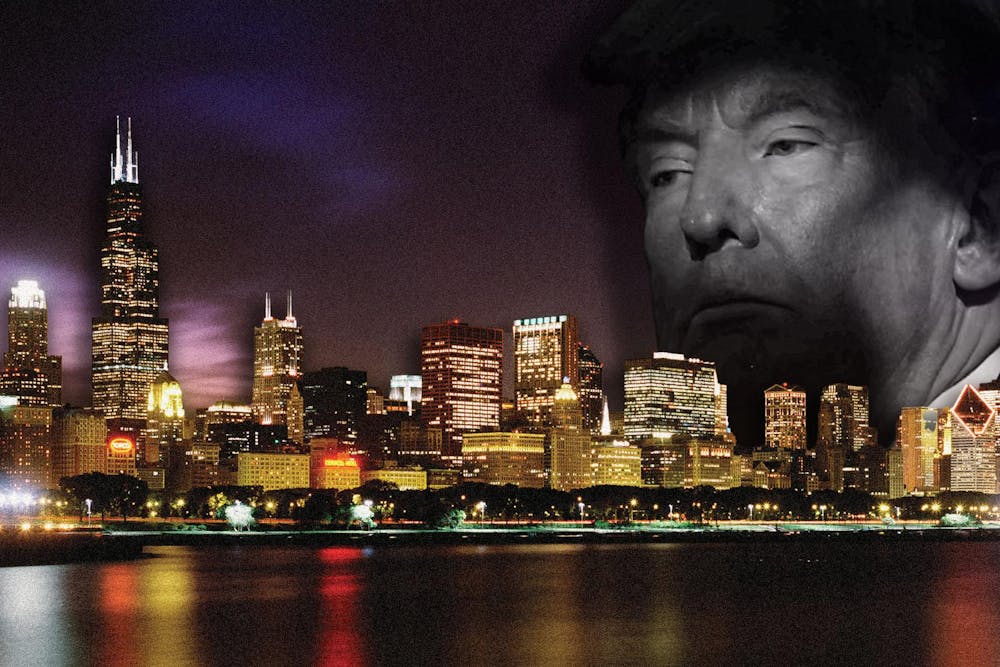
Last month, I found myself enjoying a pleasant meal in Stratford, Ontario — a city of approximately 30,000 residents, most famous for its annual performing arts festival (which also explained the presence of the 50 or more Notre Dame undergraduates spending the weekend in the city). After finishing dinner with a group of fellow Domers, the server — perceiving our inherent Americanism (is it that obvious?) — asked where we were from. “Kentucky,” replied two of us. “Los Angeles,” said another. The fourth answer — Chicago — aroused great excitement in our Canuck server. “Chicago!” he said. “That’s where the troops are now!”
I suppose it should come as no great surprise that the United States presently enjoys a precarious international reputation. It also should be no surprise that our neighbors to the north feel a sense of resentment toward us. Media outlets across both the United States and Canada, for example, observed earlier this year a trend of Canadian sports fans booing “The Star-Spangled Banner” at hockey and soccer games.
Booing the national anthem is small potatoes compared to the needless antagonizing inflicted upon Canada by the United States. From the sitting U.S. president repeatedly referring to Canada as the “51st state” to the sweeping tariffs applied to one of the strongest trade partnerships in the world, a once beautiful international friendship continues to deteriorate.
Do I fault my server for his ironic excitement at learning that he was waiting on a resident of Chicago? Not at all. It seems like a cruel joke that the U.S. government would wage war on one of its greatest cities.
But that’s exactly what is happening.
President Trump has placed a focus on reshaping the military in the past few months, including an executive order to rename the Department of Defense to the Department of War. Why exactly the self-purported “Peace President” has decided to signal his support of celebrating “War” is a question for another day, yet his post regarding the department and Chicago demands further consideration.
In his meeting with America’s generals, Trump called for America’s cities to be a training ground for the military. After describing Chicago as a “war zone,” the president then deployed the National Guard to the city despite the protests of the city’s mayor and the governor of Illinois.
The feud between Illinois Gov. J.B. Pritzker and the president now occupies the national stage. Pritzker has taken to a media blitz, claiming that the president is the one who turned Chicago into a “war zone.” In response to the governor’s actions in “failing to protect ICE” operations in the city, Trump asserted that Pritzker “should be in jail.” Pritzker then mocked the president in a recent appearance on Jimmy Kimmel’s show, reporting “live from war-torn Chicago.” There’s an uncomfortable tension developing during this administration where political threats and political theatre blend together. It becomes harder and harder to tell what’s really threatening vs. what’s just another “threat to democracy” platitude. When considering whether to take Trump’s open hostility to governors seriously, however, it’s crucial to remember the effects his actions have on the nation’s confidence in our institutions.
The president has made it an apparent policy of his second administration to antagonize the American people, their elected officials and their institutions. Whether it’s deploying the National Guard illegally (as multiple federal courts have ruled) or cutting research funding from the crown jewels of the American university system, President Trump’s irreverence toward his nation’s institutions creates tangible and intangible damage.
The Canadian server’s perception of the current situation in America perfectly encapsulates our nation’s international reputation. Forbes recently reported that Canadian tourism to the United States has been on a precipitous decline. Boycotts of American products are now common in Canada, with American spirits imports dropping by 85% since tariffs have been enacted. Anecdotally, I can verify that Canadian nationals are aware and puzzled by our president’s decisions to pursue aggression toward the American people as much as they are puzzled by the president’s aggression toward their own nation. How ludicrous must it look to outsiders that our president is actively calling for state officials to be jailed while he simultaneously deploys the military to their state’s cities?
The most frustrating part of Trump’s war on America’s reputation is that it lacks any discernible purpose. What is the ultimate goal of these actions? What grand plan is the president promoting? What problems are being fixed?
Our relationships with other countries and faith in our own institutions remain paramount in preserving the monopoly on soft global power that the United States has enjoyed for nearly 40 years. Those relationships are slipping and have been slipping for quite some time.
That’s a trend that should be noticed and not taken lightly.
While Canadians enjoy their peaceful dinners, their neighbors to the south may look out the window and “see the troops marching.” Today it’s Chicago. Tomorrow it’s your hometown.
Grayson Beckham is a freshman living in the Coyle Community in Zahm Hall. He hails from Independence, Ky. When he's not publishing woke propaganda inThe Observer, he studies political science and eloquently uses his silver tongue on the mock trial team. You can send him relevant hate mail at gbeckham@nd.edu.