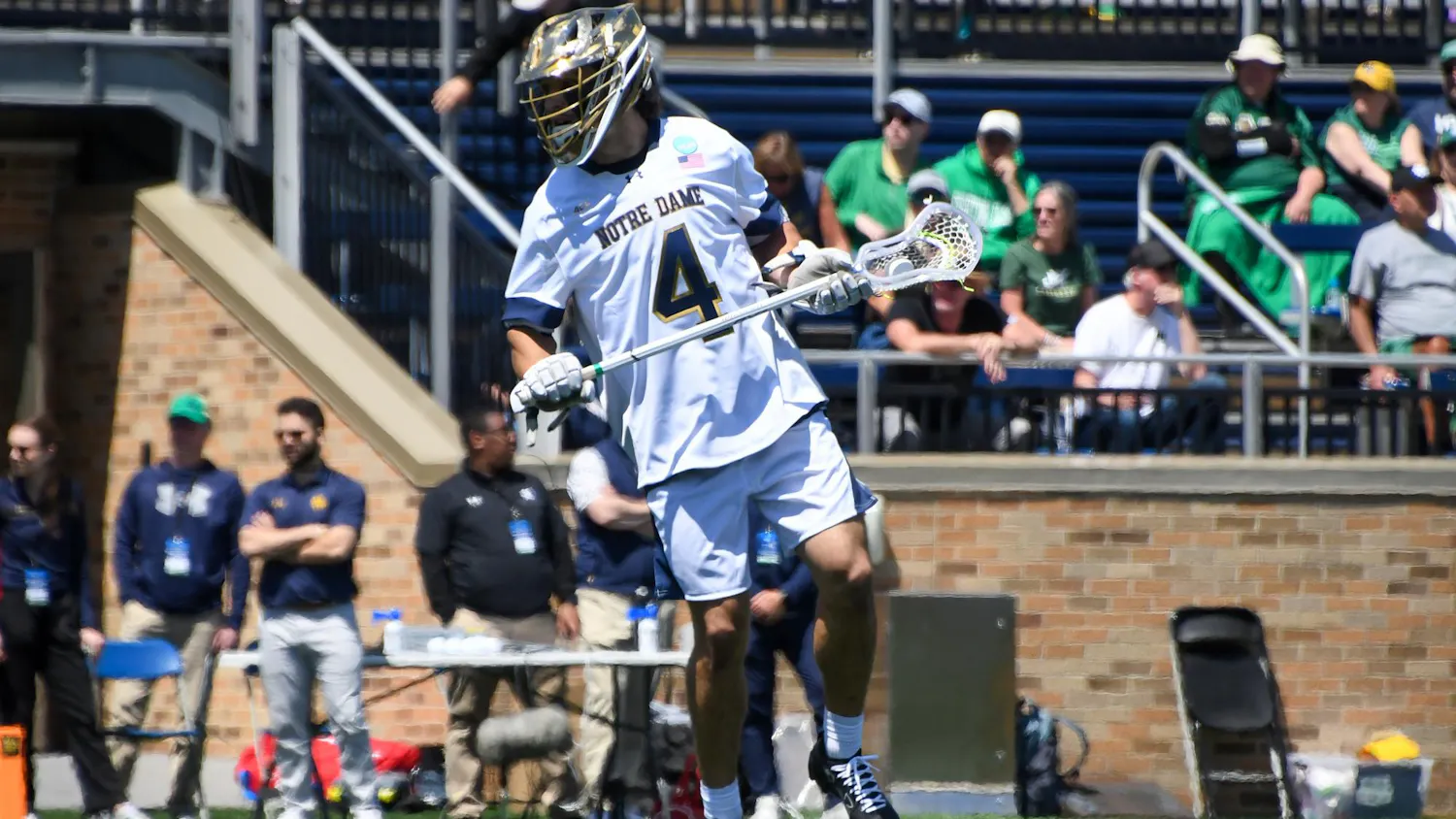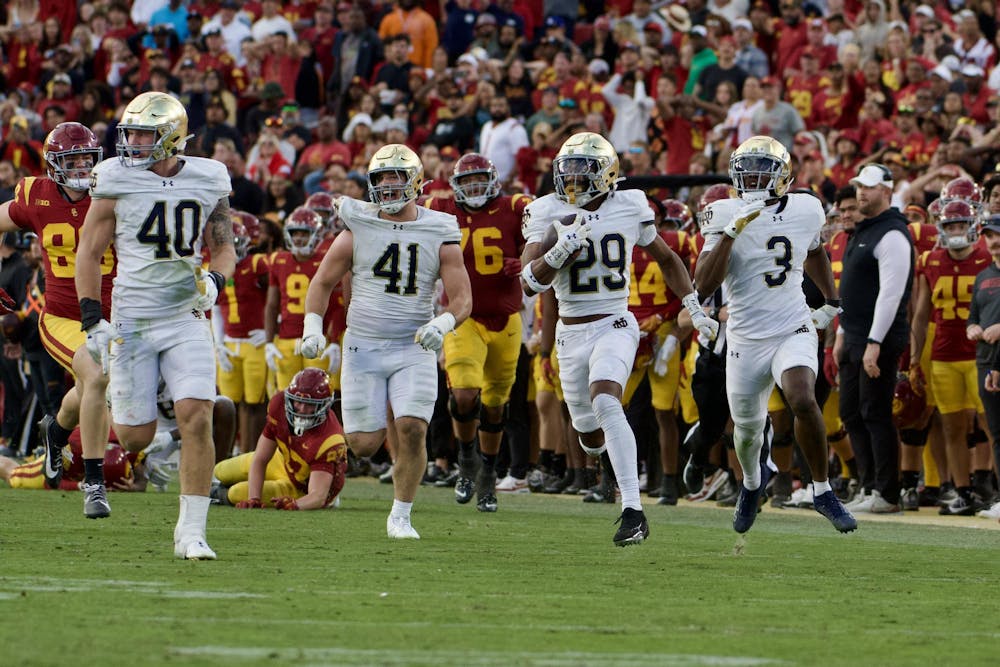
There are two different stories as to how the storied football rivalry between the University of Southern California and the University of Notre Dame came to be.
One has been coined the “conversation between wives.” USC was on the hunt for a new rivalry, so athletic director Gwynn Wilson and his wife were sent to Nebraska to watch Notre Dame play the Nebraska Cornhuskers. After the Irish lost 17-0, Knute Rockne didn’t support the idea of adding a series with the Trojans; however, after minor convincing from the Wilsons, Rockne agreed and the sport’s greatest showdown began.
A different, more historian-backed tale, is the one that many fans believe. According to college football historian Murray Sperber, many colleges in the 1920s were concerned about the commercialization that stemmed from large money payouts that teams would receive from traveling and playing in bowl games. With Notre Dame’s rise in popularity as they collected wins over top programs, they caught the eyes of the Rose Bowl Committee, who pitted midwestern teams against top teams from the West Coast. Rose Bowl member institutions such as Stanford and California refused to play Notre Dame regularly as they viewed the Irish as scholastically inferior, whereas USC coach Gus Henderson reached out to Rockne directly, saying USC would welcome the chance to compete against Notre Dame. Although the Irish played the Cardinal for the Rose Bowl that year in 1925, the Trojans were immediately added to Notre Dame’s annual roster the following year.
The rivalry between the Irish and Trojans began in 1926, with breaks from 1943 to 1945 for World War II and 2020 for the COVID-19 pandemic. It has remained a much anticipated game for fans of both programs, and even those who don’t support either team. With their massive fanbases and storied histories, it’s important to note just how renowned these two programs are. Together, the schools have won a combined 24 national championships and 15 Heisman Trophies (eight for USC — the most in college football — and seven for Notre Dame), have 89 members of the College Football Hall of Fame (46 from Notre Dame and 43 from USC), and 26 members of the Pro Football Hall of Fame (13 from both).
Both teams have given each other their fair share of spoils, ruining the opposition’s season-long hard work. The Irish handed the Trojans their first losses of their entire season in 1927, 1947, 1952, 1973 and 1995, while USC broke the Notre Dame win streak in 1931 and 1971.
In 1968, USC came into the game ranked first in the country while having an undefeated season, riding off the success from eventual Heisman Trophy winner O.J. Simpson, whereas Notre Dame was only 7-2 on the season. Despite Joe Theismann starting at quarterback and throwing a pick-six early in the game, his confidence was unfazed, and the Irish led 21-7 at halftime. The Trojans were able to push past the defense and score twice in the back half of the game, and with two unsuccessful field goal attempts from the Irish, the game ended in a tie. The Trojans, then No. 2, played No. 1 Ohio State in the Rose Bowl soon after, and were handed another loss.
USC spoiled Irish title hopes in 1938, 1964, 1970 and 1980. In 1938, Notre Dame was on the road to the national championship, as coming into the game they were ranked first in the nation. However, following the loss, they dropped to fifth — completely losing the chance to be in the national championship. In 1964, the Irish were in the midst of a program turnaround, and under quarterback John Huarte, led 17-0 at halftime. The Trojans would overcome that deficit to win the game 20-17 behind star players Craig Fertig and Rod Sherman. This loss dropped Notre Dame to third, causing them to lose their chance at the national championship. In 1980, the Irish were once again within reach of a national title, yet they came out with a weak defense and were barely able to put up any points. After losing their season and the rivalry 20-3, they lost to Georgia in the Sugar Bowl soon after.
In 1988, both teams were undefeated and happened to be the top two ranked teams in the country. Lou Holtz, despite public outrage, decided to play USC without Ricky Watters and Tony Brooks, who were suspended. Wearing their underdog status proudly, the Irish defense, led by Frank Stams and Stan Smagala, and offense, led by Tony Rice, were able to capture a victory, pushing them one step closer to the national championship, which was later clinched with a Fiesta Bowl triumph over West Virginia.
The rivalry can be broken down into periods and defined by key games within. The 1920s are when the rivalry began, with the key meetings being the first game in 1926 that ended in a 13-12 Notre Dame win, and the 1927 game when Notre Dame won 7-6 in Soldier Field in front of roughly 120,000 fans. The 1930s saw Rockne’s legacy and the rise of USC’s program. A Notre Dame victory in 1930 was Rockne’s final regular season game, and 1931 saw USC break the Irish’s 26 game winning streak.
In the 1940s, Notre Dame dominated the college football landscape, winning four national titles. However, in 1948, USC tied the Irish and crushed their 21 game winning streak. The 1950s were full of close contests, with an 9-7 win in 1950 for the Trojans and a 23-17 win for the Irish on a late touchdown in 1954. The 1960s were considered the golden age of the rivalry as both teams won national titles and were home to the 1966 game where Notre Dame beat USC 51-0. O. J. Simpson led USC to a 24-7 win the next year, before 1968 and 1969 both ended in ties, which kept tensions high.
The 1970s saw lots of ups and downs as in 1973, the Irish won by a large margin, but lost 55-24 the year after as USC scored 55 points in 17 minutes. In 1977, the “Green Jersey game” made Notre Dame victorious and helped propel them to a national championship under Dan Devine. 1983 began the decade of dominance for the Irish, as they won the next eleven matchups against the Trojans. This stretch ended in 1996 when USC won 27-20 in overtime, which also happened to be the first game in the series that reached an extra period. USC dominated the first decade after the turn of the century, with Carson Palmer’s 425-yard Heisman-clinching game in 2002, the controversial “Bush Push” game in 2005, and the merciless 38-0 shutout in 2007. Notre Dame rebounded under Brian Kelly and Marcus Freeman and has since won six of the last seven matchups.
This year’s Battle for the Jeweled Shillelagh will mean more than it ever has for the Irish, as a win over USC would give them their best win as they look to return to the College Football Playoff. This weekend will also be a serious test for the offense to complete drives for seven and for the defense to stand up against a Trojan team that put up 489 yards last week against Michigan.
Notre Dame currently leads the rivalry 50-37-5 and is looking to extend its winning streak this Saturday, Oct. 18 at 7:30 p.m. inside historic Notre Dame Stadium.