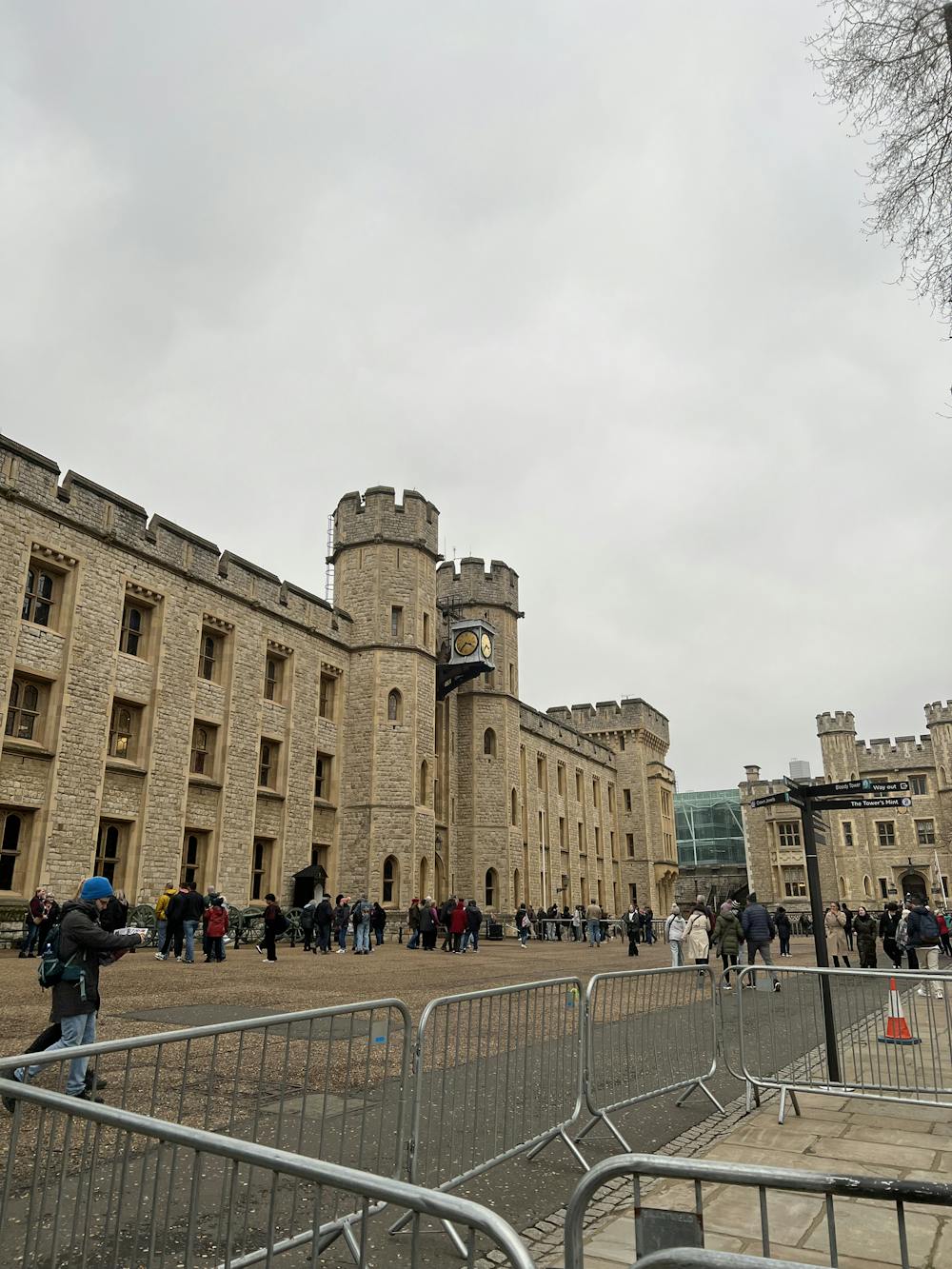
This weekend, I decided that spending hours traveling to cram all the tourist attractions of a thousand-year-old city into 24 hours was too stressful, considering midterms are imminent. Instead, I took this weekend to enjoy London and everything it has to offer. After snapping photos of Buckingham Palace and buying keychains of crowns to give my family, I started to realize how most of my touristy weekend had been surrounded by the British monarchy. Obviously, the British monarchy has no real political power, but it has evolved from an institution into a symbolic representation of Britishness. Instead of focusing on the more intense issues, British politics can divert attention to the more glamorous aspects of the state.
The British government still allocates millions of pounds to fund the lavish pageantry of the monarchy. While the government grants the Royal Family £86 million, an anti-monarchist group calculated the extra costs the monarchy incurs, such as security, that are not included in the grant, totaling the actual cost to £510 million. This egregious amount of public spending on the monarchy cannot sustain itself.
As a result, the Royal Family has become a brand that markets itself as an attraction, generating approximately £1.7 billion annually through indirect effects such as trade, tourism and media. Since London boasts many other tourist attractions, such as Big Ben and several national museums, all of that £1.7 billion cannot be attributed solely to the Royal Family; however, that still does not mean that their presence is not a significant factor in generating that money.
Through this, the Royal Family has become quintessentially British: it is not just a small part of their history but a global export that defines their national character. Once a global superpower with colonies in every inch of the planet, Britain has slowly faded out. It cannot spread its culture through its colonies as it had previously, so it had to find other ways to market itself to curate a global presence.
However, the monarchy survives not because it showcases Britain’s power, but because it disguises its decline. As the politics of the United Kingdom ebb and flow, the Crown is something citizens can look at as a unifying cultural force. The state seems powerful and strong, but in reality, it lies on a politically cracked foundation.
These cracks are clearly evident in Britain’s bumbling economy. The Organization for Economic Co-operation and Development (OECD) predicts that the U.K. will have the highest inflation rate (3.5%) among all the G7 countries this year. As a result, the U.K. economy will slow in growth from 1.4% to 1.0%. British citizens will feel these effects as food prices rise and wages fail to keep up with inflation rates. In turn, the government is under pressure to curb inflation without hurting growth rates or raising taxes.
Despite this economic and political havoc, Britain still manages to put on opulent displays under the guise of royalty. In early September, President Donald Trump made a state visit to the United Kingdom. Instead of being met with several diplomatic and political talks, he and his wife were carried in ornate carriages, stepping out onto the perfect royal lawn to watch parades and eat at a lavish banquet.
As British citizens struggle to buy dinner, the Royal Family flaunts opulence in their faces. Dynamic displays of royal hospitality may impress foreign leaders, but they cannot distract the media from the growing issues that U.K. citizens face every day.
However, people are more drawn to tabloid headlines and elaborate ceremonies than they are to real issues. 28 million people in the U.K. watched Queen Elizabeth II’s funeral, which is about 40% of the country’s population. No matter how much people try to escape the monarchy, its importance has permeated the minds of millions. The monarchy is not surviving despite criticism; instead, it survives because it is impossible to look away from.
The British obsession with royalty reminds us not only to appreciate the glamour of life but also to take a closer look at the world around us. It is easy to get distracted by ideals and attempts to form a picture of perfect power. However, even as Britain flaunts its opulence, there are deeper issues at play. In a country where wages stagnate, prices rise and politics falter, the monarchy provides Britain with a more palatable crisis to watch. It may not solve anything, but it keeps the story going: polished, choreographed and conveniently apolitical.
Abby Hernan is a junior, majoring in political science and applied & computational mathematics and statistics, from Orlando, Florida. She is currently studying abroad in London and is excited for her semester out of South Bend. When not writing for The Observer, you can find her buying overpriced coffee, scrolling through X or roaming the halls of Lewis. Reach out to ahernan@nd.edu.