
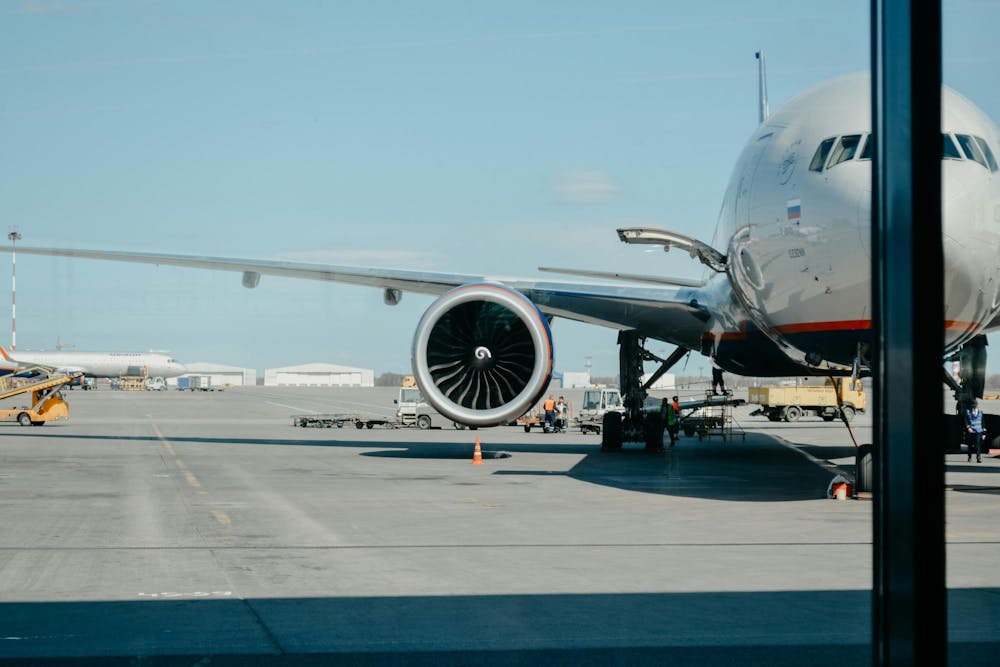
With the government shutdown officially over, air travel across the country is beginning to return to normal. Students traveling during the shutdown experienced delays, grounded flights and uncertainty at airports.
Matthew Carmody, a junior studying economics and psychology, said he traveled over the Halloween weekend and faced a four-hour flight delay. “I had a four-hour delay, and it was clear both TSA and air traffic control were struggling,” Carmody said. “Entire gates were grounded for hours. Getting back to campus was stressful. I ended up arriving very late and had to drive from O’Hare after my flight.” He added that he did not face any unexpected costs, but the delays affected his schedule.
The shutdown, which began on Oct. 1, caused staffing shortages at the TSA and the FAA. Students reported longer wait times at security checkpoints, fewer available flights and delayed departures or grounded planes. Smaller regional airports were particularly affected due to limited staffing, which made it difficult to maintain regular flight schedules.
Electra Vaitsas, a senior studying economics and French & Francophone studies, said her travel experience was affected at every step along the way. “Security lines were significantly longer, flights were delayed, and communication from airlines was minimal,” she said. “I had to pay for food and Uber due to the long waits, which added unexpected costs.” Vaitsas also said she plans to leave extra buffer time for future travel and to use TSA PreCheck to reduce security wait times.
Tamsyn Gorman, a junior psychology student, noted that the uncertainty of the shutdown affected both her travel and that of friends and family. “There were lots of delays and fewer flights, especially to smaller airports,” Gorman said. “I had to be very careful with what I booked, checking flights constantly to make sure they weren’t canceled. Even if your own trip went smoothly, seeing friends’ travel plans disrupted was stressful.”
Even major hubs experienced delays. Carmody said flights between Denver and Chicago were particularly affected. “Planes were not taking off on time,” he said. “I witnessed entire gates with multiple flights grounded for three hours.”
Vaitsas said the lack of updates from airlines was a source of stress. “There were long periods where I didn’t know whether my flight would be further delayed or canceled,” she said.
Students said they had empathy for airline staffers working under difficult circumstances. “Airline staff were clearly stressed and doing their best,” Vaitsas said. Carmody also said airlines were responding to the situation to the best of their ability.
With the shutdown over, airlines are working to recover from the backlog of delayed flights. Students said they are monitoring flights and planning future travel with extra time to accommodate potential delays. Carmody said he will check flight status closely and use services like TSA PreCheck when possible. Vaitsas said she is doing the same, leaving extra time for connections.
The travel delays affected students’ schedules on campus. Carmody said his late arrival required adjustments to commitments the following day. “Coming back late meant trying to catch up on sleep and classwork,” he said.
Gorman also mentioned the travel disruptions affected social and academic commitments during the break. She suggested universities could play a part in mitigating some disruptions.
“Students aren’t missing class on purpose,” Gorman said. “If flights are delayed or canceled, universities should work with students to catch up on coursework and avoid penalizing them for circumstances beyond their control.”


