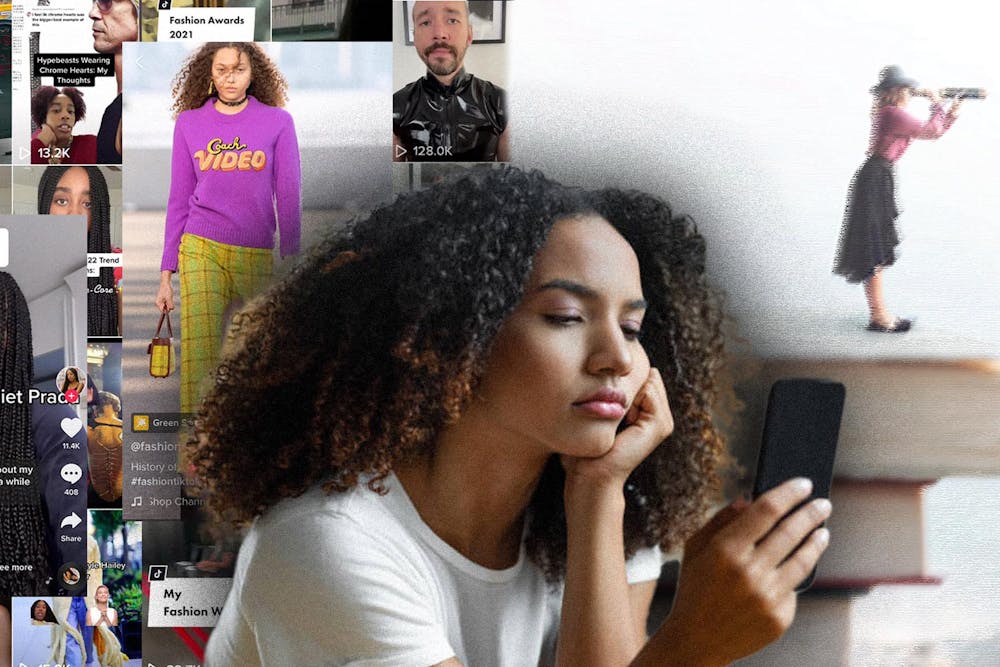
Within the last decade, a significant portion of modern life has been lived behind screens. The concept of being “chronically online” within social media platforms has become the default setting for younger generations, serving as their primary source of entertainment, interaction with others and, most importantly, influencing identity and lifestyle formation. Being “chronically online” is viewed as almost aspirational in terms of joining the newest micro-trend on TikTok, accustoming oneself to the latest aesthetic cycle or being in touch with the current terminology of “brainrot.”
This doomscrolling lifestyle in modern culture has prioritized a way of life that emphasizes perpetual scrolling, encouraging constant consumption and stimulation, yet discourages creation and reflection. It produces a strange sense of duality in individuals who are both overstimulated and intellectually malnourished.
I see this in the way people are not only becoming passive thinkers, but also passive humans. We are living according to trends that expire after their free trial, shaping our personalities and identities to align with whatever the online community approves of at a specific moment in time. It also results in a generation that is hyperconnected to the internet and emotionally disconnected from the world, turning our brains to autopilot as we go about our day.
If the internet once promised the freedom to create, pursue and find ourselves, then why is it that humans are fundamentally more unfulfilled with their lives than before?
Against the backdrop of being chronically online, the emergence of intellectualism is rising not as a niche movement or current online trend, but as a cultural revolution. At the core, intellectualism is one’s conscious decision to pursue a life of learning and curiosity, a desire to understand the world and improve critical thinking and the human condition beyond the use of algorithms.
While many make the argument that intellectualism is rooted in elitism and following the internet’s romanticization of academia, that is not the case. It is rather rooted in self-respect and the pursuit of participating in one’s life rather than becoming an observer of others. To pursue the intellectual life in today’s society means to refuse the effects of online culture and digital noise to regain a sense of self. Intellectualism values the discerning mind, one that desires depth in rather than distraction from the outside world.
This shift is being seen across society with the emergence of long-form online content like video essays on YouTube that challenge our short attention spans, the push for participation in hobbies such as reading and writing, desire for intellectual discourse and deep conversations among other humans, renewed interest in the complexities of the humanities and the overall growing rejection of current trends in culture and social media.
People are tired of the endless trend cycles that only last a certain amount of time, tired of curating a persona both online and offline instead of cultivating a personality, and they are tired of living through their phone screens instead of living through actual experiences.
The news is that people want to learn, not because they are forced to or because they must, but rather because they want to feel alive again in a world that glorifies an online presence.
Intellectualism offers a form of fulfillment that digital life cannot replicate. It comes from the satisfaction of understanding a topic deeply, from developing real skills and losing yourself in knowledge and art of growing in literacy and intellect.
While some might view living an intellectual life as restrictive, pushing away the need for online activity, this lifestyle is expansive. Detaching oneself from the internet creates the mental space for genuine thought and reflection.
As I consider what it means to live an intellectual life grounded in both intention and offline presence, I build on Richard Taylor’s recent column, “The joy of knowing: intellectual life at Notre Dame.” He offers an honest reflection that the intellectual life begins with personal choices and a genuine desire for truth.
A fulfilling life of intellectualism can appear differently to each individual, but it retains certain elements: return to true presence in society, attention to one’s own life and chasing personal pursuits beyond the classroom.
Some examples of this can be reading widely without the distraction of a cellular device, pursuing one’s interests with serious intent, learning for the sake of enrichment, engaging in complex questions and conversations and most importantly experiencing the world around us without the pressure to document it through social media.
I am not trying to argue that all consumption of social media is harming the human brain. The problem lies in the imbalance it has created. Digital spaces were meant to enrich our lives, not consume them. As digital platforms shift from online tools to environments that take away both our time and intellect, the costs become impossible to ignore.
Instead, when you follow the overlooked truth that learning makes life feel vivid again, you start to chase your curiosity and see the world through a new lens. You rediscover the pleasure of thinking without distractions, reading without rushing and becoming someone who understands rather than quickly scrolls past.
Intellectualism is not a new trend, it’s a shift in one’s values and life. It signals a collective desire to live a life with intention instead of living in someone else's. People are starting to wake up to the reality that their attention is their most valuable resource and that the internet was designed to diminish it.
The future belongs to those who want to live fully, not through a phone screen, but through knowledge and true ambition in the world.
Sienna Stephens is a freshman at Saint Mary's College and planning on majoring in secondary education and English. When she is not taking a hike from SMC to Notre Dame, you will find her listening to music 24/7 and trying to make her Pinterest boards aesthetic. Feel free to reach out to her at sstephens01@saintmarys.edu