Amid the faux Republican primary in 2024, former New Jersey Gov. Chris Christie made a noble but ultimately hopeless run for the Republican nomination. Being a political creature, I watched the primary debates mostly for my own personal gratification (or torture). In the September debate, Christie criticized Trump’s absence in the primary debates, saying, “If you keep doing that, no one up here is going to call you Donald Trump anymore. They’re gonna call you Donald Duck,” before smugly grinning at the Shakespearean brilliance of his pre-planned zinger.
Unfortunately for Christie, his comment made him a laughingstock, with Christie suspending his presidential campaign just three months later. I never forgot Christie’s “Donald Duck” comment and, incidentally, I believe that it applies now more than ever. While Christie initially used it to criticize Trump for “ducking” the debates, the reality has already come that Donald Trump is a “lame duck” president.
Definitionally, a lame duck president is one who has lost reelection or is not eligible to run again. The term is often used to describe the three-month window between the presidential successor’s election and inauguration, with the president lacking any real political influence. Just two weeks into a historically terrible month for Trump, it’s appearing that his lame duck status has arrived earlier than expected.
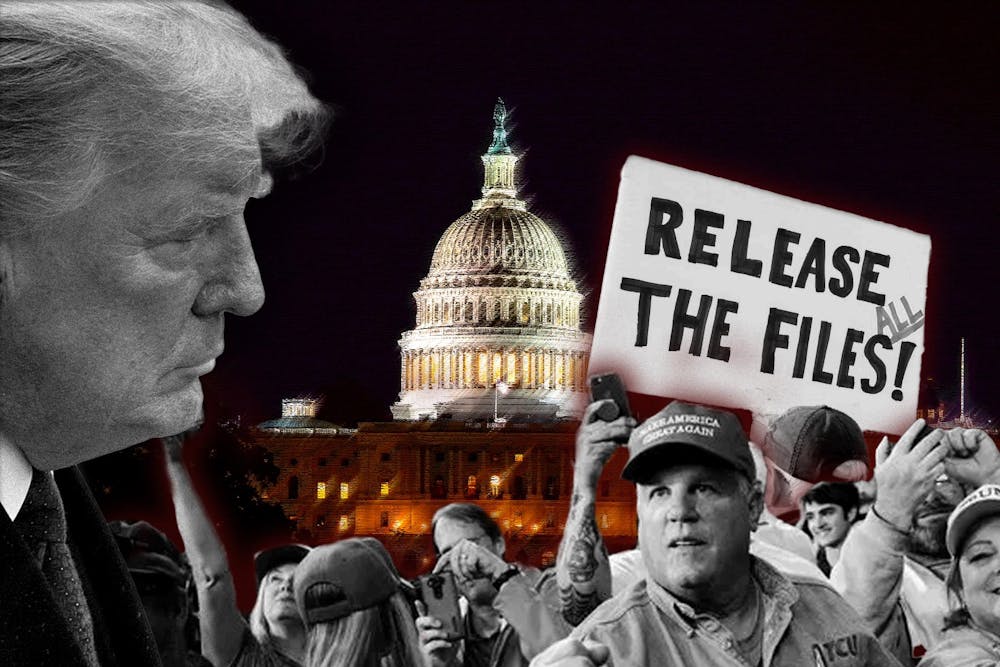
With the Democratic Party’s resounding victory a few weeks ago in several statewide races, congressional Republicans are showing more of a willingness to defy the president than they have previously. With the budget uncertainty stemming from the government shutdown, Trump called on Senate Republicans to abolish the filibuster. Majority Leader John Thune called the idea a non-starter. Several key Republicans denied Trump’s call to block a vote on the release of the Epstein files, as four Republicans joined the Democratic Party in signing a discharge petition to force a vote on their release. The four Republicans are all painfully familiar with the MAGA movement; Thomas Massie, Lauren Boebert, Marjorie Taylor Greene and Nancy Mace all resisted the White House’s pressure campaign.
Last Friday afternoon, Trump began retaliating. In a 300-word Truth Social post, he withdrew his support for Marjorie Taylor Greene, calling her a “Congresswoman” (quotes included) who is “wacky” and a “ranting Lunatic.” Who would have imagined the day that one of Trump’s key election-denying allies would lose his favor?
An argument can be made that since November 2015, Trump has been the strongest individual political figure in America. Even following his 2020 defeat, his endorsement and policy preferences continued to be the driving force in the Republican Party. For instance, it was his voice that killed the bipartisan border bill early last year, a bill that included many policy concessions to congressional conservatives. If Trump, as an incumbent president, lacks the whipping authority he had as a candidate, what message is sent regarding his next three years in office?
We’re likely to see Trump’s personal influence on party and congressional politics continue to erode. And the Republicans are likely to benefit from the soft launch away from Trumpism. As my representative to the House of Representatives, Thomas Massie aptly said, “But, I would remind my colleagues that [the impending Epstein files] vote is going to be on your record for longer than Trump is going to be president.”
The Epstein issue is a losing issue for Trump. The files already released by the House Oversight Committee have implicated Trump in ways more explicit than ever. There are now emails on record from the notorious sex offender Jeffrey Epstein that claim the president is the “dog that hasn’t barked … [Victim] spent hours at my house with him ,, he has never once been mentioned.” Well Jeffrey, Donald Trump is now being mentioned. The late Epstein referenced how “dirty” the president’s actions were, claiming in a different email, “i am the one able to take him down.”
As the 45th and 47th president continues to become more embattled, his once-immutable endorsement and policy influence will continue to erode. Members of his administration are now openly addressing their own political ambitions, giving observers the clearest view into a post-Trump Republican Party. Trump’s lesson is one from which we should all learn — Father Time is undefeated.
Most importantly, we now know that not even Trump is immune from the lame duck effect. The post-Trump world has not quite arrived, but we’re getting a peek into what it may look like. Perhaps the New Jersey bard was right to call President Trump “Donald the Duck.” He was just two years early.
Grayson Beckham is a freshman living in the Coyle Community in Zahm Hall. He hails from Independence, Ky. When he's not publishing woke propaganda inThe Observer, he studies political science and eloquently uses his silver tongue on the mock trial team. You can send him relevant hate mail at gbeckham@nd.edu.