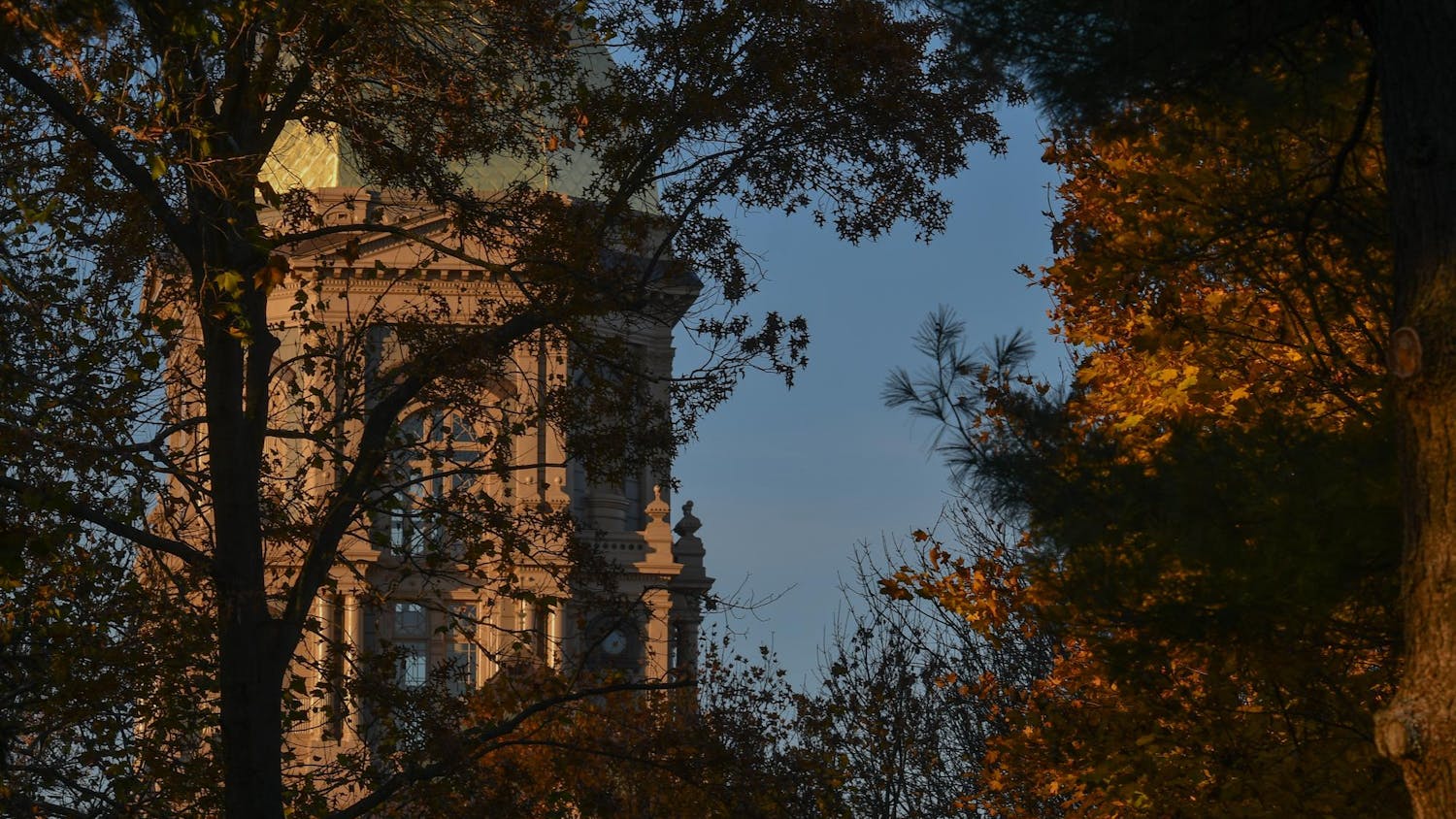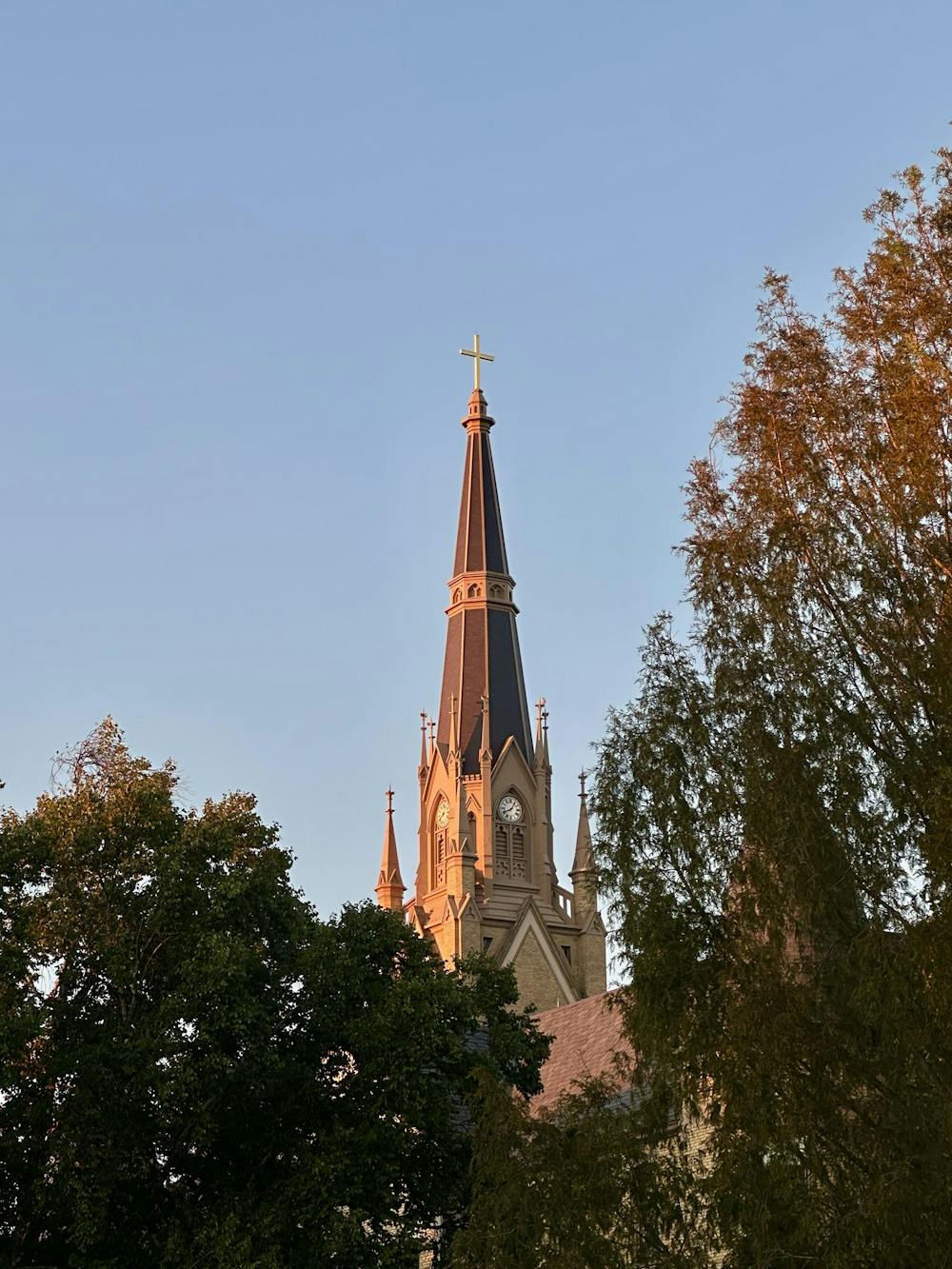
This morning, I attended the 9:30 a.m. Mass at the Basilica of the Sacred Heart, which celebrated the Commemoration of All Souls, one of the most popular and characteristic Catholic feasts. For this Mass, the rector of the Basilica — Fr. Brian Ching — presided as celebrant, and the Notre Dame Liturgical Choir, along with a small orchestra, performed the famous “Requiem in D Minor” by W. A. Mozart. I have several students who sing in the Liturgical Choir, so I knew that they had been preparing for this day for quite some time. In fact, I had known since my orientation as a new faculty member in August that the Liturgical Choir was planning this great musical work for Nov. 2: Fr. Ching had told me about these plans himself, while the Congregation of Holy Cross warmly welcomed the new faculty into Corby Hall for a lovely reception and dinner. I was impressed by the joyful and collaborative spirit that Fr. Ching exuded when speaking of the work of the Liturgical Choir, and I recognized it as the same kind of spirit I witnessed in his predecessor, the Fr. Peter Rocca, when I worked as a musician at the Basilica myself. “Not much has changed,” I thought to myself, and the warm memories returned.
The Mass for All Souls today was truly remarkable. The Basilica was packed to the walls with people — mostly students. The Liturgical Choir processed in solemnly, with the director, Andrew McShane, filing in last. As the first notes of Mozart’s iconic work began, the servers, Fr. Ching, and other C.S.C priests began the liturgical procession, and you could feel everyone in the space begin to offer up their prayer. Music professor that I am, I was delighted to hear Fr. Ching chant several of the prayers in English, as well as the fine musicians of the Liturgical Choir fill in the “gaps” between Mozart’s rich choral and instrumental music with beautifully executed liturgical chant. The congregation responded in kind, with full heart and prayerful voice. The Liturgical Choir had been preparing for weeks, but they reverently deflected the attention away from themselves. All present in the Basilica — priests, musicians, congregation — participated fully in the Mass, and at the end of the liturgy, Fr. Ching kindly asked us, at the Liturgical Choir’s request, to please not applaud; all involved wanted to preserve the deep sense of prayer that had surrounded the music and the Mass. After the final notes of Mozart’s “Requiem” had sounded, people lingered for much longer in silence, soaking in the beauty and offering prayers for their departed loved ones.
Outside in the sun, students and other congregation members talked and laughed. It was clearly a Mass that everyone would remember for a long time. Saying goodbye to some students, I walked to Cedar Grove Cemetery, where I found the grave of Gail Walton, one of the founding directors of the Notre Dame Liturgical Choir. Gail has been one of the greatest influences of my life. She taught me how to be a musician, and she and Craig Cramer — her husband and my organ teacher — were generous to me in ways I can never enumerate. I offered a prayer of thanks for everything she, Craig and the Liturgical Choir have given to me. I know that, on this particular feast of All Souls, she would be incredibly proud of Dr. McShane and the Liturgical Choir.
Mary Catherine Levri
Associate Professor of the Practice, Organ and Sacred Music
Nov. 2