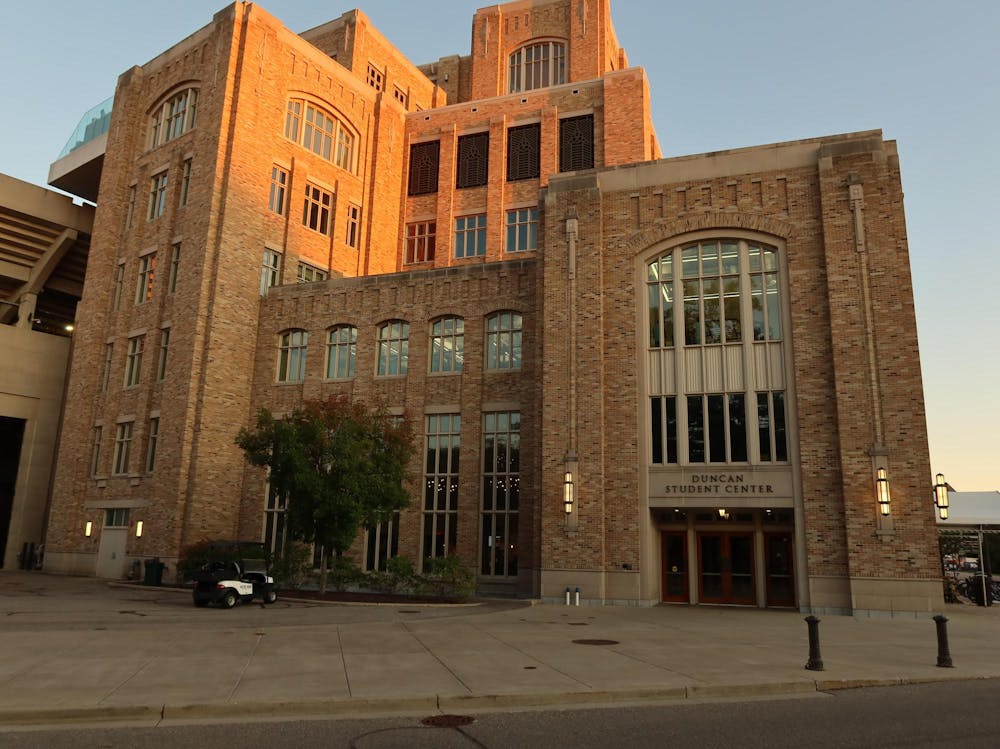
In early September, I found myself sitting on a highchair in a packed Duncan classroom, helping lead a community kickoff for an on-campus organization I am a part of. I was drenched in sweat; I had forgotten my new nametag, which I was supposed to wear, and was forced to run-walk to my dorm and back to retrieve the item before the event officially started. I took my seat, evidently breathing heavily and perspiring (like a maniac), and began to gaze out at the crowd. To my great dismay, I saw many familiar faces — some greeted me with a kind smile and nod, while others wore a solemn expression, thinly veiled with the same worry I carried on my face.
The event ran its course, and at the end, there was an invitation to “meet” and “network” with board members of the organization I was a part of. As a board member, I stayed behind to meet those who wished to speak to us. This action, for some reason, struck me as unusual. I answered eager questions about career paths and networking, trying to sound composed — yet the idea that my words carried weight, that my advice mattered, felt strangely undeserved.
My title as a board member placed me in that position. People approached me with questions about their futures because, of course, a board member would know. Repeatedly, I thought to myself, “I am not this important.” I couldn’t help but wonder if the value of my words was solely attached to my title, rather than the person speaking them.
Titles are something we all carry — son, daughter, brother, so on and so forth. Some of these titles take a more formal nature: director, co-president, club officer, board member. Our innate, familial titles will never leave us, no matter what lengths one goes to distance themself. However, earned titles — gained through climbing the metaphorical ladder of an often-self-engineered bureaucracy — come and go as they please. In my life, I have been a “committee member,” a “secretary” and I even rose the ranks to the esteemed role of a “vice president.” These titles, although important, no longer hold bearing on my life. I will always be a brother, but there will be a day when the board I serve no longer requires my presence.
However, the value of earned, artificial titles often supersedes our most basic ones. People seek higher titles as a means of differentiating themselves from the herd. I find this to be the greatest danger of titles: We understand them to be the origin of our importance. As outsiders, we elevate the “president” of a club above the “vice president” or “director,” even when they leave the spaces where those titles hold any weight. Understandably, it is difficult not to internalize that hierarchy ourselves. We should be proud of what we accomplish, but once our sense of self becomes contaminated by external distinctions, we begin to lose the true essence of our importance.
It is not the title that holds the value; it is the person who bears it. The honor in wearing the badge of a “board member” or “club officer” lies in how it reflects on your God-given abilities and willingness to serve. Our nature cannot be confined to a few words on a resume, nor our worth measured by the titles that follow our names.
As we grow older, and “club officer” becomes “Dr.” and “board member” becomes “partner,” we must not lose sight of the title that gives meaning to all the rest — the simple, enduring one of being human.
Naasei is a junior from Portland, Oregon living in the Coyle Community in Zahm Hall. When not burdened with overwhelming political science coursework, he enjoys photography and baking. He can be reached at wlynn@nd.edu.