
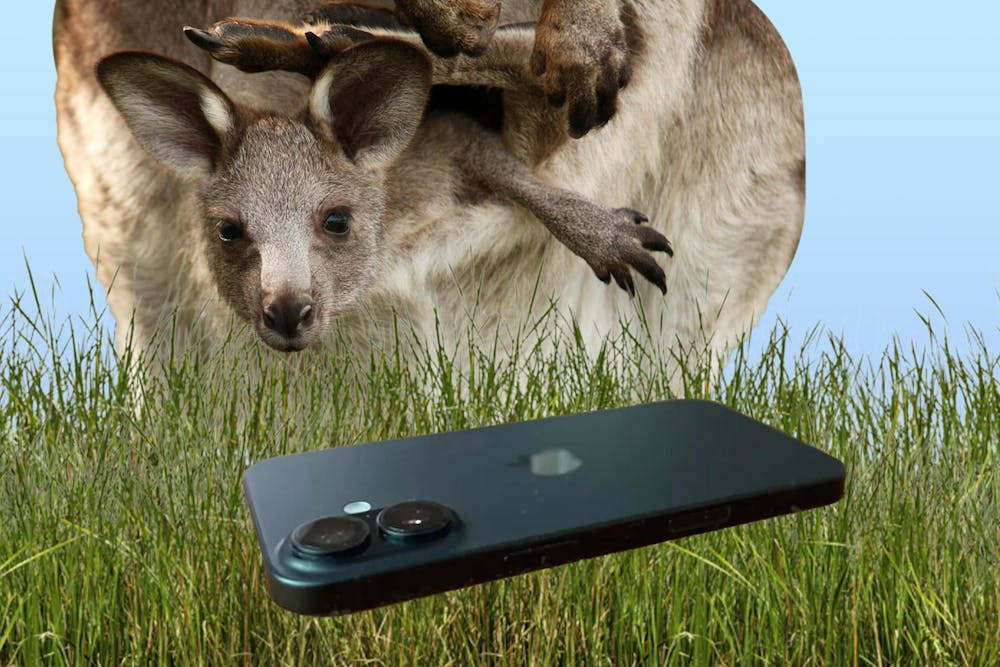
Australia is banning social media for children younger than 16 years old. Sounds impossible to do, right?
That’s because it partly is.
The law — the first of its kind in the world — goes into effect on Dec. 10, and it requires 10 tech firms to take “reasonable steps” to prohibit youth from possessing social media accounts, according to Australian communications minister Anika Wells in an interview with the BBC. If children have an existing social media account, then it will be deleted. The affected platforms include YouTube, TikTok, Snapchat, Instagram, Facebook, X and more.
Two weeks ago, Meta deactivated hundreds of thousands of these accounts. Despite this, public officials have acknowledged the ban will not be 100% effective. Some users will always find ways to circumvent it, they say.
The interesting thing about this mandate is that Australia isn’t punishing children for their use and parents or guardians for knowing about their children’s use. Instead, the government is imposing fines on companies up to $50 million AUD, around $32.8 million USD, if they don’t comply.
American companies involved in the ban are backed by President Trump, who favors keeping tech firms away from government regulation. Shortly after his second inauguration, he restored TikTok after its momentary outage. He revoked an executive order by former President Joe Biden’s that directed federal agencies to enact hundreds of actions to govern responsible AI use. Instead, Trump issued “Winning the Race: America’s AI Action Plan” to accelerate its development.
Trump claims these orders and laws, though implemented on the international level, are attacks on U.S. firms. Trump and his supporters see these tech powerhouses as a bastion of American innovation and excellence. They relentlessly defend the First Amendment and the right to free speech. A blow to these tenets infringes the whole system.
Australia does not have the same explicit protection on speech and expression, but they do follow the UN’s enshrined protections on “opinions without interference” and “freedom of expression.” Even so, Australia places the policies under certain restrictions. These limitations include “for the respect of the rights or reputations of others” and “for the protection of national security or of public order, or of public health or morals.”
The Australian government says limiting social media use for minors limits cyberbullying, contact with predators and exposure to sensitive and explicit content. Additionally, the ban aims to protect young mental health, a problem facing both the U.S. and Australia.
According to eSafety Commissioner, an Australian independent government organization that tracks online safety, over 1 million social media accounts would be affected. Snapchat has 440,000 users aged 13 to 15, Instagram has 350,000, YouTube has 325,000 and TikTok reported 200,000. These numbers are a conservative estimate according to the Australian government.
On Dec. 1, a report from Queensland University of Technology cited that 86 Aussies aged 12 to 15 years old said they want social media reform, but not a complete ban on certain apps.
When young Americans were asked about how social media impacts their livelihoods, their responses were similar.
According to an April report by Pew Research Center, 48% of teens aged 13-17 years old say social media have a mostly negative impact on people their age, up from 32% in 2022. They claimed the platforms contained few merits . A majority of participants said social media makes them feel more connected to their friends and can show off their creative side.
When TikTok went dark in January for a few hours, a situation not too far from Australia’s situation, alternative apps sprouted. Trump stopped their rise when he signed TikTok back into our lives. Aussies are looking for alternatives, so they’re following the American way.
“We watched what American kids did when TikTok went blank. They went to RedNote. They went to Lemon8,” said Julie Inman Grant, Australia’s eSafety Commissioner. “Some of that is going to happen, inevitably, but that’s what teenagers do.”
At the time, the largest factor when choosing to ban TikTok was the fear that if Beijing pressed ByteDance for user data, TikTok would be forced to give over Americans’ data. Despite this concern among many adults on top of growing mental health worries, TikTok is still active.
In 2023, over 20% of Americans aged 12-17 years old reported a current, diagnosed mental or behavioral health condition, up from 15% in 2016. In 2021, 39% of Australians who were 16-24 years old had “operationally defined mental disorders,” up from 26% in 2007.
These percentages are not the same, but they indicate something similar. If mental health issues keep rising, in part thanks to social media, it’s paramount (and hopefully bipartisan) to find a solution. What that solution may be depends on which side of the Pacific you’re on.
Redmond "Reddy" Bernhold is The Observer's opinion editor emeritus and a senior studying biochemistry and journalism. He originally hails from Minster, Ohio but calls Siegfried Hall his home on campus. When not writing, he explores South Bend coffee shops and thrift stores. You can contact Reddy at rbernho2@nd.edu.


