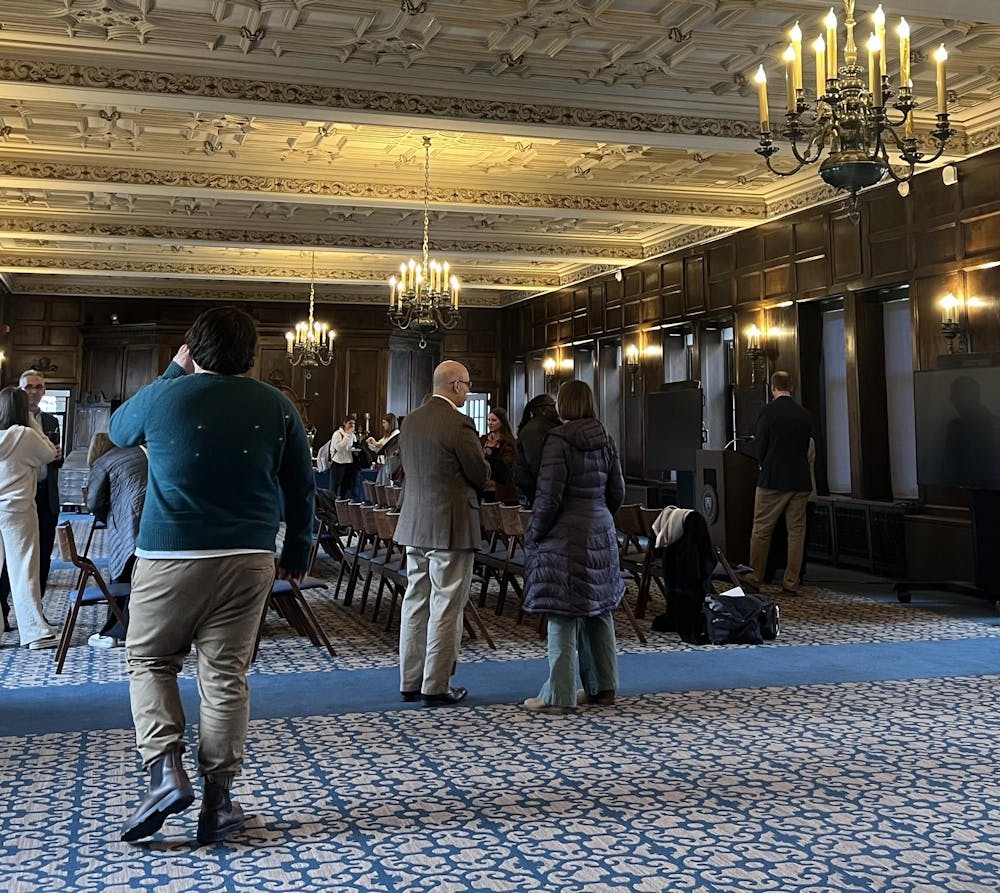
For its 31st annual Symposium of St. Thomas Aquinas, the religious studies and theology department invited Warren Kinghorn, professor of psychiatry at Duke University, to offer his perspective on coping with fear and trauma through courage and love.
Kinghorn serves as an Esther Colliflower professor of the practice of pastoral and moral theology and co-director of the Theology, Medicine and Culture Initiative at Duke Divinity School. Additionally, he works as a staff psychiatrist at the Durham VA Medical Center. Keeping to the theme of the symposium, Kinghorn’s lecture was titled, “How St. Thomas Aquinas’ Accounts of Fear and Courage Matter for Life After Trauma.”
He aimed to provide insight into how trauma survivors can approach the healing process, saying that many healthcare professionals do not spend much time considering the connections between medicine and theology in their treatment of trauma.
“Surviving trauma is a communal project requiring both divine assistance and the assistance of others,” Kinghorn said.
Nevertheless, Kinghorn hopes that through courage, community and the teachings of St. Thomas Aquinas, trauma survivors may find new ways of looking at their experiences and of approaching life itself.
“Trauma leads to a shattering of trust that compromises our ability to love,” Kinghorn said.
He highlighted the role virtue plays in helping trauma survivors regulate their emotions, giving special attention to the virtues of courage, patience, prudence and justice.
“Courage is most usefully applied to the present and future and not to a recreation of the past,” he said. “We need virtues of courage to exist in a complicated world.”
He emphasized that courage is neither the absence of fear nor the ignorance of danger but rather provides hope for an everlasting life while grappling with worldly evils.
Attendees found the lecture unique and insightful.
Associate professor Michael Waddell said, “There are very few people who try to integrate St. Thomas Aquinas’s thought with modern psychiatry.”
He praised Kinghorn’s “ability to weave both the scientific and clinical aspects of psychiatry with Aquinas’ thinking on the virtues — especially the virtue of courage.”
Hannah Teich, a junior, went to the lecture to better understand the context behind Dr. Kinghorn’s book, “Wayfaring: A Christian Approach to Mental Health Care.” She found one of the main takeaways to be “all traumas are different, so we have to approach them differently,” adding that “courage is essential to recover from trauma and to live well.”
Kate Vock, a freshman, attended the lecture for her religion class. She said she found it interesting to learn about how “even if you have gone through trauma, you can still face the world in a courageous way”.