
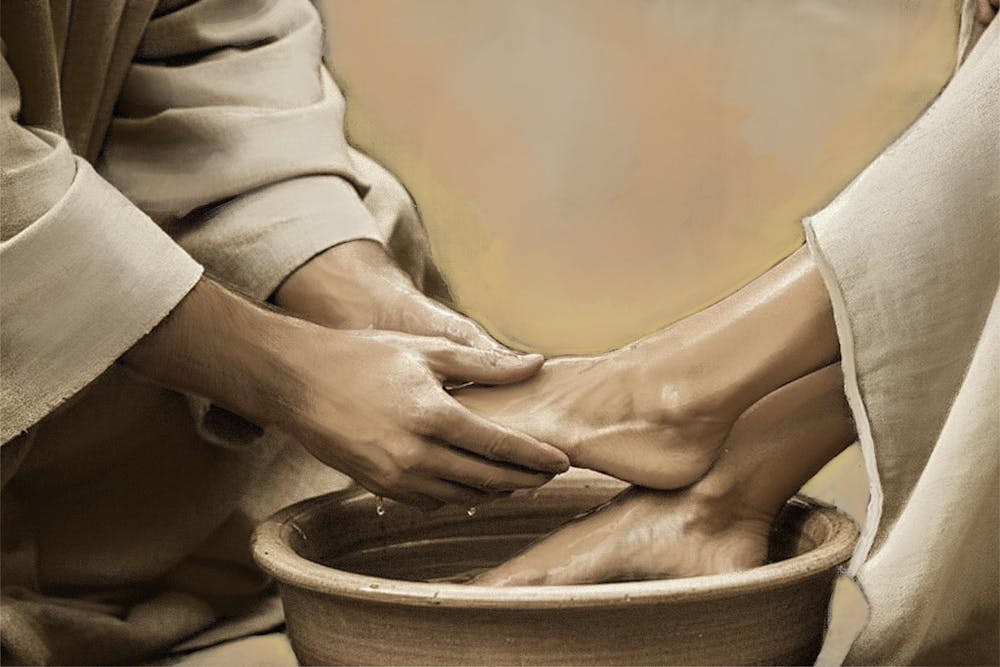
Recently, while I was sitting in the CoMo chapel, I came across a prayer called the Litany of Humility in the pages of my book. Intrigued, I resolved to pray it. But almost immediately, I found myself stumbling over the words. Phrases like “From the desire of being loved, deliver me, Jesus” and “That, in the opinion of the world, others may increase, and I may decrease, Jesus, grant me the grace to desire it” made me do a double take. For a moment, I had to stop and ask myself: Do I really want to be asking for these things to happen to me?
Although I wanted to pray for humility, a knot of misgiving prevented me from continuing. I found myself wrestling with the concept of asking for my efforts to be overlooked, especially in favor of others. It would be difficult to forgo credit, praise and recognition — or even to never see the fruits of my labor — and still find motivation to pursue success. Yet my hesitation made me reconsider what truly drives my actions: Am I motivated by personal gain or by a desire to serve others?
Many people familiar with the Litany of Humility would agree that it is a challenging prayer. At first glance, the things we are asking for don’t exactly seem appealing. We all want to be esteemed, loved and honored, as the Litany says. We all fear humiliation, ridicule and even being forgotten. It seems unnatural to desire to be less than others instead of more. And yet, despite how difficult it is to pray for such things, there is a peace that comes from asking God to free us from our anxiety about the world’s opinion. Imagine the relief of relinquishing control and allowing our actions to be motivated by pure goodness rather than by a feverish drive to maintain constant approval.
Of all people, Notre Dame students understand the pressure to live up to high expectations. In an environment bursting with driven, hardworking and high-achieving individuals, it becomes all too easy to compare ourselves to others and begin to see ourselves as not smart enough, not involved enough, etc. This comparison reinforces our desire to improve ourselves, which is not inherently bad — but if unchecked, it can morph into an obsession with being better than others rather than becoming better for others. Soon enough, praise and recognition become our primary motivators, steering us away from what should be our ultimate goal: pursuing the common good for its own sake.
That is why humility is especially important on this campus. It sounds counterintuitive, but we have to start with others as the center of our lives — not ourselves. No matter how hard we try, our work will only really be fruitful if we remember that its purpose is not for us, but in service to the world. Once we remove personal prestige from the equation and come to see our lives as instruments through which to achieve the common good, it becomes easier to celebrate others’ successes without worrying about how our own compare. We can experience gratitude for and satisfaction with our state in life and be content with the work we do, despite the fact that our best might not be the best.
Back in CoMo, I finally decided to finish praying the Litany. The last line reads, “That others may become holier than I, provided that I may become as holy as I should, Jesus, grant me the grace to desire it.” It’s a good reminder to focus not on success, not for competition’s sake, but rather to uplift others, embracing humility as we seek to grow the good at Notre Dame and in the wider world.
Noirin Dempsey is a freshman from Lake Geneva, Wisconsin currently living in McGlinn Hall. When she’s not studying English and journalism, she can usually be found playing piano in the McGlinn chapel, wandering the snack aisle at Trader Joe’s or watching the Chicago Bears lose football games. You can contact Noirin at ndempsey@nd.edu.


