With recent events such as President Trump criticizing Pope Leo IV on social media and posting deepfake photos depicting him as Jesus, many Catholics have spoken out against President Trump. When CNN visited campus April 15, the University of Notre Dame quickly found itself in the national spotlight. As a prestigious Catholic university dedicated to the dignity of every human being and promoting social justice, all eyes are looking to see how the Notre Dame community responds. And what are we to say?
I want to first turn to Pope Leo XIII, whose “Rerum Novarum” provided the framework for Catholic Social Teaching and emphasized the importance of unity within the Church. “Rerum Novarum” called for social reforms, especially regarding the care for the poor and the rights of the “working man.” But is Washington currently trying to help the working man? I think many would say no. With the “Big Beautiful Bill,” which I would argue is not so beautiful, gutting welfare spending and giving tax breaks to billionaires, the current administration seems to ignore the needs of those who are suffering most.
Although it may seem that students who share the same Catholic faith would share the same political affiliation, political polarization within the Catholic Church has driven a wedge between Catholic students. Many students are astounded, furious and outspoken against the current administration, but just as many are defending the Trump administration. The political divide between Catholics extends beyond Notre Dame’s campus. With varying opinions on topics such as abortion and sexual identity driving people apart, can the Church overcome the hatred and division found in America today?
Let’s rewind to one of the Catholic Church’s most influential documents from the Second Vatican Council: “Gaudium et Spes.” The Church acknowledged the growing divide between peoples: “Never has the human race enjoyed such an abundance of wealth, resources and economic power, and yet a huge proportion of the world’s citizens are still tormented by hunger and poverty…Never before has man had so keen an understanding of freedom, yet at the same time new forms of social and psychological slavery make their appearance. Although the world of today has a very vivid awareness of its unity and of how one man depends on another in needful solidarity, it is most grievously torn into opposing camps by conflicting forces. For political, social, economic, racial and ideological disputes still continue bitterly, and with them the peril of a war which would reduce everything to ashes.”
Sound familiar? The concerns of the Church in the 1960s are even more exacerbated today as roughly half of Americans live paycheck to paycheck while tech giants accumulate more money than anyone can dream of spending. We cannot ignore the social, economic and racial inequality in our nation. From impulsive executive orders to inhumane deportations of people to the raging war in the Middle East, is America still the “land of the free”? Answering the increasingly asked question of whether our democracy is in crisis can be daunting, and it can be easier for young people to turn away from the overwhelming political world thinking that someone else will come to save them. But to quote “Les Miserables,” “the time is now, the day is here.” Liberating our nation from hatred and polarization is not a hopeless endeavor, but it will not happen overnight nor without hard work. I believe the Catholic Church can be a beacon of peace and unity if we let it.
However, we cannot be apolitical. The time for saying “I am not a political person” is over. Although I may be biased as a political science major, I believe that engaging in politics and civil discourse is necessary. If you don’t believe me, maybe the United States Conference of Catholic Bishops can convince you. The USCCB states that we, “as both faithful Catholics and American citizens, [have] rights and duties as participants in the civil order.”
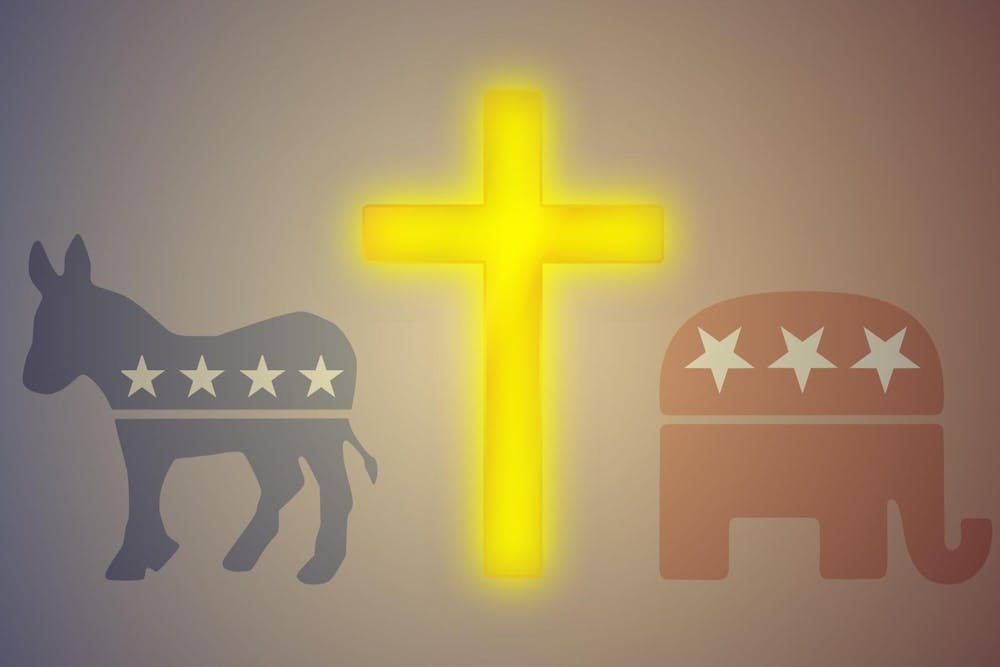
Now, here lies the difficulty. The Catholic Church does not align perfectly with either party, and nor should it. We should seek to rise above the hatred and tense debates found in American politics today through the radical love of our neighbor. The USCCB asks Catholics to “be guided more by our moral convictions than by our attachment to a political party or interest group.”
Pope Leo XIV has roused global attention in many ways. First, by being the first pope born in the United States and second, by asking Americans to promote peace abroad. With the 2026 Midterms in the fall, it is especially important for students to exercise their civic duty by staying informed and voting for the candidates that best represent justice, truth and love.
But why should we care? We, as Notre Dame students, are called to fight for those who are suffering. We are called to be “forces for good” who root out injustice and protect the vulnerable. Attending the top Catholic university in the United States is a privilege, and we should take advantage of the education and influence we have. Notre Dame has garnered significant media attention this year, from college football playoffs to the passing of coach Holtz to the St. Olaf ice chapel. Now, the world is watching Notre Dame students and faculty lead the way forward, and we must show up.
Maggie Powell is a freshman from Phoenix, Arizona. She is double majoring in marketing and political science. She is currently writing for the news and sports departments. Contact Maggie at mpowel25@nd.edu.