As Holy Week approaches at the University of Notre Dame, the Basilica of the Sacred Heart prepares for one of its most attended liturgical weekends of the year, with updated guidelines in place for the 2026 Easter Vigil.
Consistent with previous years, key liturgies include the Mass of the Lord’s Supper at 5 p.m. on Holy Thursday, Tenebrae at 11 p.m., the Celebration of the Lord’s Passion at 3 p.m. on Good Friday and the Easter Vigil in the Holy Night at 9 p.m. on Holy Saturday.
Based on previous years, attendance at these liturgies is expected to be high.
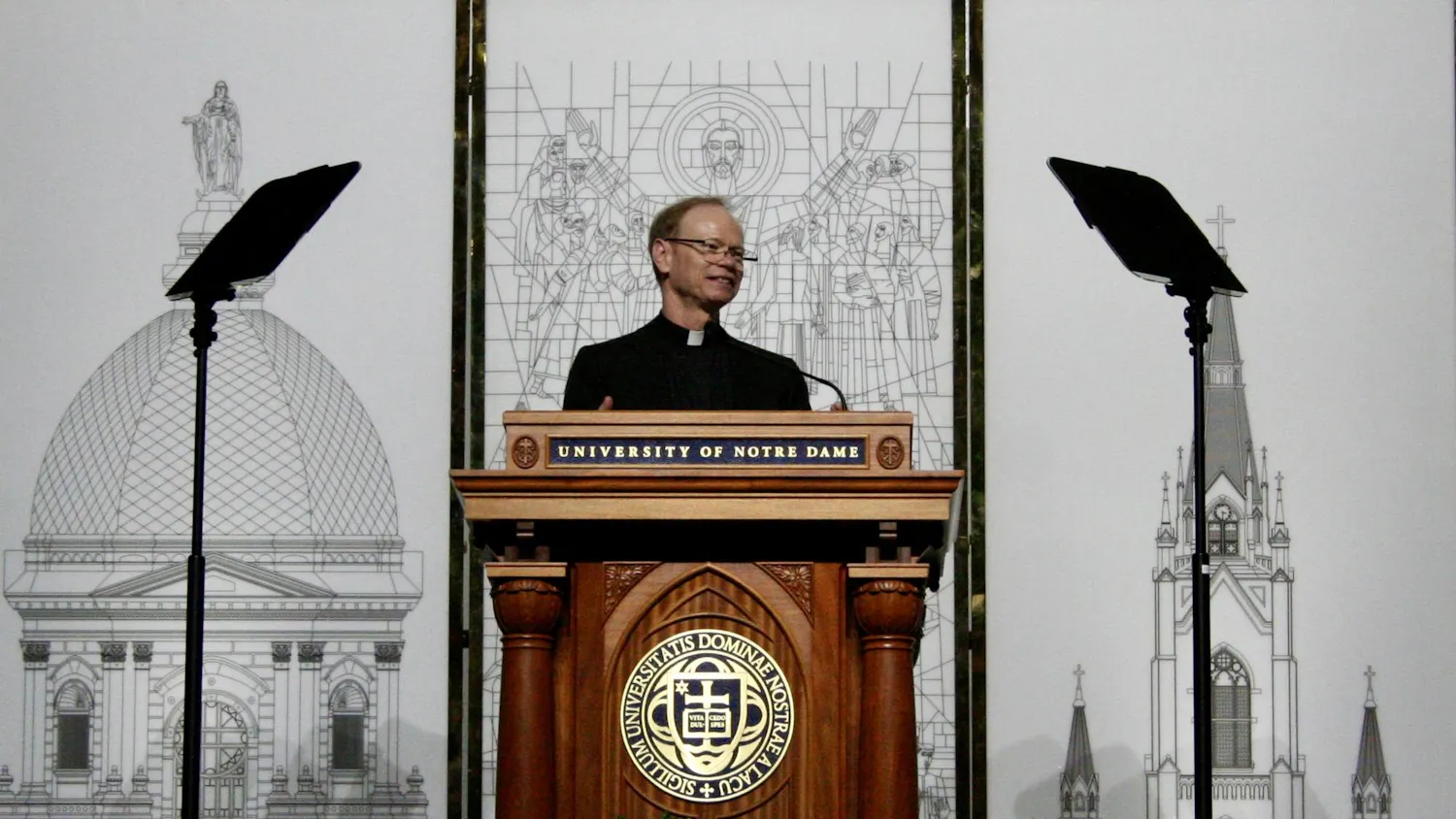
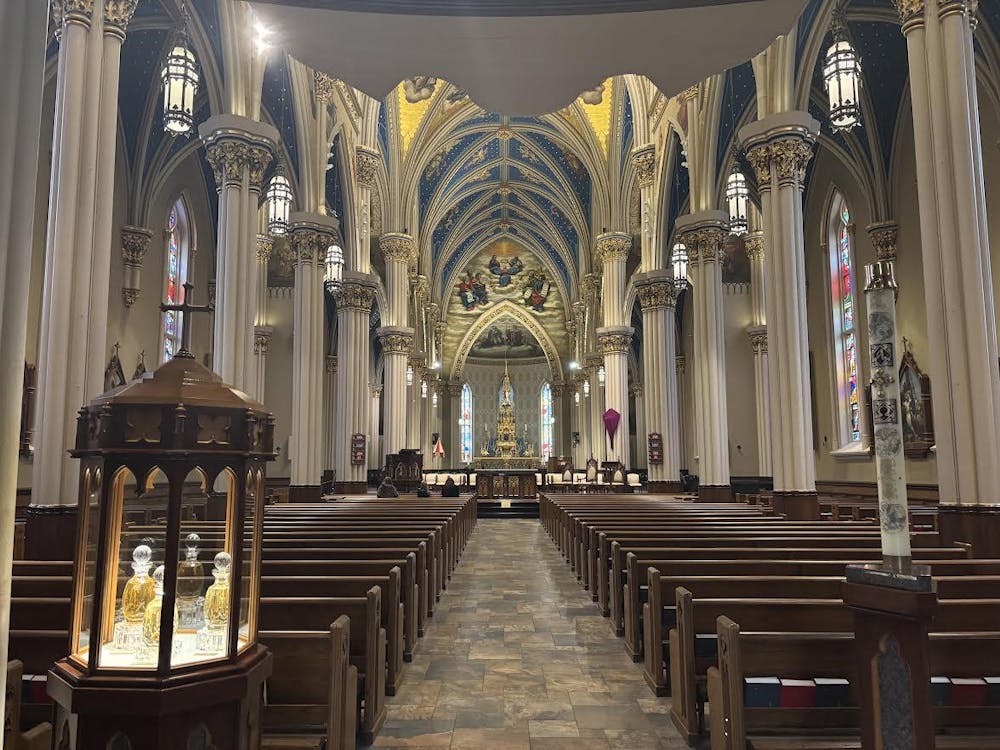
“The three primary services are always very full. The Basilica can hold approximately 1,000 people, and we are planning on having a full crowd this year as well,” Fr. Brian Ching, rector of the Basllica of the Sacred Heart, said.
This year’s Easter Vigil is expected to draw even more attention due to a significant increase in students entering the Catholic Church. Thirty-six students will be baptized through the Order of Christian Initiation of Adults (OCIA) during the Vigil, up from 22 the previous year. OCIA, which begins preparation in the fall semester, provides preparation for baptism and reception into the Church.
“We want to accommodate their families as best we can,” Ching said. “That does mean the number of seats for everyone else will be more limited than it has been in the past.”
In response to increased demand, Campus Ministry announced new guidelines for attending the Easter Vigil. Most notably, guests are no longer permitted to line up before 9 a.m. on the day of the liturgy. Doors will open at 7 p.m., and attendees must be present by 6:30 p.m. to be admitted. Overflow seating will be available in Washington Hall.
The new policy is intended to address a longstanding tradition of early lines forming outside the Basilica. “We want our students to be safe, [and] we want our students to be healthy, which means getting sleep. So, in an effort to ensure a little bit of equity and help ensure some healthy habits of preparation, we decided that saying you can’t start lining up more than 12 hours ahead of time sounds fair,” Ching said.
Music also plays a central role in Holy Week liturgies, with three choirs — the Folk Choir, the Magnificat Choir and the Liturgical Choir — contributing throughout the weekend.
Junior Victoria Garascia, vice president of the all-women’s Magnificat Choir, said the group begins preparing for Easter services in January, months in advance.
The choir prepares approximately 20 pieces for Holy Week. It will sing with the Folk Choir at the Mass of the Lord’s Supper on Holy Thursday, a particularly long service where both choirs split the pieces.
“If you are in rehearsals but not at Mass, then the sound doesn’t balance the same way,” Garascia said. “It’s one of the rare occasions where every single person in the choir is going to be at those liturgies and it feels really special.”
The Liturgical Choir, composed of about 75 members, prepares an even larger body of music. Senior baritone Reece Connors, who has been with the choir since his first year, said the group works on 52 musical movements for Holy Week, ranging from short acclamations to extended choral pieces like “The Reproaches” or “Hail Gladdening Light,” his favorite piece.
Preparation begins at the start of Lent with Andrew McShane, director of the Liturgical Choir, selecting the repertoire with suggestions from choir members.
“We start learning music, getting down parts, fixing notes, getting down diction,” Connors said. During Holy Week, the choir rehearses daily to finalize its performances.
Connors highlighted the scale of Easter liturgies as distinct from the rest of the year.
“A lot of the music that we do in Easter consists of what we call a descant,” he said, referring to pieces with a higher and separate melody sung by sopranos above the main theme. “It makes the music sound grand and uplifting.”
Both Garascia and Connors emphasized the role of music in shaping the liturgical experience. Garascia described how audience feedback reinforces the choir’s purpose.
“People come up to us after the performance and say how it helped them pray,” Garascia said.
Ching echoed this sentiment, pointing to the broader sense of community surrounding Easter at Notre Dame.
“Students don’t feel as if they were going to someone else’s show,” he said. “This is our community celebrating Easter together.”
The choirs must adapt to the Basilica’s acoustics and the organ, an instrument with over 5,000 pipes that accompanies the singers. All three choirs rehearse at the Basilica in the weeks leading up to Easter.
“Acoustics change a striking amount between rehearsal in an empty basilica and a full basilica. We always have to account for that. It’s more resonant and carries sound a lot easier when it’s empty,” Connors said.
With increased participation, new attendance guidelines and months of preparation behind the scenes, this year’s Holy Week liturgies are expected to continue drawing large numbers of students, families and visitors to the Basilica.