Every undergraduate residence hall at Notre Dame is led by a rector. Their jobs are multifacted, and are “a pivotal role in Notre Dame’s mission to nurture a community where students grow spiritually, thrive socially, and succeed academically,” according to the rector’s website.
When Sorin Hall became the first standalone undergraduate residence in 1888, Fr. Andrew Morrissey, a future president of the University, was appointed its first hall rector. Since then, at least 470 individuals have served as a rector. While some aspects of the role have remained the same since Morrissey’s tenure, others have not.
Married rectors live in dorms
Most rectors are single, but not all. A pilot program exists for rectors to marry and still remain in their positions. In a written statement to The Observer, Karen Kennedy, associate vice president for Residential Life, explained that the informal program allows rectors to move their significant other into their residence hall after marriage, joining them in the rector’s apartment. This situation has occurred five times in the past decade.
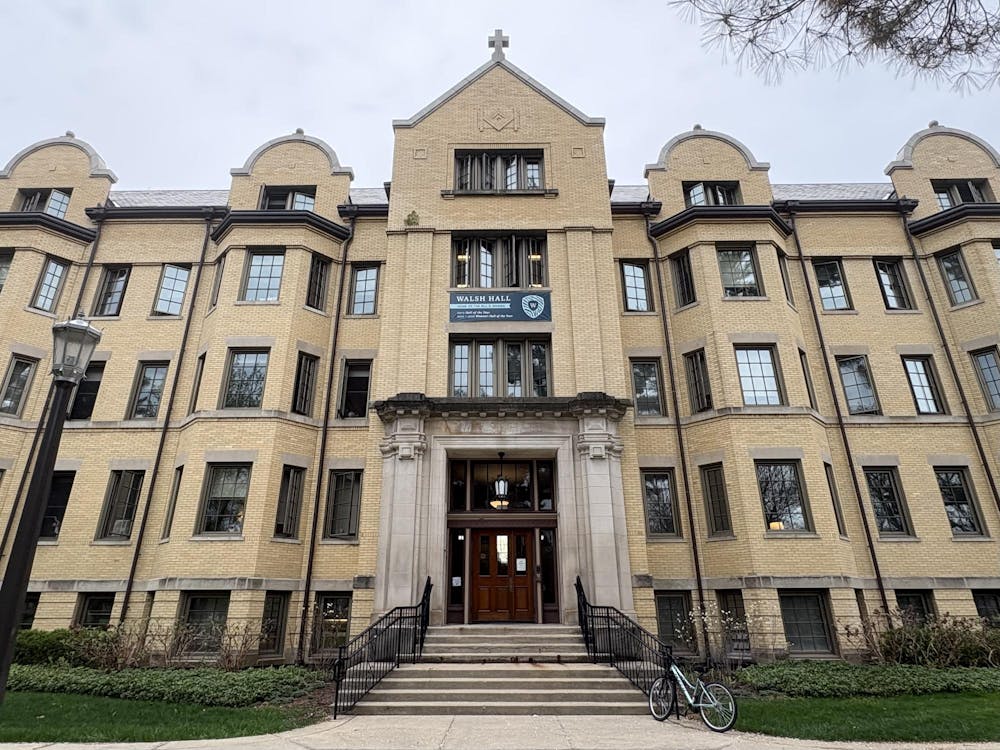
Walsh Hall rector Cheyenne Joseph is the most recent addition to the program. Her husband, Aibel Joseph, joined her in the residence hall beginning in the fall of the 2025-2026 academic year.
“The first rector to marry and welcome a spouse into a residence hall occurred in 2017, and the option has continued for rectors who have become engaged since that time,” Kennedy wrote.
In 2017, Noel and Jaclyn Terranova told The Observer that she was pregnant, and they were still discussing raising a child in the dorm. Beginning in the fall of 2017, Keenan had a new rector, James Tull.
As of March 23, Joseph’s out-of-office message read, “I have left Notre Dame to go on maternity leave and will not be returning.”
Women’s residence halls accept male rectors in acting roles
After Joseph retired as a rector on March 17, Richard Mazzei, known by students as Mazz, took over as the acting rector of Walsh Hall.
Mazzei served as the rector of Fisher Hall from 2014-2021, then as rector of O’Neill Family Hall from 2021-2022. After a brief stint as the interim rector in Carroll Hall, he became acting rector of Farley and Breen-Philips Halls. Presently, he is a minister-in-residence in Baumer Hall.
A spokesperson for the University confirmed that all three times Mazzei has served as an acting rector in a women’s dorm, his residence has remained Baumer Hall.
Some Walsh residents voiced their support for Mazzei’s presence, although they have hit some hiccups while trying to plan for next year.
Laurel Hamilton said that despite Mazzei not living in Walsh Hall, he is easily accessible.
“If you need to talk to him, you can just email him, and he will reply, honestly, within seconds, so it feels like he is there all the time,” she said. “Everybody really loves Mazz, and we feel like he adds so much to our culture. We miss Cheyenne, but we feel very well taken care of.”
Haley Nieman, incoming president of Walsh Hall, described Mazzei as “incredible,” explaining he treated the incoming executive team to a meal at O’Rourke’s to plan the upcoming year.
“He has really tried to integrate himself into the dorm and get to know the Walsh community as great as possible,” Nieman said.
Molly Kenney, a member of Walsh Hall's St. Andre Committee for freshman onboarding, said she was “a little shocked” when she learned Walsh would be led by a male rector, but “his personhood makes up for all of it.”
“It is just a little difficult trying to figure out next year when we do not have anyone for next year. I think that is kind of frustrating because I am thinking about August, and it is hard when there is not really someone who is going to be here in August,” Kenney said of the temporary nature of Mazzei’s position.
Consecrated religious declines
When women were first admitted to Notre Dame in 1972, the landmark decision also brought about change to who could serve as a rector. Kathleen Cekanski-Farrand in Badin Hall and Joanne Szafran in Walsh Hall became the first lay, and first female rectors that year. Prior to this, all rectors were consecrated religious individuals, with the exception of when Notre Dame housed midshipmen during World War II.
Not until the academic year 1987-1988 did the University have a lay male rector, Joseph McKenna, in Sorin College. This coincided with the beginning of the presidency of Fr. Edward Malloy.
Over time, the number of consecrated religious individuals has decreased. Since 1972, there has only been one academic year in which all rectors were consecrated religious: 1996-1997. Since then, the slope of decline has steepened.
In the 2016-2017 academic year, lay rectors outnumbered consecrated religious ones. Since crossing that threshold, the percentage of residences led by lay rectors has only grown.
Tenures of rectors shorten
The highest average tenure for rectors in individual residence halls was achieved from 1897 to 1901 at 7 years. After the average dropped to as low as 1.7 years from 1917-1921, it eventually rebounded to 6.14 years from 1977-1981 and remained above six years for three of the next four half-decades.
Since the turn of the 21st century, the average tenure of rectors has been cut in half. The average tenure from 2017-2021, 2.9 years, is the shortest average in 50 years.
Of the 24 rectors who started between 2002-2006, only one is still serving in their role — Fr. Ralph Haag in St. Edward’s Hall. Four out of 35 rectors who began between 2017-2021 are still serving as of this year. At least three of those four will not to be returning to their current residence hall, or retiring altogether.