The annual sexual violence awareness event, Take Back the Night, provided students an opportunity to march for increased prevention and response efforts on Wednesday. This event marks 23 years since it was established at Saint Mary’s and continues to be led by students and the Belles Against Violence office.
Take Back the Night, established at Saint Mary’s in 2003 by Jackie Zins, is part of a global awareness initiative established in the 1970s, where similar smaller protests came about to call out women’s safety and demand more resources. The first ever rally for TBTN was established following the murder of Susan Alexander Speeth, a microbiologist from Philadelphia who was stabbed on her walk back from home, a block away. The International Tribunal on Crimes against Women took place the following year in Brussels, Belgium, with a candlelit vigil and a TBTN march proceeding afterward.
The event is split into multiple parts, including the Survivor Speak Out, a march around the University of Notre Dame and a prayer service the following day.
The kickoff celebration
In Stapleton Lounge of Le Mans Hall, BAVO gathered students in a kickoff event of sign making, with the third day of an open viewing of the “What Were You Wearing?” exhibit. Food was catered by Sugar Rush.
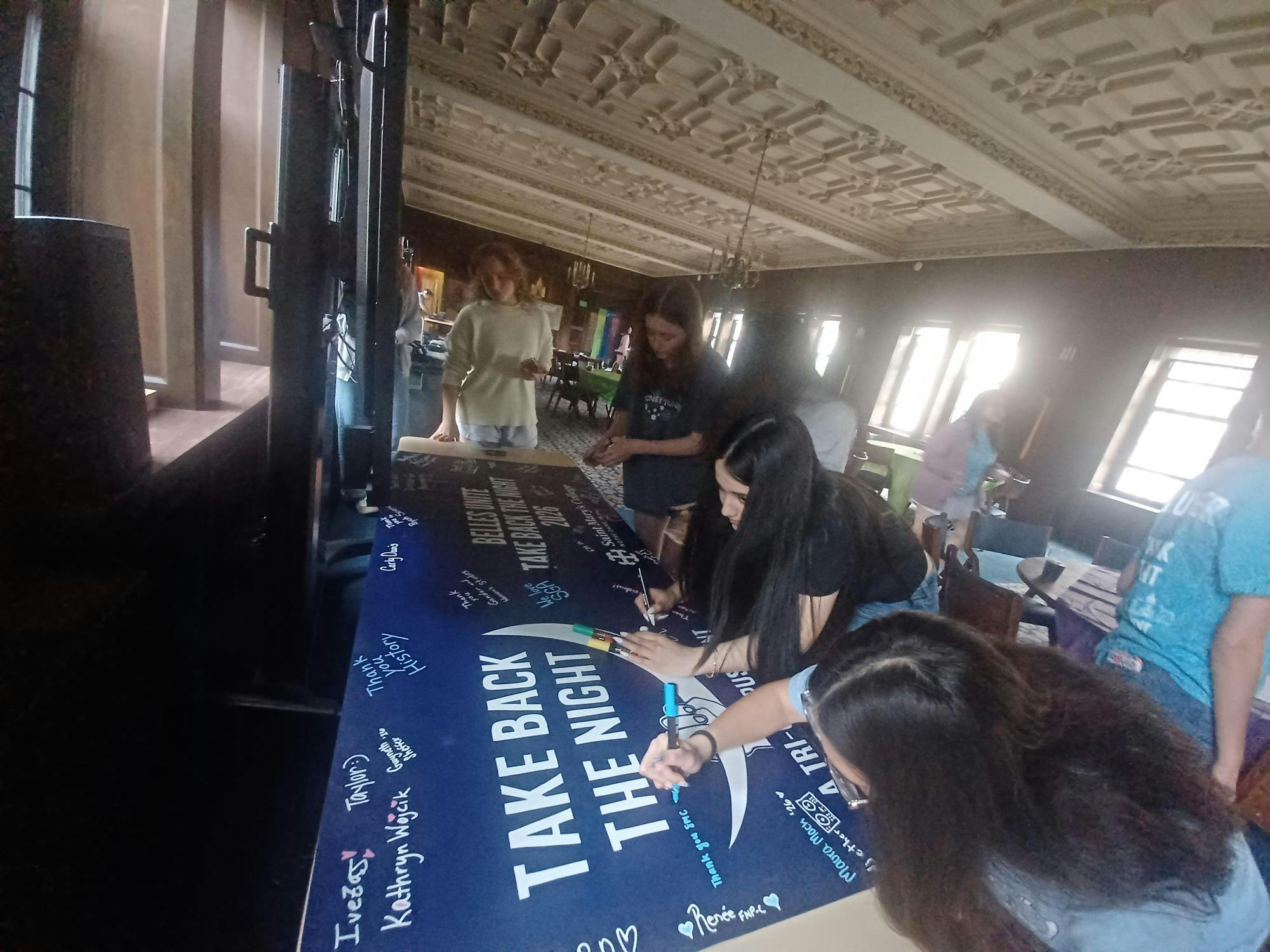
During the kickoff event, students were able to grab free food from Sugar Rush, make posters, and sign the main flyer for Take Back the Night prior to the march.
Mallory Lipps, the BRAVO coordinator at Saint Mary’s, shared that the initial event allows students to receive a preliminary break prior to going to the other events later that day. It provides a space where they are surrounded by others with support around a sensitive topic.
“I think how it benefits us is that it’s really to get us together in one space, so you don’t feel like you have to go over there by yourself … It helps get our volunteers and those interested together, helps rally us and get us pumped up to go over there. It is a really heavy topic, and so it’s also like a levity point for us too to maybe have a little bit of fun before we take on the really hard stuff tonight,” she stated.
For the first time, Take Back the Night and Raise Your Voice will be taking place in the same year. Lipps explained that they wanted to execute a week on sexual assault awareness at the College and see how well it works in the future. They also said it was due to availability of certain Notre Dame buildings and took the best option possible.
Survivors speak out
Following the kickoff event, students were escorted, by Blinkie, to McKenna Hall due to inclement weather and a lack of major turnout. Once dropped off, students were led to the second floor where they waited for the Survivor Speak Out event in the conference room.
The University of Notre Dame’s Prevention, Outreach, Education, and Training team, part of the Office of Institutional Equity, collaborated with BAVO for this event to be possible. They, along with others, are part of the Take Back the Night Committee, which helps with planning and coordination of the event.
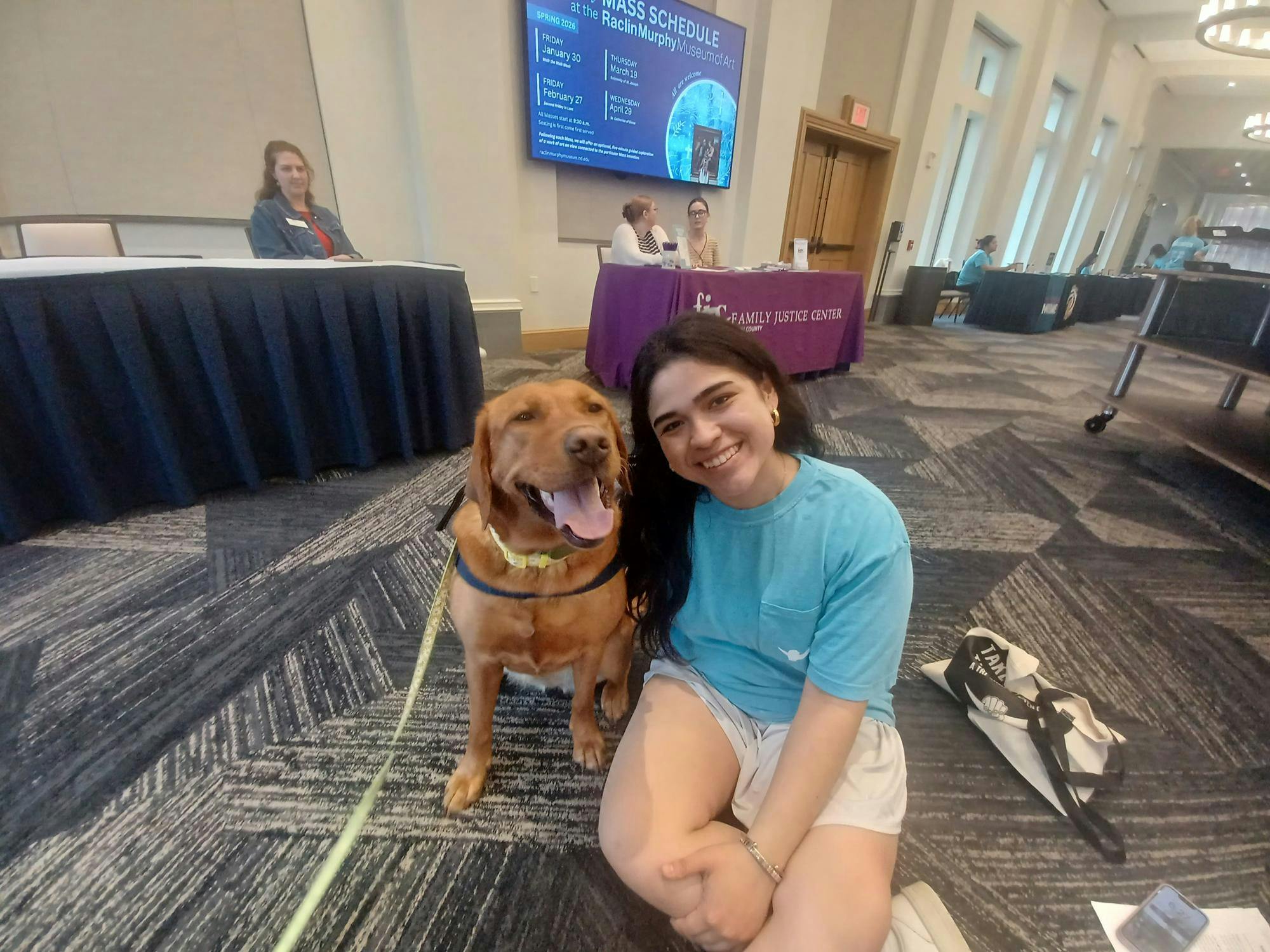
NDPD comfort K9s were seen at the Survivor Speak Out.
Abby Bulgrien, director of victim services at the Family Justice Center of St. Joseph County, a local nonprofit organization for survivors of interpersonal violence, discussed the organization’s involvement with TBTN and their support of allocating resources to students.
“Our organization sits on the CSAP committee, so the Notre Dame Committee for Sexual Assault Prevention that includes Holy Cross and Saint Mary’s as well. So we are … helping to provide awareness for how sexual assault, domestic violence and stalking is impacting not just the campuses themselves, but the community around them, because so many students are involved off campus,” she noted.
The confidential event allows students to speak in a safe space on stories of sexual violence and for allies to be in solidarity with them. Students have the opportunity to submit and share their stories whether through proxy or by speaking out themselves.
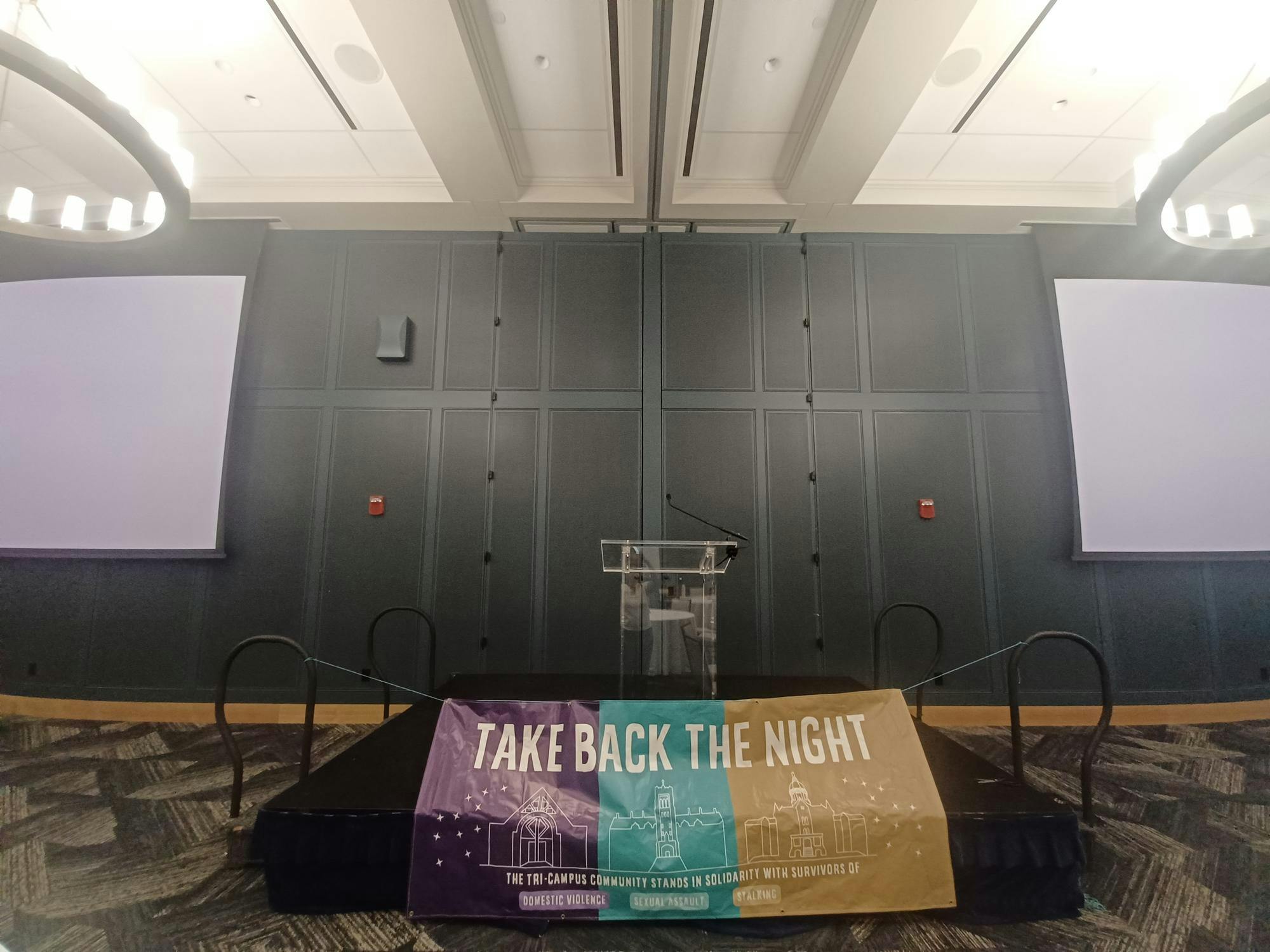
McKenna Hall hosts Survivor Speak Out, open for students to share their stories, along with the submission of proxy stories by students and faculty.
“I think it’s really important to give someone a platform to have their story heard, so that others who may have experiences but aren’t able to speak out, feel seen and heard, even if it’s not in their own story,” Lipps said.
Lipps shared that around 25% of undergraduate women experience sexual assault or rape on college campuses. Reported by the Journal of Interpersonal Violence, about one in four women will experience sexual assault.
In a joint interview with The Observer, senior Ally Krause and junior Daniela Rivera, BAVO Student Advisory Committee members, shared the importance of having spaces such as Survivor Speak Out in embracing conversations that may have topics otherwise seen as taboo.
“It just means so much that we’re able to have these type of talks, because in some places, these types of conversations are not permitted or they’re silenced … I find that it’s really valuable that we’re allowed to have these really difficult, sometimes critical conversations,” Krause said.
The march
Throughout the course of Take Back the Night, students had the opportunity to make posters that show support of survivors while fighting against sexual violence.
The march started outside of McKenna Hall, where students were given instructions on how to shout back. Students then began the march, with chants such as “Who’s campus? Our campus! Who’s body? My Body!,” and “Hey Hey, Mister Mister! Get your hands off my sister!”
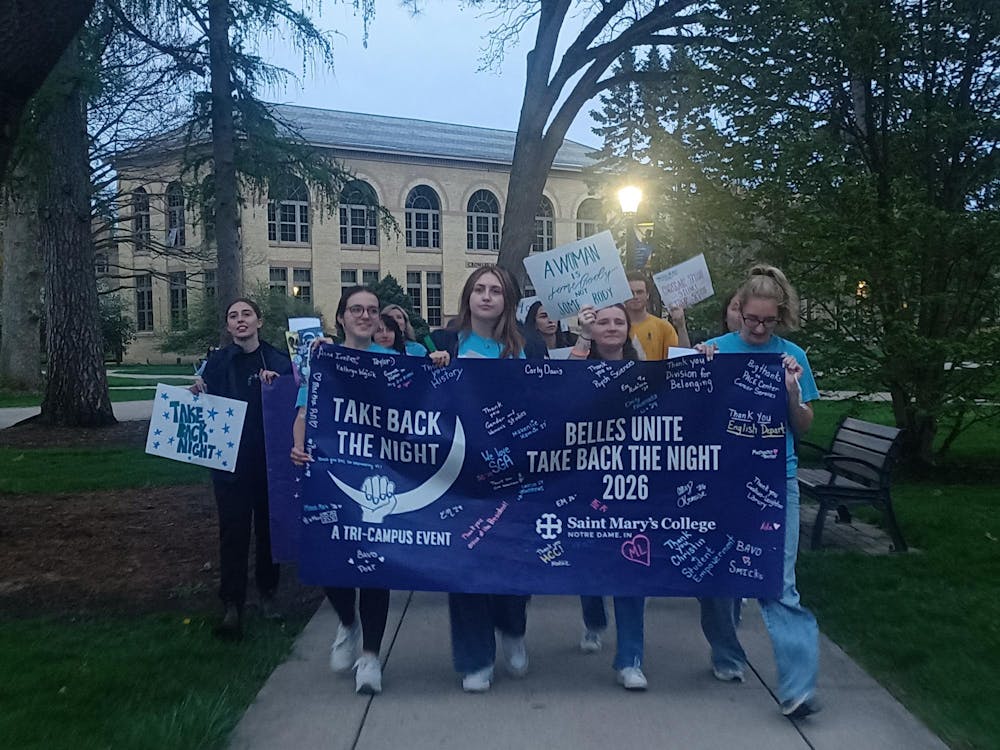
With a path mapped in the event handout, students took to Notre Dame’s campus marching through God Quad under The Golden Dome with signs raised and voices loud. At the front, the biggest sign read, “Belles Unite Take Back the Night 2026,” held by BAVO SAC members. Other signs behind stated, “A Woman is Somebody Not Some Body” and “Break the Silence, Stop the Violence.”
Lipps explained that the march allows allies and survivors to empower themselves and reduce the barriers of speaking out their truth. It gives a path for the tri-campus community to come together under a common issue.
“A lot of times, people don’t feel like they can speak about these issues openly, or can’t support these issues without barriers or maybe some pushback,” she highlighted. “And so tonight [is] to really empower students, whether you’re a Smick, whether you go to Notre Dame, whether you’re at Holy Cross, whether you’re male, female or nonbinary, too, this is not just an event for women. [It] is to make you feel like you are not alone, and also to get people who care about these issues to feel like they’re making a change and making a difference.”
Multi-faith prayer service
Despite rain earlier in the day, the prayer service continued on Thursday at the Grotto of Our Lady of Lourdes with lines of chairs prepared for attendees at 8 p.m. Students and faculty from different spiritual backgrounds were welcome to come to the multi-faith prayer service.
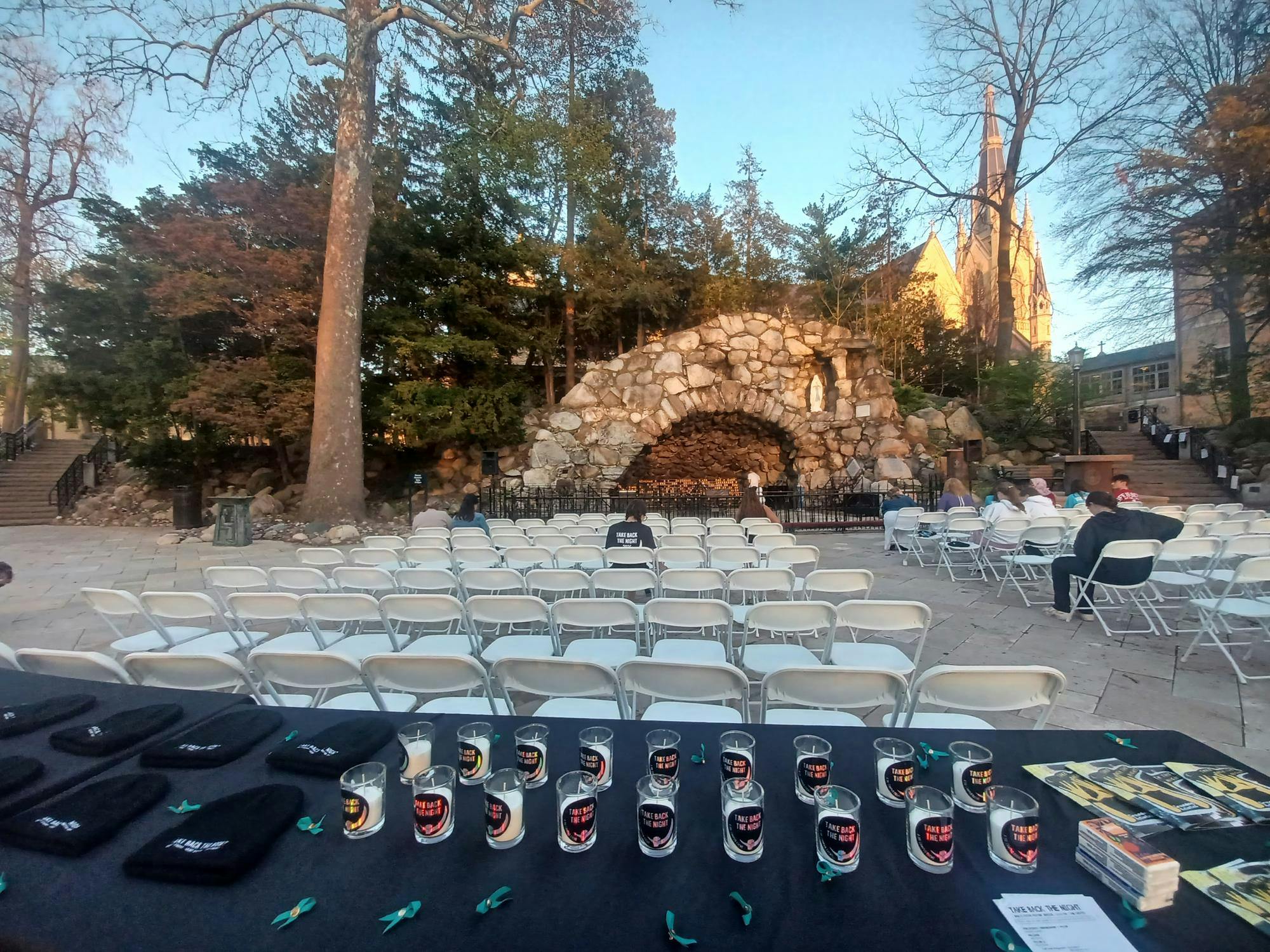
Students from various faiths were able to participate in the prayer service on Thursday. Despite the rain a few hours beforehand, the event continued.
Lipps shared that the prayer service was moved to Thursday to provide a clear description to the community on confidential and non-confidential events and to ensure that faculty are still able to stand in solidarity with students.
“It was moved to Thursday because the Speak Out and march are confidential. So staff who are not confidential, which does not include myself, cannot go to the Speak Out and the march,” Lipps stated.
The prayer service was co-organized by Krause and senior Carly Davis but was put on in collaboration with faith organizations from througout the tri-campus community. Davis shared that she reached out to ensure these groups would be comfortable speaking at a service dedicated to sexual violence survivors. Partners included: Saint Mary’s Center for Faith, Action, and Ministry; Notre Dame Muslim Student Association and Jewish Club of Notre Dame.
The event included a preliminary announcement and prayer by sophomore Quinlen Schachle, followed by the welcome and prayer one by Krause. Krause continued by leading a call and response of “Suvivors, We believe you — Survivors, we empower you — Survivors, we love you.” The intersessions were then led by Delana Cates with prayers two and three provided by graduate student Fathya Salih and junior Anna Heck, before moving onto speeches.
Editor’s note: Cates is a former writer for Scene at The Observer, the newspaper’s arts and culture section.
Davis and Krause picked Schachle to have a male leader as a speaker, in order to represent this issue occurring across all genders, as noted by Lipps. In the preliminary announcement, he shared the importance of advocating for survivors and not hiding behind silence.
“Too often, conversations about sexual violence are treated as if they are women’s issues. When they’re not, they’re human issues. And their issues that men, collectively, have a responsibility to confront. Not because men are inherently bad, but because we are shaped by systems that too often excuse harm, minimize accountability and teach us to ignore the experiences of others,” he said.
The manifestation and call to community were done by Davis, with the quiet meditation and lighting of candles spoken by Krause. The event concluded with a closing from Schachle, where he read a poem by Wendell Berry titled, “The Peace of Wild Things.”
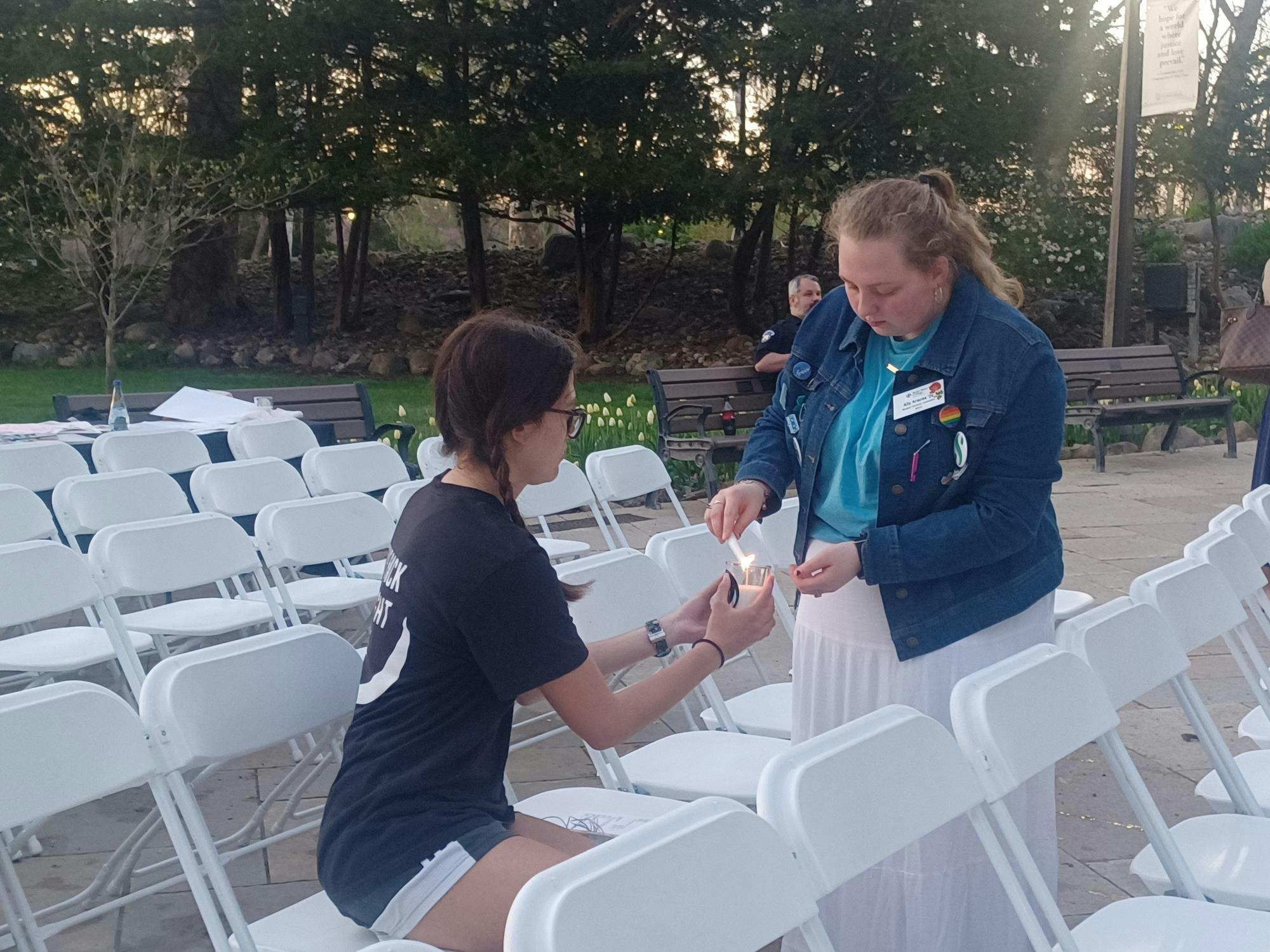
During the prayer service on Thursday, the lighting of the candles occur following quiet mediation. Seniors Ally Krause and Carly Davis light up candles of participating students.
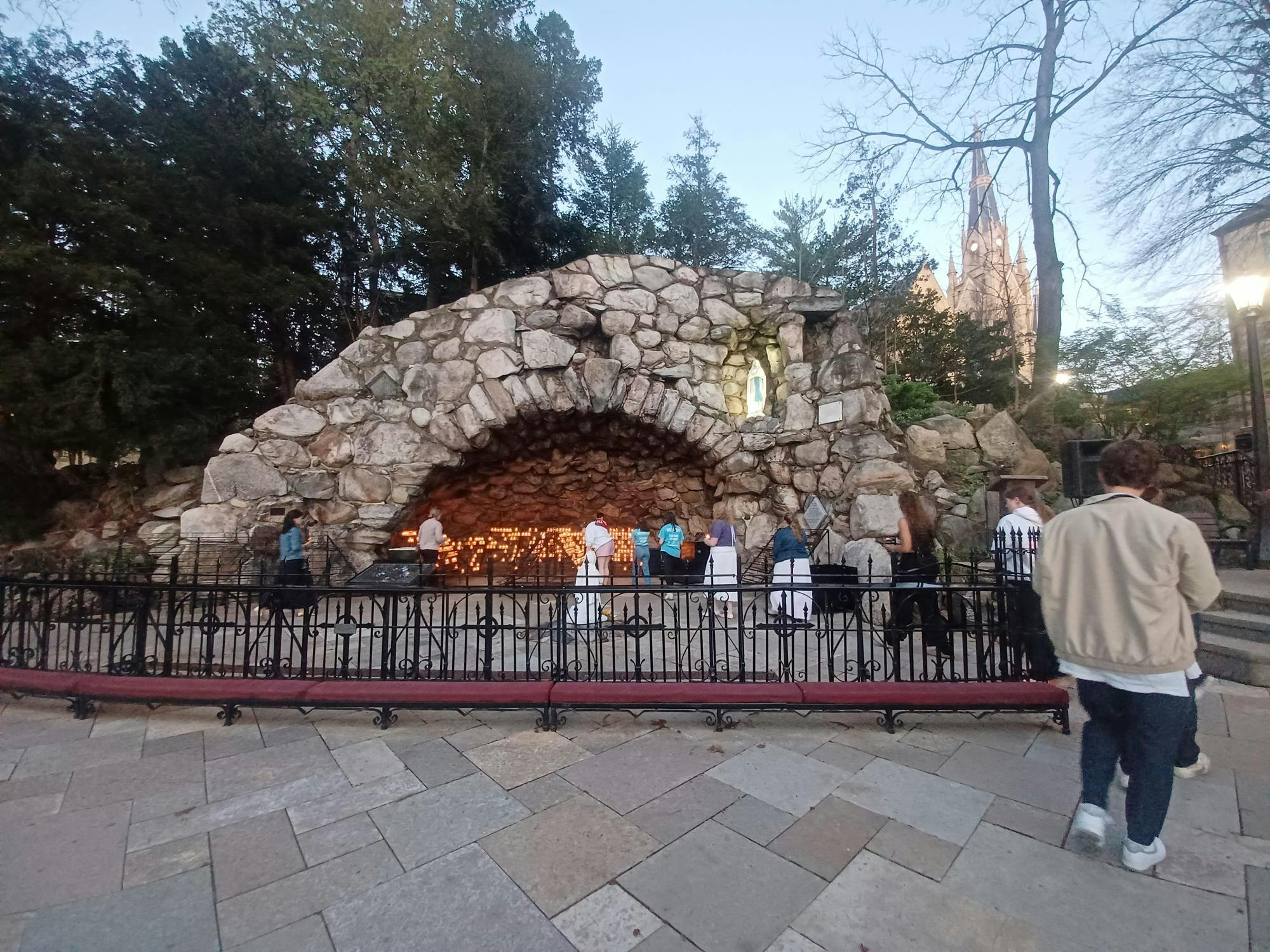
Following the lighting of the candles, students and faculty lined up at the Grotto of Our Lady of Lourdes to place their candles down, with a Take Back the Night sticker at the front of it.
An increase of reports
Considering the recent sexual assault reports made within the tri-campus, predominantly to the University of Notre Dame’s Office of Institutional Equity, student groups like POET and BAVO have emphasized the importance of their existence.
“I feel kind of dual sided about the increase in reporting. On one side, it’s shocking and it’s jarring and it’s horrifying to hear things that are happening to people, but on the other side, it means that people are comfortable reporting,” Krause stated.
Rivera doubled down on the need for campus resources to combat issues such as the last three reported assault cases. She continued to express gratitude to those in support of spreading awareness and participating in the active fight for safer communities.
“Even if it’s Ally or I or other amazing staff members, we’re always here to hear you, believe you, and with these types of events, just like, show up, even if you show up as a supporter, you’re always welcome,” Rivera stated.